


Fish oil in critical illness: mechanisms and clinical applications
- PMID: 20643303
- PMCID: PMC4464752
- DOI: 10.1016/j.ccc.2010.04.009
Fish oil in critical illness: mechanisms and clinical applications
Abstract
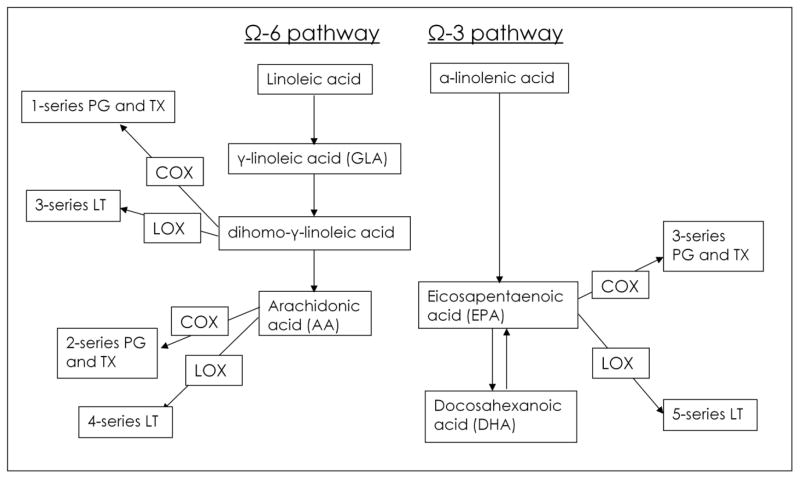
Fish oil is rich in omega-3 fatty acids, which have been shown to be beneficial in multiple disease states that involve an inflammatory process. It is now hypothesized that omega-3 fatty acids may decrease the inflammatory response and be beneficial in critical illness. After a review of the mechanisms of omega-3 fatty acids in inflammation, research using enteral nutrition formulas and parenteral nutrition lipid emulsions fortified with fish oil were examined. The results of this research to date are inconclusive for both enteral and parenteral omega-3 fatty acid administration. More research is required before definitive recommendations can be made on fish oil supplementation in critical illness.
Copyright 2010 Elsevier Inc. All rights reserved.
Figures
References
-
- Simopoulos AP. Essential fatty acids in health and chronic disease. Am J Clin Nutr. 1999 Sep;70(3 Suppl):560S–569S. - PubMed
-
- Angus DC, Linde-Zwirble WT, Lidicker J, Clermont G, Carcillo J, Pinsky MR. Epidemiology of severe sepsis in the United States: analysis of incidence, outcome, and associated costs of care. Crit Care Med. 2001 Jul;29(7):1303–1310. - PubMed
-
- Wheeler AP, Bernard GR. Acute lung injury and the acute respiratory distress syndrome: a clinical review. Lancet. 2007 May 5;369(9572):1553–1564. - PubMed
-
- Cohen J. The immunopathogenesis of sepsis. Nature. 2002 Dec 19–26;420(6917):885–891. - PubMed
-
- Hotchkiss RS, Karl IE. The pathophysiology and treatment of sepsis. N Engl J Med. 2003 Jan 9;348(2):138–150. - PubMed
Publication types
MeSH terms
Substances
Grants and funding
LinkOut - more resources
Full Text Sources
Medical
