


A longitudinal study of exposure to retail cigarette advertising and smoking initiation
- PMID: 20643725
- PMCID: PMC3046636
- DOI: 10.1542/peds.2009-3021
A longitudinal study of exposure to retail cigarette advertising and smoking initiation
Abstract
Objectives: Accumulating evidence suggests that widespread advertising for cigarettes at the point of sale encourages adolescents to smoke; however, no longitudinal study of exposure to retail tobacco advertising and smoking behavior has been reported.
Methods: A school-based survey included 1681 adolescents (aged 11-14 years) who had never smoked. One measure of exposure assessed the frequency of visiting types of stores that contain the most cigarette advertising. A more detailed measure combined data about visiting stores near school with observations of cigarette advertisements and pack displays in those stores. Follow-up surveys 12 and 30 months after baseline (retention rate: 81%) documented the transition from never to ever smoking, even just a puff.
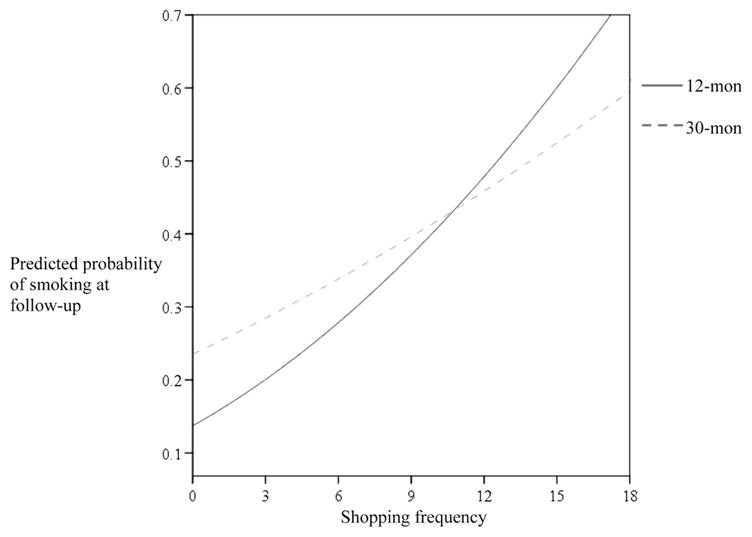
Results: After 12 months, 18% of adolescents initiated smoking, but the incidence was 29% among students who visited convenience, liquor, or small grocery stores at least twice per week and 9% among those who reported the lowest visit frequency (less than twice per month). Adjusting for multiple risk factors, the odds of initiation remained significantly higher (odds ratio: 1.64 [95% confidence interval: 1.06-2.55]) for adolescents who reported moderate visit frequency (0.5-1.9 visits per week), and the odds of initiation more than doubled for those who visited > or = 2 times per week (odds ratio: 2.58 [95% confidence interval: 1.68-3.97]). Similar associations were observed for the more detailed exposure measure and persisted at 30 months.
Conclusions: Exposure to retail cigarette advertising is a risk factor for smoking initiation. Policies and parenting practices that limit adolescents' exposure to retail cigarette advertising could improve smoking prevention efforts.
Figures
References
-
- Monitoring the Future. Trends in prevalence of use of cigarettes in grades 8, 10, and 12. 2008. [Accessed October 22, 2009]. Available at: www.monitoringthefuture.org/data/08data/pr08cig1.pdf.
-
- Paul S, Blizzard L, Patton G, Dwyer T, Venn A. Parental smoking and smoking experimentation in childhood increase the risk of being a smoker 20 years later: the Childhood Determinants of Adult Health Study. Addiction. 2008;103(5):846–853. - PubMed
-
- Federal Trade Commission. Federal Trade CommissionCigaretteReportfor2006. Washington, DC: Federal Trade Commission; 2009.
-
- Ruel E, Mani N, Sandoval A, et al. After the Master Settlement Agreement: trends in the American tobacco retail environment from 1999 to 2002. Health Promot Pract. 2004;5(3 suppl):99S–110S. - PubMed
Publication types
MeSH terms
Grants and funding
LinkOut - more resources
Full Text Sources
Medical
