


A decade of Burkholderia cenocepacia virulence determinant research
- PMID: 20643851
- PMCID: PMC2950345
- DOI: 10.1128/IAI.00212-10
A decade of Burkholderia cenocepacia virulence determinant research
Abstract
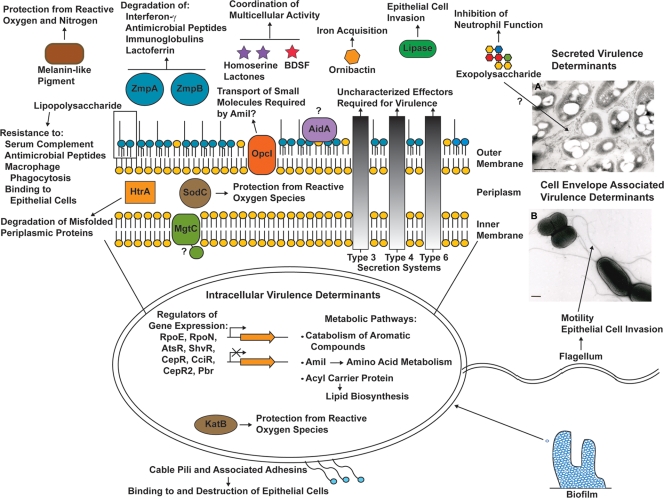
The Burkholderia cepacia complex (Bcc) is a group of genetically related environmental bacteria that can cause chronic opportunistic infections in patients with cystic fibrosis (CF) and other underlying diseases. These infections are difficult to treat due to the inherent resistance of the bacteria to antibiotics. Bacteria can spread between CF patients through social contact and sometimes cause cepacia syndrome, a fatal pneumonia accompanied by septicemia. Burkholderia cenocepacia has been the focus of attention because initially it was the most common Bcc species isolated from patients with CF in North America and Europe. Today, B. cenocepacia, along with Burkholderia multivorans, is the most prevalent Bcc species in patients with CF. Given the progress that has been made in our understanding of B. cenocepacia over the past decade, we thought that it was an appropriate time to review our knowledge of the pathogenesis of B. cenocepacia, paying particular attention to the characterization of virulence determinants and the new tools that have been developed to study them. A common theme emerging from these studies is that B. cenocepacia establishes chronic infections in immunocompromised patients, which depend more on determinants mediating host niche adaptation than those involved directly in host cells and tissue damage.
Figures
References
-
- Aaron, S. D., W. Ferris, D. A. Henry, D. P. Speert, and N. E. Macdonald. 2000. Multiple combination bactericidal antibiotic testing for patients with cystic fibrosis infected with Burkholderia cepacia. Am. J. Respir. Crit. Care Med. 161:1206-1212. - PubMed
-
- Ades, S. E. 2004. Control of the alternative sigma factor σE in Escherichia coli. Curr. Opin. Microbiol. 7:157-162. - PubMed
-
- Andrade, G., K. L. Mihara, R. G. Linderman, and G. J. Bethlenfalvay. 1997. Bacteria from rhizosphere and hyphosphere soils of different arbuscular-mycorrhizal fungi. Plant Soil 192:71-79.
Publication types
MeSH terms
Substances
Grants and funding
LinkOut - more resources
Full Text Sources
Miscellaneous
