


The genetic, morphological, and physiological characterization of a dark larval cuticle mutation in the butterfly, Bicyclus anynana
- PMID: 20644735
- PMCID: PMC2904379
- DOI: 10.1371/journal.pone.0011563
The genetic, morphological, and physiological characterization of a dark larval cuticle mutation in the butterfly, Bicyclus anynana
Abstract
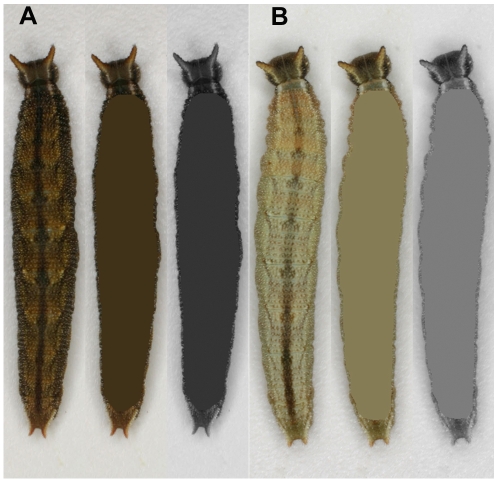
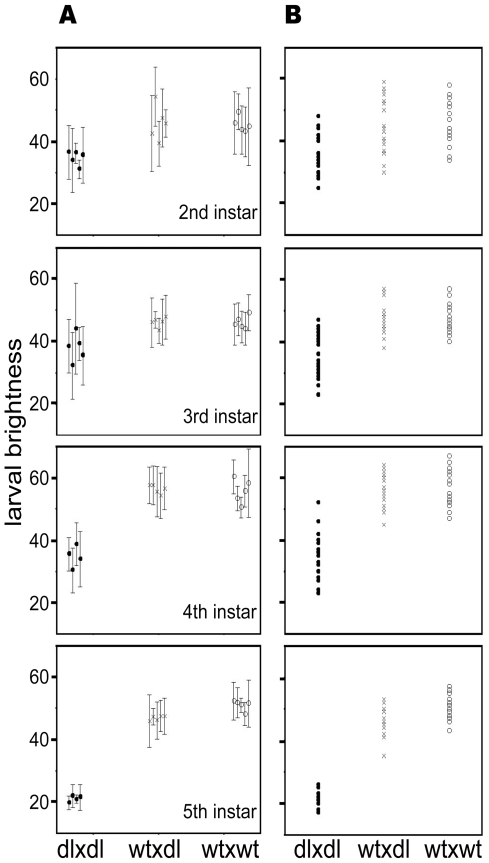
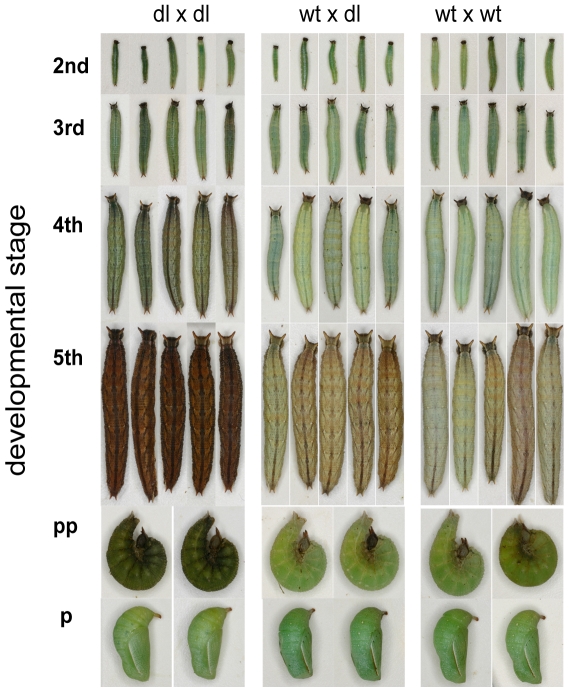
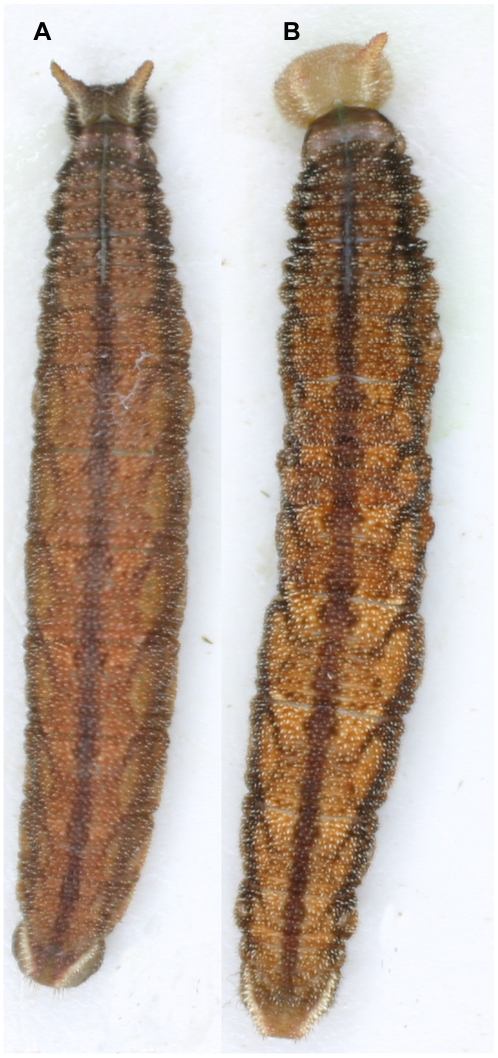
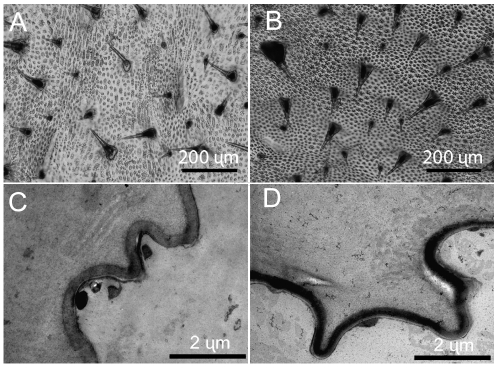
Studies on insect melanism have greatly contributed to our understanding of natural selection and the ultimate factors influencing the evolution of darkly pigmented phenotypes. Research on several species of melanic lepidopteran larvae have found that low levels of circulating juvenile hormone (JH) titers are associated with a melanic phenotype, suggesting that genetic changes in the JH biosynthetic pathway give rise to increased deposition of melanin granules in the cuticle in this group. But does melanism arise through different molecular mechanisms in different species? The present study reports on a Bicyclus anynana (Lepidoptera: Nymphalidae) dark larvae single locus mutation, in which larvae exhibit a darker cuticle relative to wild type. Unlike other lepidopteran melanic larvae mutations, this one is autosomal recessive and does not appear to involve a deficiency in JH titers. Unlike JH deficiency mutants, dark larvae mutants display similar growth rates and sexual behaviors as wild type, and topical application of a JH analogue failed to rescue the wild type cuticular coloration. Finally, transmission electron microscopy showed that sclerotization or deposition of diffuse melanin, rather than deposition of melanin granules, produces the dark coloration found in the cuticle of this species. We conclude that different molecular mechanisms underlie larval melanism in different species of Lepidoptera.
Conflict of interest statement
Figures
References
-
- Majerus MEN. Oxford University Press; 1998. Melanism: Evolution in Action.
-
- True JR. Insect melanism: the molecules matter. Trends Ecol Evol. 2003;Vol. 18 no. 12:640–647.
-
- Hubbard J, Uy JAC, Hauber ME, Hoekstra HE, Safran RJ. Vertebrate pigmentation: from underlying genes to adaptive function. Cell. 2010;39:231–239. - PubMed
-
- Hiruma K, Riddiford LM. Molecular mechanisms of cuticular melanization in the tobacco hornworm, Manduca sexta (L.) (Lepidoptera: Sphingidae). Int J Insect Morphol Embryol. 1993;22:103–117.
-
- Llopart A, Elwyn S, Lachaise D, Coyne JA. Genetics of a difference in pigmentation between Drosophila yakuba and Drosophila santomea. Evolution. 2002;56:2262–2277. - PubMed
Publication types
MeSH terms
Substances
LinkOut - more resources
Full Text Sources
