


Predictors for good functional outcome after neurocritical care
- PMID: 20646313
- PMCID: PMC2945110
- DOI: 10.1186/cc9192
Predictors for good functional outcome after neurocritical care
Abstract
Introduction: There are only limited data on the long-term outcome of patients receiving specialized neurocritical care. In this study we analyzed survival, long-term mortality and functional outcome after neurocritical care and determined predictors for good functional outcome.
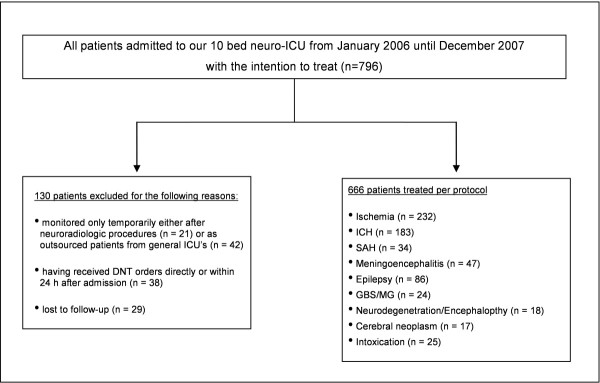
Methods: We retrospectively investigated 796 consecutive patients admitted to a non-surgical neurologic intensive care unit over a period of two years (2006 and 2007). Demographic and clinical parameters were analyzed. Depending on the diagnosis, we grouped patients according to their diseases (cerebral ischemia, intracranial hemorrhage (ICH), subarachnoid hemorrhage (SAH), meningitis/encephalitis, epilepsy, Guillain-Barré syndrome (GBS) and myasthenia gravis (MG), neurodegenerative diseases and encephalopathy, cerebral neoplasm and intoxication). Clinical parameters, mortality and functional outcome of all treated patients were analyzed. Functional outcome (using the modified Rankin Scale, mRS) one year after discharge was assessed by a mailed questionnaire or telephone interview. Outcome was dichotomized into good (mRS ≤ 2) and poor (mRS ≥ 3). Logistic regression analyses were calculated to determine independent predictors for good functional outcome.
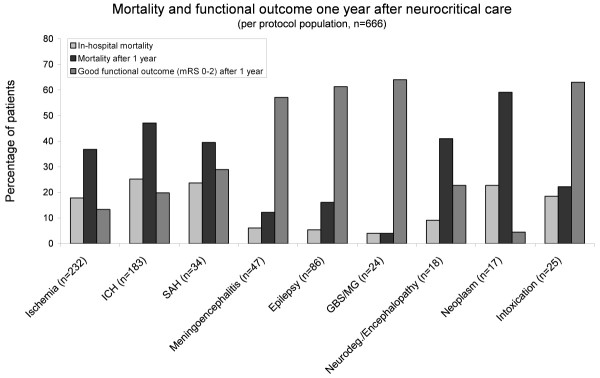
Results: Overall in-hospital mortality amounted to 22.5% of all patients, and a good long-term functional outcome was achieved in 28.4%. The parameters age, length of ventilation (LOV), admission diagnosis of ICH, GBS/MG, and inoperable cerebral neoplasm as well as Therapeutic Intervention Scoring System (TISS)-28 on Day 1 were independently associated with functional outcome after one year.
Conclusions: This investigation revealed that age, LOV and TISS-28 on Day 1 were strongly predictive for the outcome. The diagnoses of hemorrhagic stroke and cerebral neoplasm leading to neurocritical care predispose for functional dependence or death, whereas patients with GBS and MG are more likely to recover after neurocritical care.
Figures
References
-
- Suarez JI, Zaidat OO, Suri MF, Feen ES, Lynch G, Hickman J, Georgiadis A, Selman WR. Length of stay and mortality in neurocritically ill patients: impact of a specialized neurocritical care team. Crit Care Med. 2004;32:2311–2317. - PubMed
MeSH terms
LinkOut - more resources
Full Text Sources
Medical
