


Intravital imaging of anti-tumor immune response and the tumor microenvironment
- PMID: 20652252
- PMCID: PMC2971683
- DOI: 10.1007/s00281-010-0217-9
Intravital imaging of anti-tumor immune response and the tumor microenvironment
Abstract
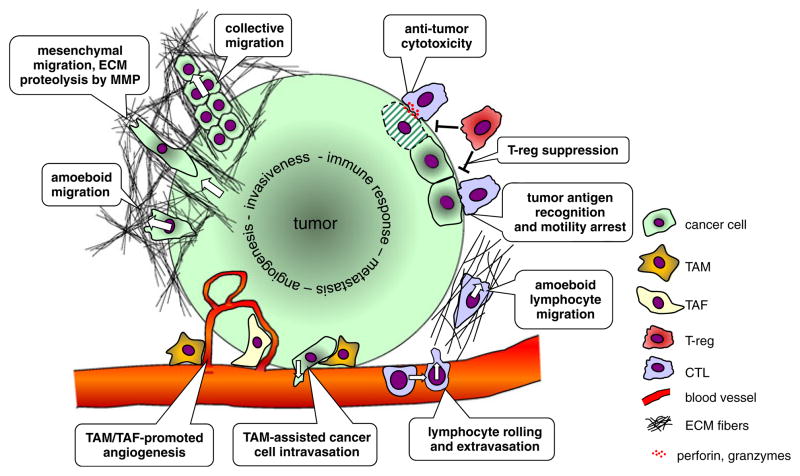
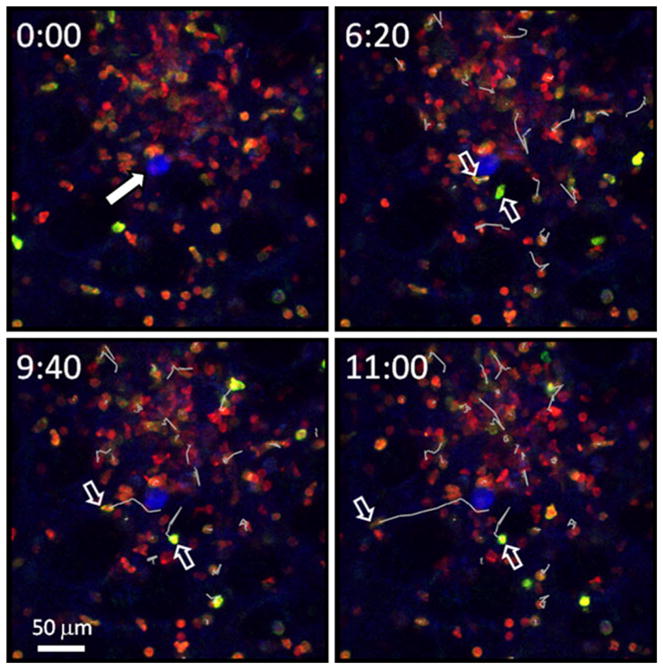
Tumor growth, invasiveness, and metastasis are dynamic processes involving cancer interactions with the extracellular matrix, the vasculature, and various types of non-cancerous host cells that form the tumor stroma. An often-present stromal component is the immune cells, such as tumor-associated myeloid and lymphocytic infiltrates, yet endogenous anti-tumor immune responses are typically ineffective in tumor rejection and may even contribute to the progression of some cancers. How exactly cancer cells interact with the stroma and invade healthy tissues while avoiding anti-tumor immune responses, and which interactions should be targeted for anti-tumor therapy, can now be studied by minimally invasive observation using multiphoton and other low impact confocal microscopy techniques and fluorescent animal tumor models. Intravital video microscopy has already been instrumental in defining the roles and modes of cellular motility in the angiogenic process and during tissue invasion at the tumor margin. In the hands of cancer immunologists, intravital video microscopy is beginning to unravel the complexity of effector and suppressory lymphocytic interactions in tumors and in the draining lymphoid organs. As the intravital microscopy approach is beginning to move beyond fundamental description and into analyzing the molecular underpinnings of cell's dynamics, future technical advances will undoubtedly provide yet deeper insight while stitching together a systems dynamics view of cancer-host interactions that will keep on inspiring cancer researchers and therapists.
Figures
References
-
- Peggs KS, Quezada SA, Korman AJ, Allison JP. Principles and use of anti-CTLA4 antibody in human cancer immunotherapy. Curr Opin Immunol. 2006;18:206–213. - PubMed
-
- Sakaguchi S, Sakaguchi N, Asano M, Itoh M, Toda M. Immunologic self-tolerance maintained by activated T cells expressing IL-2 receptor alpha-chains (CD25). Breakdown of a single mechanism of self-tolerance causes various autoimmune diseases. J Immunol. 1995;155:1151–1164. - PubMed
-
- Shimizu J, Yamazaki S, Sakaguchi S. Induction of tumor immunity by removing CD25+CD4+ T cells: a common basis between tumor immunity and autoimmunity. J Immunol. 1999;163:5211–5218. - PubMed
-
- Fontenot JD, Gavin MA, Rudensky AY. Foxp3 programs the development and function of CD4+CD25+ regulatory T cells. Nat Immunol. 2003;4:330–336. - PubMed
Publication types
MeSH terms
Substances
Grants and funding
LinkOut - more resources
Full Text Sources
Other Literature Sources
Research Materials
