


Arboviral encephalitides: transmission, emergence, and pathogenesis
- PMID: 20652430
- PMCID: PMC3286874
- DOI: 10.1007/s11481-010-9234-7
Arboviral encephalitides: transmission, emergence, and pathogenesis
Abstract
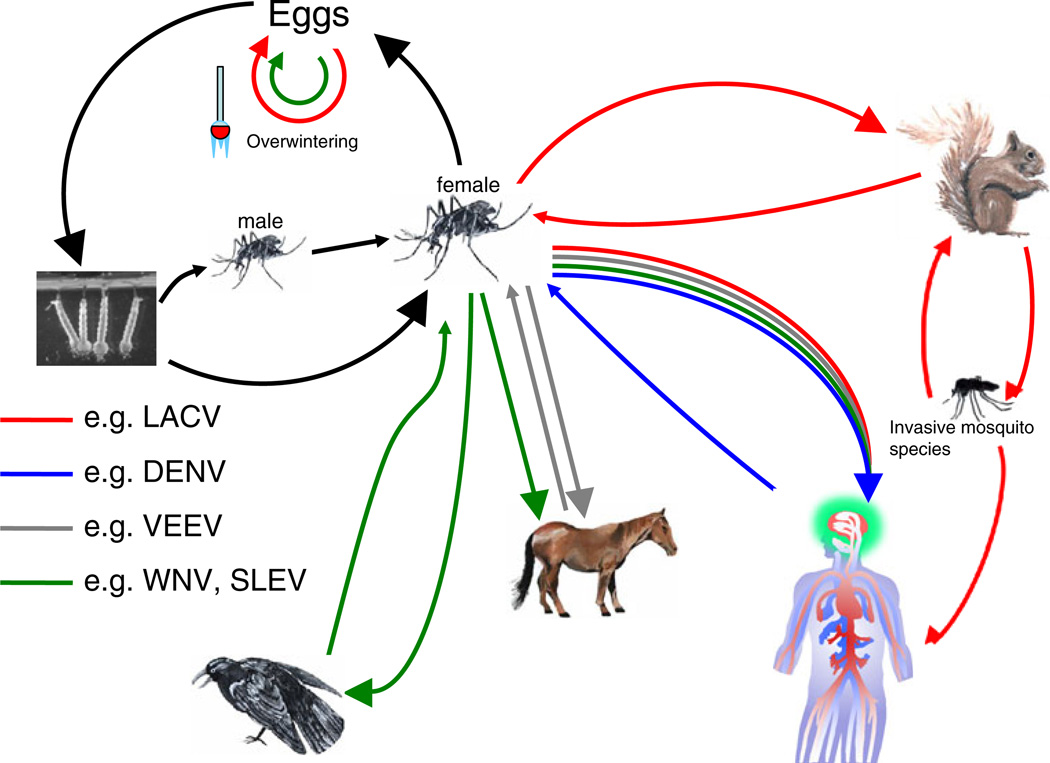
Arthropod-borne viruses (arboviruses) are of paramount concern as a group of pathogens at the forefront of emerging and re-emerging diseases. Although some arboviral infections are asymptomatic or present with a mild influenza-like illness, many are important human and veterinary pathogens causing serious illness ranging from rash and arthritis to encephalitis and hemorrhagic fever. Here, we discuss arboviruses from diverse families (Flaviviruses, Alphaviruses, and the Bunyaviridae) that are causative agents of encephalitis in humans. An understanding of the natural history of these infections as well as shared mechanisms of neuroinvasion and neurovirulence is critical to control the spread of these viruses and for the development of effective vaccines and treatment modalities.
Conflict of interest statement
The authors declare that there are no conflicts of interest.
Figures
References
-
- Outbreak of Rift Valley fever—Saudi Arabia, August–October 2000. MMWR Morb Mortal Wkly Rep. 49:905–908. - PubMed
-
- Abd el-Rahim IH, Abd el-Hakim U, Hussein M. An epizootic of Rift Valley fever in Egypt in 1997. Rev Sci Tech. 1999;18:741–748. - PubMed
-
- Angelini P, Macini P, Finarelli AC, Pol C, Venturelli C, Bellini R, Dottori M. Chikungunya epidemic outbreak in Emilia-Romagna (Italy) during summer 2007. Parassitologia. 2008;50:97–98. - PubMed
-
- Arthur RR, El-Sharkawy MS, Cope SE, Botros BA, Oun S, Morrill JC, Shope RE, Hibbs RG, Darwish MA, Imam IZ. Recurrence of Rift Valley fever in Egypt. Lancet. 1993;342:1149–1150. - PubMed
Publication types
MeSH terms
Grants and funding
LinkOut - more resources
Full Text Sources
