


Context-driven cocaine-seeking in abstinent rats increases activity-regulated gene expression in the basolateral amygdala and dorsal hippocampus differentially following short and long periods of abstinence
- PMID: 20654701
- PMCID: PMC2934782
- DOI: 10.1016/j.neuroscience.2010.07.027
Context-driven cocaine-seeking in abstinent rats increases activity-regulated gene expression in the basolateral amygdala and dorsal hippocampus differentially following short and long periods of abstinence
Abstract
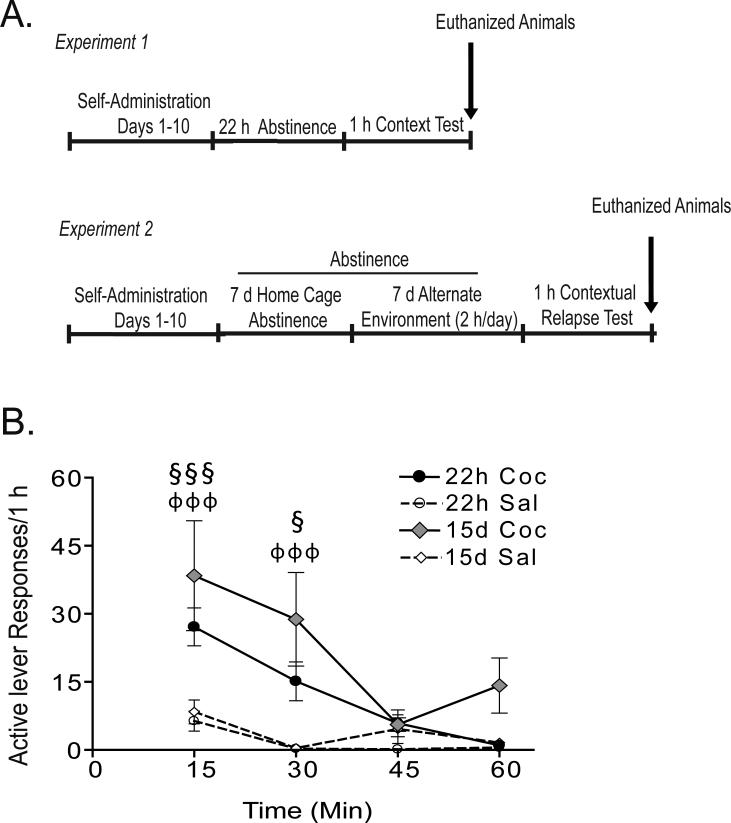
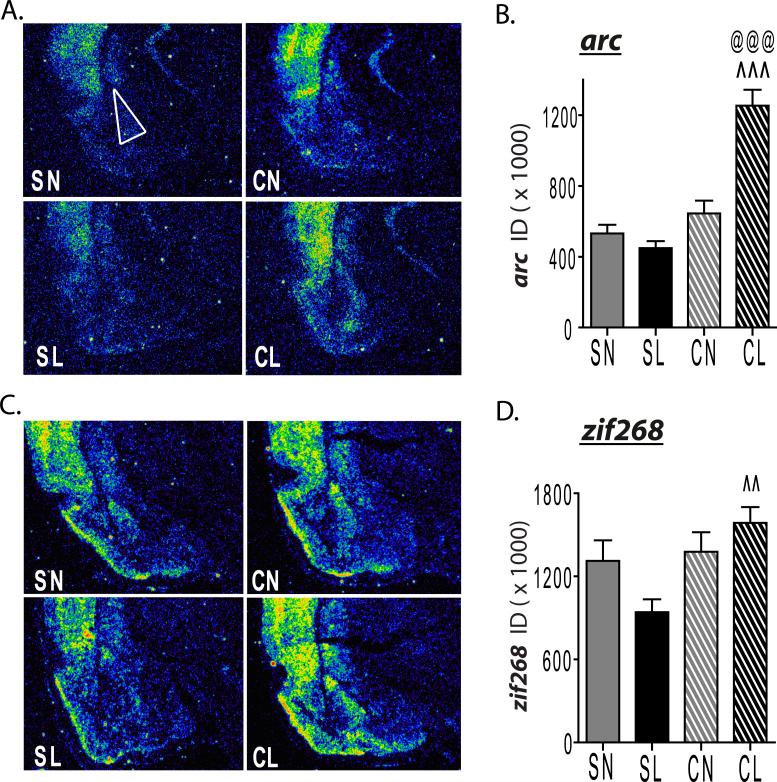
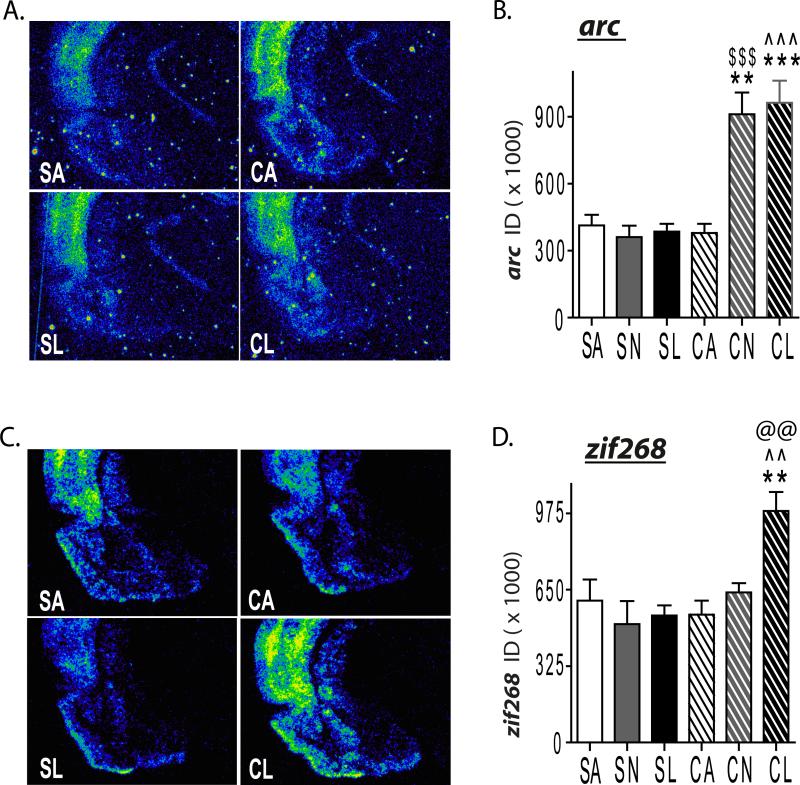
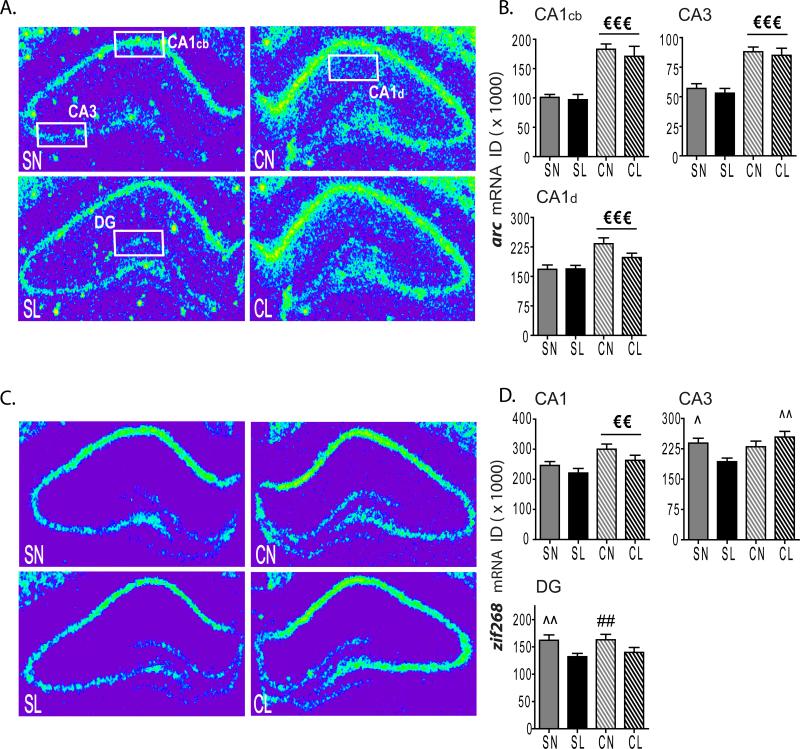
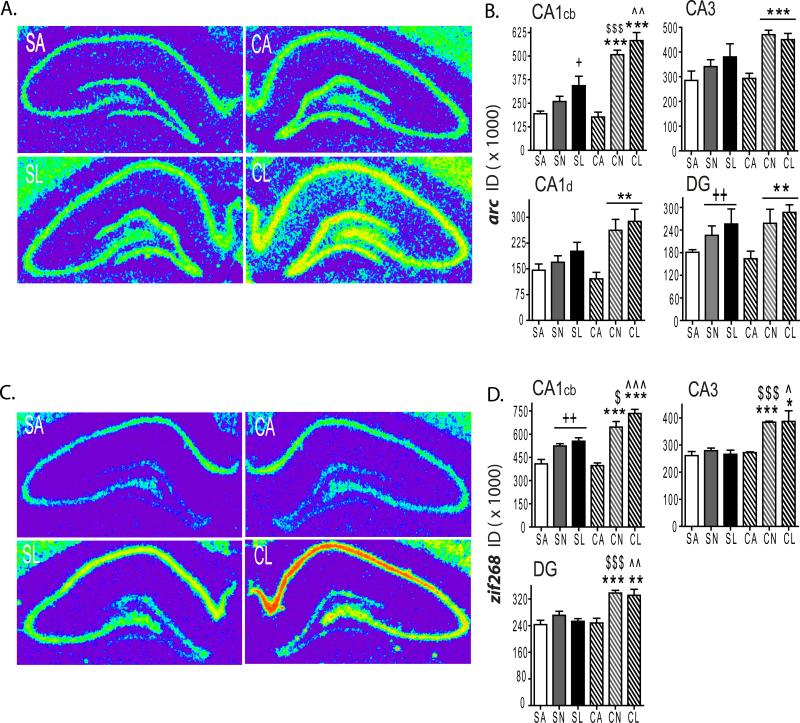
In this study, the expression patterns of zif268 and activity-regulated cytoskeleton-associated gene (arc) were investigated in the basolateral amygdala (BLA) and dorsal hippocampal (dHPC) subregions during context-induced drug-seeking following 22 h or 15 d abstinence from cocaine self-administration. Arc and zif/268 mRNA in BLA and dHPC increased after re-exposure to the cocaine-paired chamber at both timepoints; however, only the BLA increases (with one exception-see below) were differentially affected by the presence or absence of the cocaine-paired lever in the chamber. Following 22 h of abstinence, arc mRNA was significantly increased in the BLA of cocaine-treated rats re-exposed to the chamber only with levers extended, whereas following 15 d of abstinence, arc mRNA in the BLA was increased in cocaine-treated rats returned to the chamber with or without levers extended. In contrast, zif268 mRNA in the BLA was greater in cocaine-treated rats returned to the chamber with levers extended vs. levers retracted only after 15 d of abstinence. In the dentate gyrus (DG) following 22 h of abstinence, zif268 mRNA was greater in rats returned to the chamber where levers were absent regardless of drug treatment whereas arc mRNA was increased in CA1 (cell bodies and dendrites) and CA3 only in cocaine-treated groups. Following 15 d of abstinence, arc mRNA was significantly greater in CA1 and CA3 of both cocaine-treated groups returned to the chamber than in those placed into a familiar, non-salient alternate environment; however, only in CA1 cell bodies the cocaine context-induced increases significantly greater than in yoked-saline controls. In contrast, zif/268 mRNA in all dHPC regions was significantly greater in both cocaine-treated groups returned to the cocaine context than in the cocaine-treated group returned to an alternative environment or saline-treated groups. These data suggest that the temporal dynamics of arc and zif268 gene expression in the BLA and dHPC encode different key elements of drug context-induced cocaine-seeking.
Copyright 2010 IBRO. Published by Elsevier Ltd. All rights reserved.
Figures
References
-
- Berke JD, Hyman SE. Addiction, dopamine, and the molecular mechanisms of memory. Neuron. 2000;25:515–532. - PubMed
-
- Crombag HS, Shaham Y. Renewal of drug seeking by contextual cues after prolonged extinction in rats. Behav Neurosci. 2002;116:169–73. - PubMed
-
- Ehrman RN, Robbins SJ, Childress AR, O'Brien CP. Conditioned responses to cocaine-related stimuli in cocaine abuse patients. Psychopharmacology. 1992;107:523–552. - PubMed
-
- Everitt BJ, Robbins TW. Second-order schedules of drug reinforcement in rats and monkeys: measurement of reinforcing efficacy and drug-seeking behaviour. Psychopharmacology. 2000;153:17–30. - PubMed
Publication types
MeSH terms
Substances
Grants and funding
LinkOut - more resources
Full Text Sources
Miscellaneous
