


Reversible suppression of food reward behavior by chronic mu-opioid receptor antagonism in the nucleus accumbens
- PMID: 20654704
- PMCID: PMC2933316
- DOI: 10.1016/j.neuroscience.2010.07.017
Reversible suppression of food reward behavior by chronic mu-opioid receptor antagonism in the nucleus accumbens
Abstract
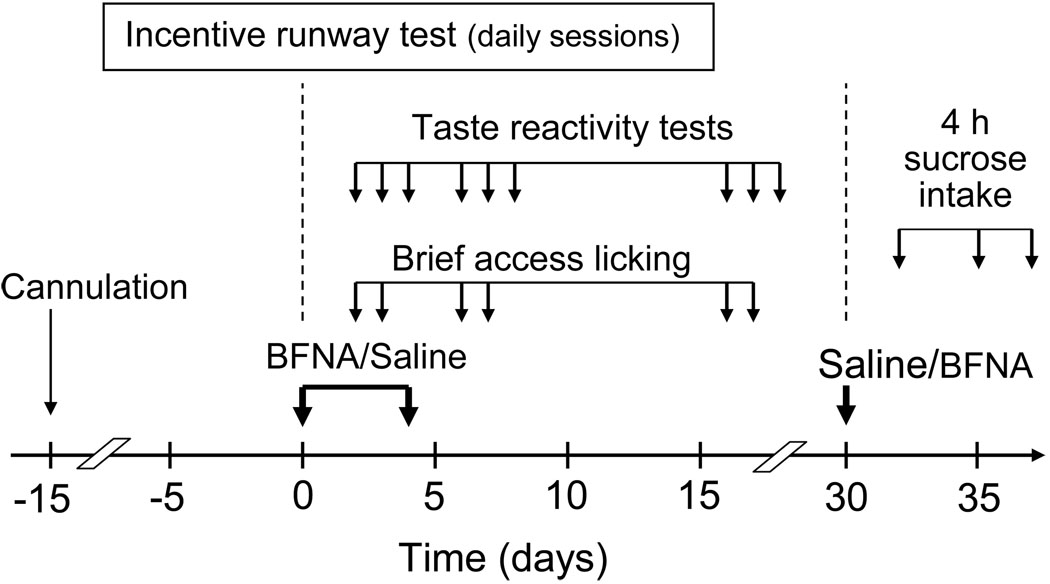
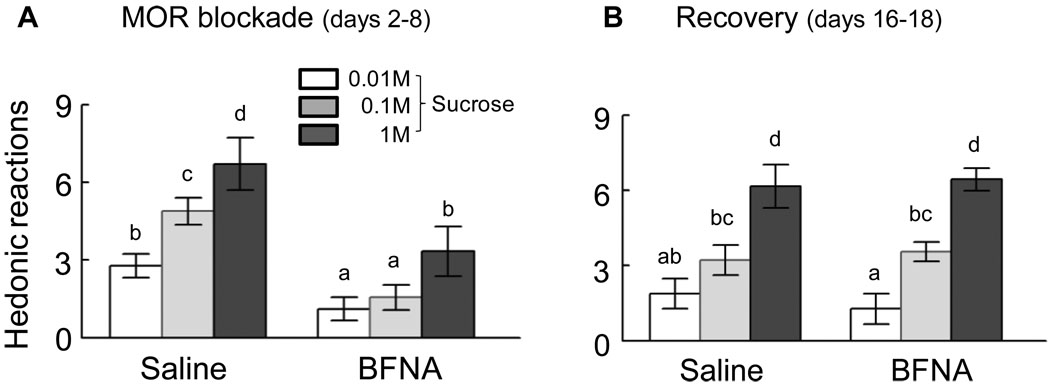
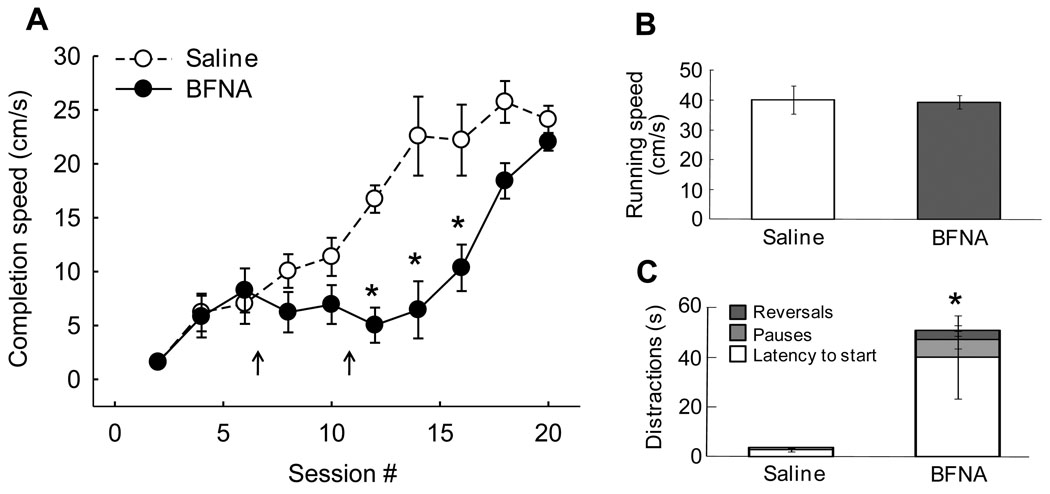
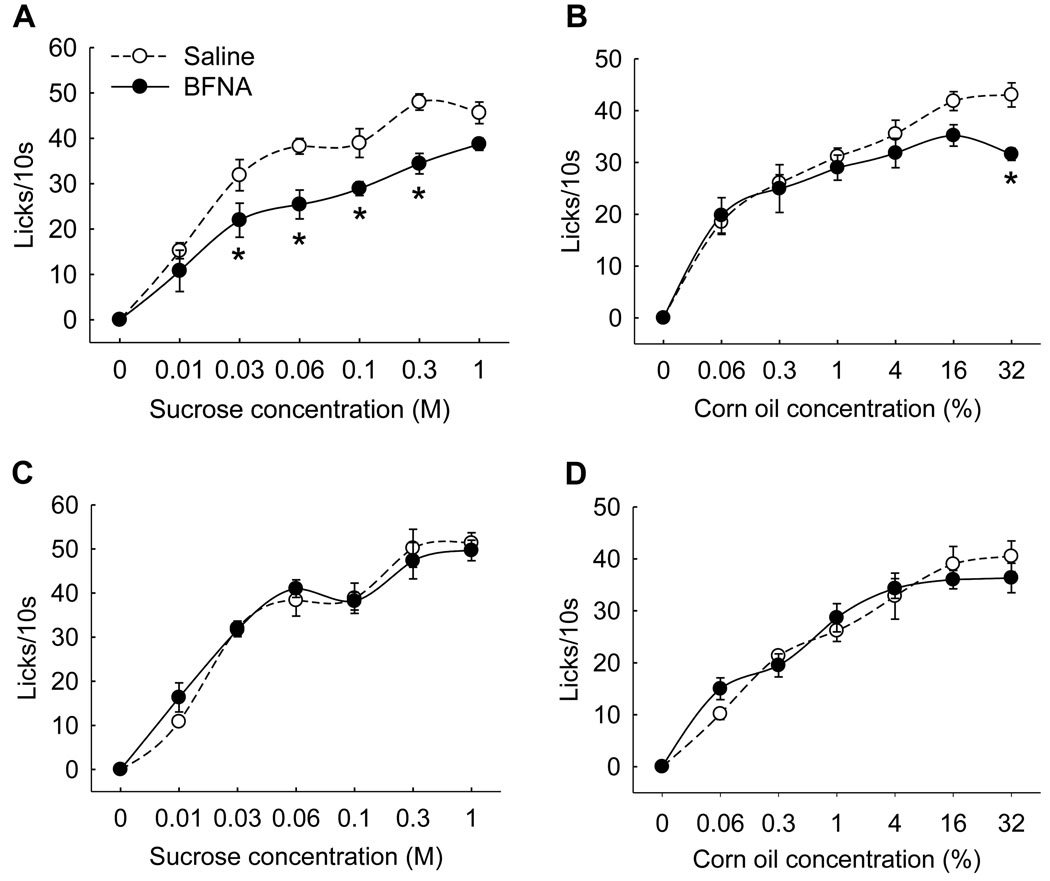
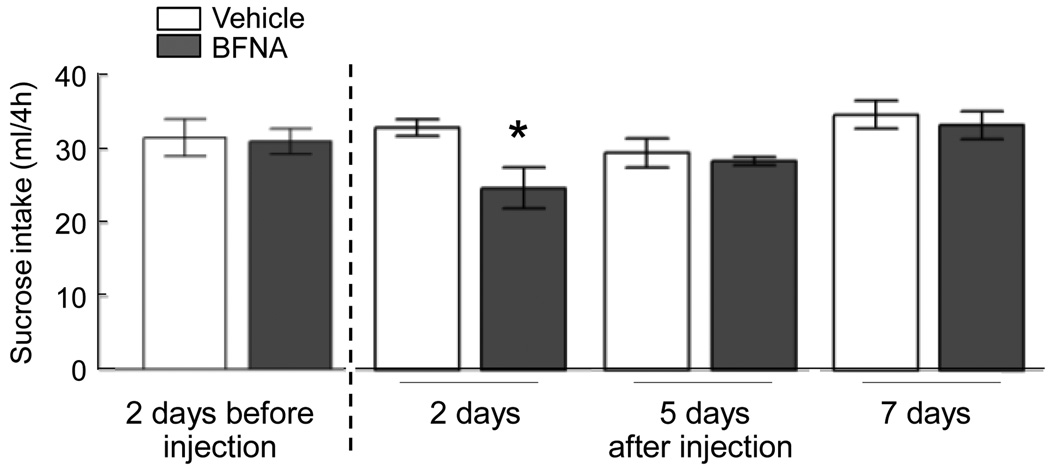
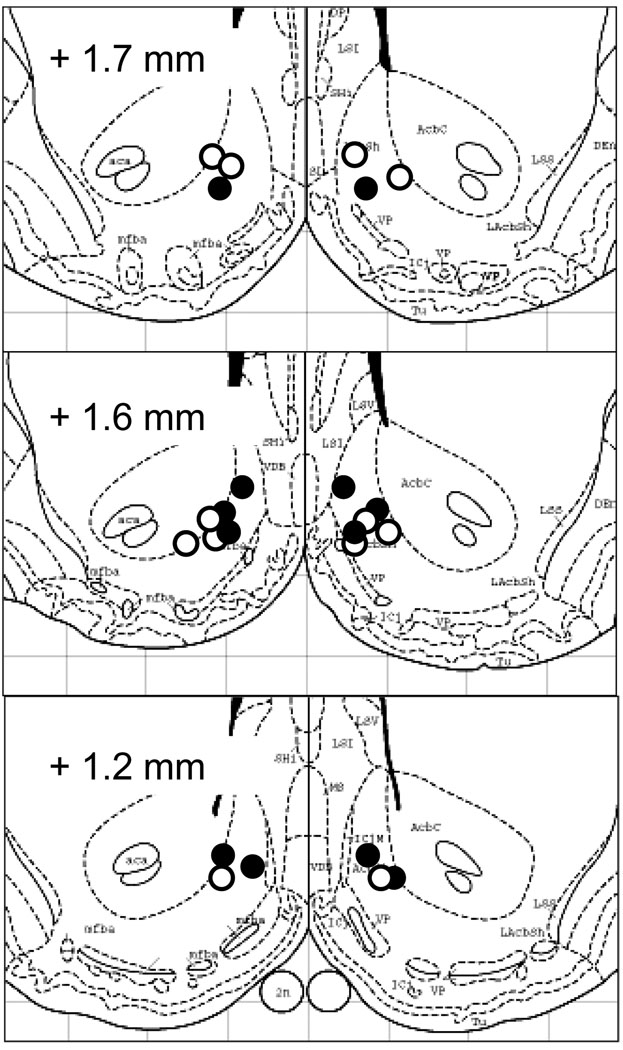
Overindulgence in easily available energy-dense palatable foods is thought to be an important factor in the current obesity epidemic but the underlying neural mechanisms are not well understood. Here we demonstrate that mu-opioid receptor signaling in the nucleus accumbens may be important. Protracted suppression of endogenous mu-opioid receptor signaling focused on the nucleus accumbens shell for several days by means of microinjected beta-funaltrexamine (BFNA) diminished both "liking" of sucrose, as indicated by fewer positive hedonic orofacial responses, and the incentive reinforcement value ("wanting") of a food reward, as indicated by lower completion speed and increased time being distracted in the incentive runway. BFNA-treatment also decreased responding to sucrose and corn oil in the brief access lick paradigm, a test measuring a combination of mainly taste-guided "liking" and low-effort "wanting", as well as 4 h intake of sucrose solution. These effects were not due to nonspecific permanent neuronal changes, as they were fully reversible. We conclude that endogenous mu-opioid signaling in the nucleus accumbens is necessary for the full display of palatable food-induced hyperphagia through mechanisms including hedonic, motivational, and reinforcement processes. Development of obesity could be the result of predisposing innate differences in these mechanisms or overstimulation of these mechanisms by external factors.
Keywords: hedonic value; obesity; reward; taste reactivity; ventral striatum; working for food.
Copyright © 2010 IBRO. Published by Elsevier Ltd. All rights reserved.
Figures
References
-
- Arjune D, Standifer KM, Pasternak GW, Bodnar RJ. Reduction by central beta-funaltrexamine of food intake in rats under freely-feeding, deprivation and glucoprivic conditions. Brain Res. 1990;535:101–109. - PubMed
-
- Berridge KC. Food reward: brain substrates of wanting and liking. Neurosci Biobehav Rev. 1996;20:1–25. - PubMed
-
- Berridge KC. Measuring hedonic impact in animals and infants: microstructure of affective taste reactivity patterns. Neurosci Biobehav Rev. 2000;24:173–198. - PubMed
-
- Berridge KC. The debate over dopamine's role in reward: the case for incentive salience. Psychopharmacology (Berl) 2007;191:391–431. - PubMed
Publication types
MeSH terms
Substances
Grants and funding
LinkOut - more resources
Full Text Sources
Research Materials
