


Behavioral weight control treatment with supervised exercise or peer-enhanced adventure for overweight adolescents
- PMID: 20655544
- PMCID: PMC2988988
- DOI: 10.1016/j.jpeds.2010.05.047
Behavioral weight control treatment with supervised exercise or peer-enhanced adventure for overweight adolescents
Abstract
Objective: To evaluate the efficacy of behavioral weight control intervention with a peer-enhanced activity intervention versus structured aerobic exercise in decreasing body mass index (BMI) and z-BMI in overweight adolescents.
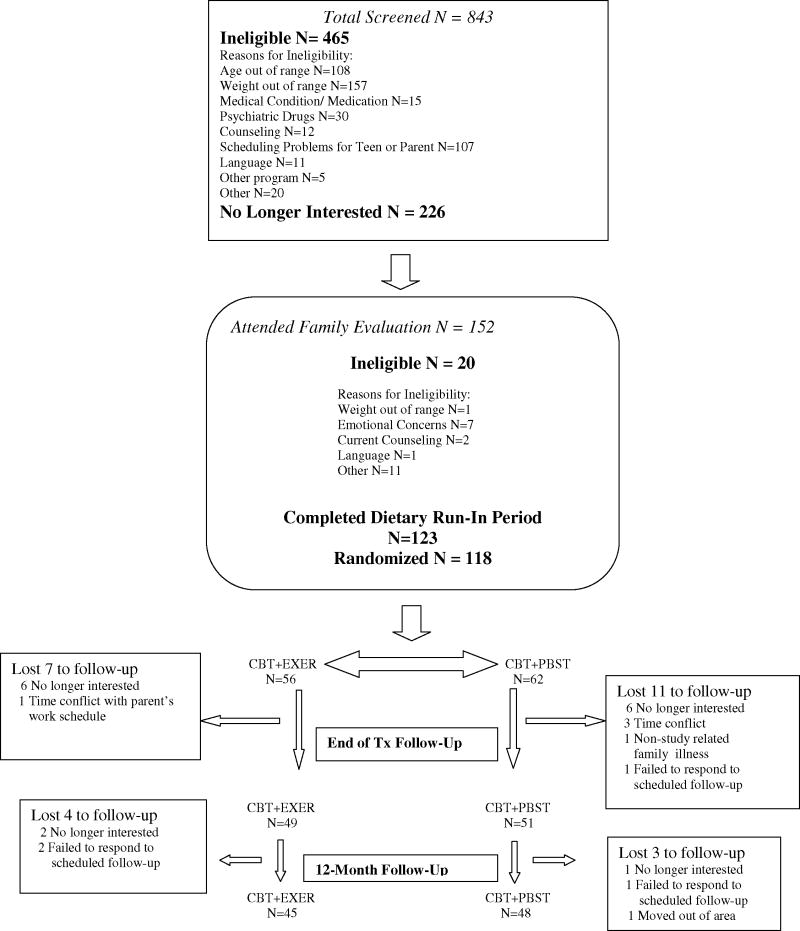
Study design: Participants were randomized to 1 of 2 group-based treatment conditions: (1) cognitive behavioral treatment with peer-enhanced adventure therapy or (2) cognitive behavioral weight control treatment with supervised aerobic exercise. Participants included 118 overweight adolescents, ages 13 to 16 years, and a primary caregiver. Changes in BMI, standardized BMI, percent over BMI, and waist circumference were examined.
Results: Analysis of variance on the basis of intent-to-treat indicated significant decreases in all weight change outcomes at the end of treatment, with significant decreases maintained at the 12-month follow-up. No differences in treatment conditions were observed. Secondary analyses indicated that adherence with attendance and completion of weekly diet records contributed significantly to reductions in BMI.
Conclusions: A cognitive behavioral weight control intervention combined with supervised aerobic exercise or peer-enhanced adventure therapy is equally effective in short-term reduction of BMI and z-BMI in overweight adolescents. Adherence, as measured with session attendance and self-monitoring, is a key dimension of weight change.
Trial registration: ClinicalTrials.gov NCT00285558.
Copyright © 2010 Mosby, Inc. All rights reserved.
References
-
- Ogden CL, Carroll MD, Flegal KM. High body mass index for age among US children and adolescents, 2003–2006. JAMA. 2008;299:2401–5. - PubMed
-
- Cruz ML, Shaibi GQ, Weigensberg MJ, Spruijt-Metz D, Ball GD, Goran MI. Pediatric obesity and insulin resistance: chronic disease risk and implications for treatment and prevention beyond body weight modification. Annual Reviews in Nutrition. 2005;25:435–68. - PubMed
-
- Daniels SR. The consequences of childhood overweight and obesity. Future of Child. 2006;16:47–67. - PubMed
-
- Hannon TS, Rao G, Arslanian SA. Childhood obesity and type 2 diabetes mellitus. Pediatrics. 2005;116:473–80. - PubMed
-
- Nathan BM, Moran A. Metabolic complications of obesity in childhood and adolescence: more than just diabetes. Current Opinions in Endocrinology, Diabetes & Obesity. 2008;15:21–9. - PubMed
Publication types
MeSH terms
Associated data
Grants and funding
LinkOut - more resources
Full Text Sources
Medical
