Review
. 2010 Aug;21(8 Suppl):S257-63.
doi: 10.1016/j.jvir.2010.05.003.

Navigation systems for ablation

Affiliations
Review

Navigation systems for ablation

Bradford J Wood et al. J Vasc Interv Radiol. 2010 Aug.

Abstract

Navigation systems, devices, and intraprocedural software are changing the way interventional oncology is practiced. Before the development of precision navigation tools integrated with imaging systems, thermal ablation of hard-to-image lesions was highly dependent on operator experience, spatial skills, and estimation of positron emission tomography-avid or arterial-phase targets. Numerous navigation systems for ablation bring the opportunity for standardization and accuracy that extends the operator's ability to use imaging feedback during procedures. In this report, existing systems and techniques are reviewed and specific clinical applications for ablation are discussed to better define how these novel technologies address specific clinical needs and fit into clinical practice.


Figures

Figure 1
Figure 1
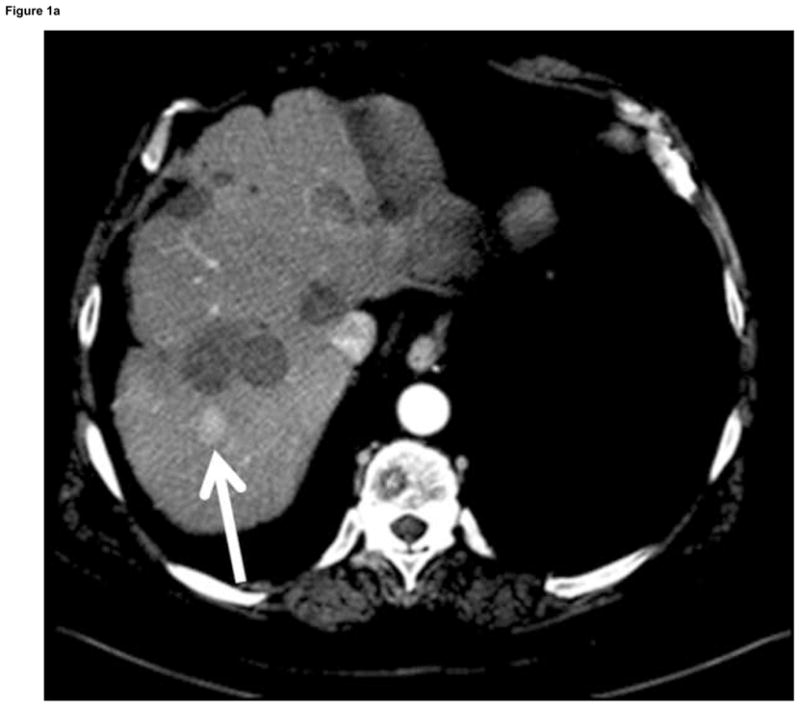
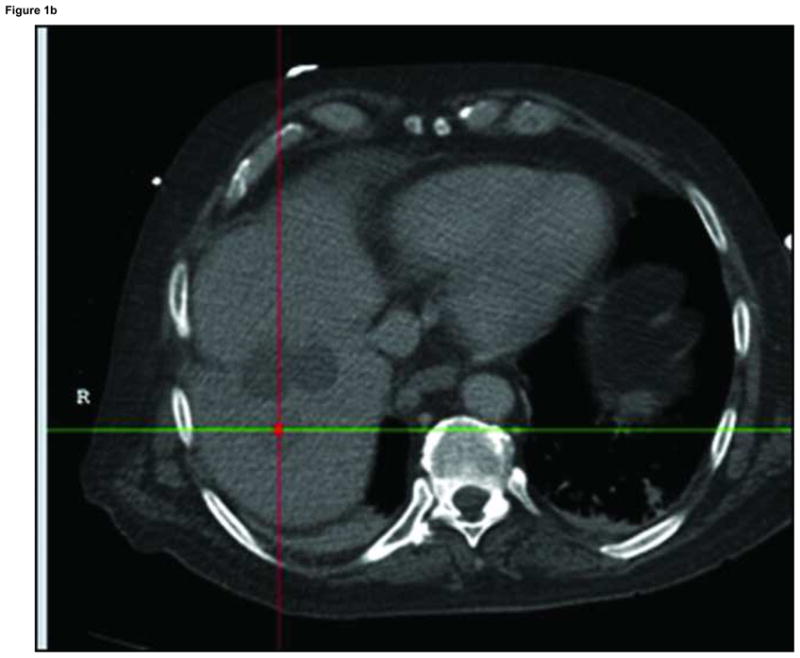
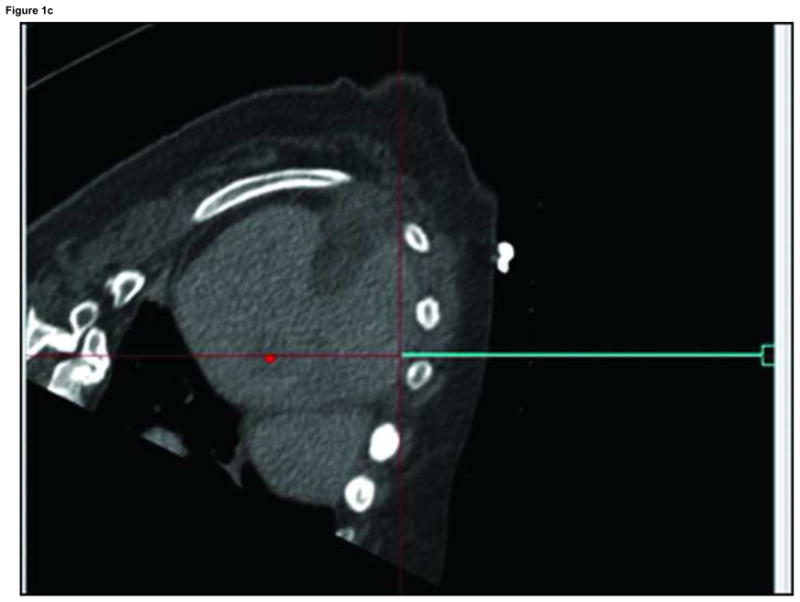
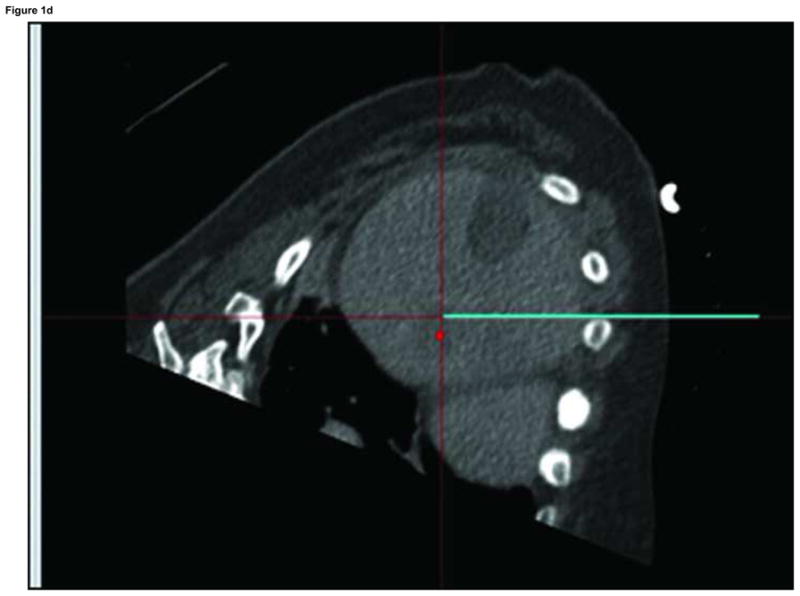
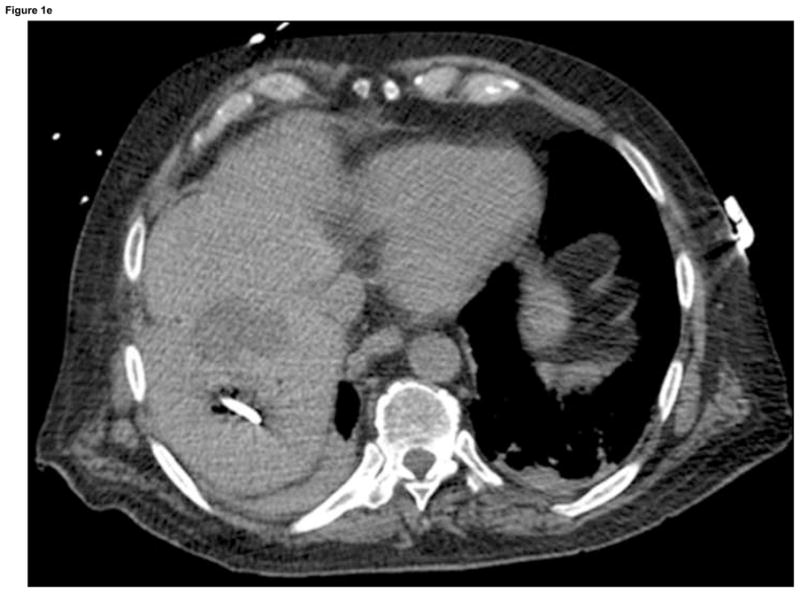
Arterial phase CT (a) showing prior non-enhancing RFA treatments and solitary enhancing hepatocellular carcinoma (arrow). Targeting interface for placement of virtual needle (blue line, b, c, d); Virtual needle in target corresponds with actual needle on CT scan (e)
Figure 1
Figure 1
Arterial phase CT (a) showing prior non-enhancing RFA treatments and solitary enhancing hepatocellular carcinoma (arrow). Targeting interface for placement of virtual needle (blue line, b, c, d); Virtual needle in target corresponds with actual needle on CT scan (e)
Figure 1
Figure 1
Arterial phase CT (a) showing prior non-enhancing RFA treatments and solitary enhancing hepatocellular carcinoma (arrow). Targeting interface for placement of virtual needle (blue line, b, c, d); Virtual needle in target corresponds with actual needle on CT scan (e)
Figure 1
Figure 1
Arterial phase CT (a) showing prior non-enhancing RFA treatments and solitary enhancing hepatocellular carcinoma (arrow). Targeting interface for placement of virtual needle (blue line, b, c, d); Virtual needle in target corresponds with actual needle on CT scan (e)
Figure 1
Figure 1
Arterial phase CT (a) showing prior non-enhancing RFA treatments and solitary enhancing hepatocellular carcinoma (arrow). Targeting interface for placement of virtual needle (blue line, b, c, d); Virtual needle in target corresponds with actual needle on CT scan (e)
Figure 2
Figure 2
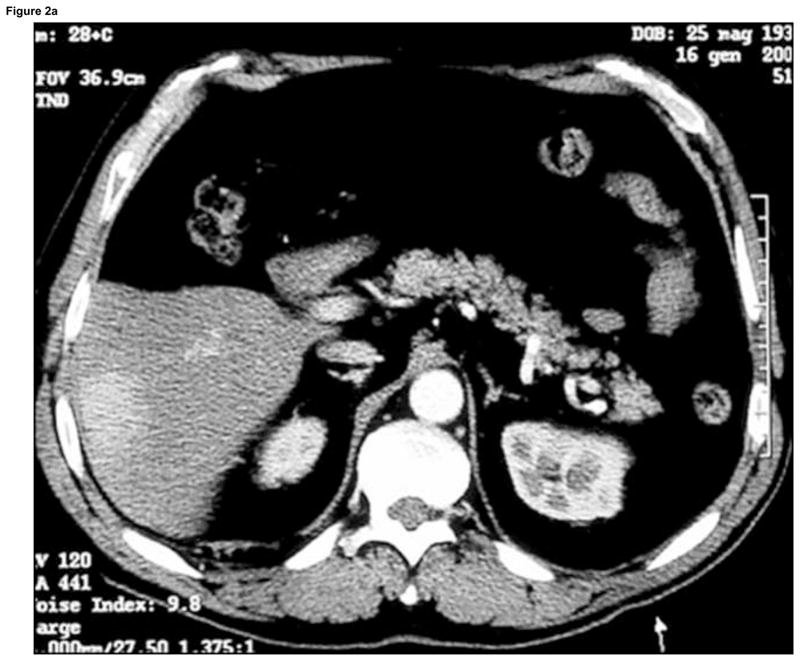
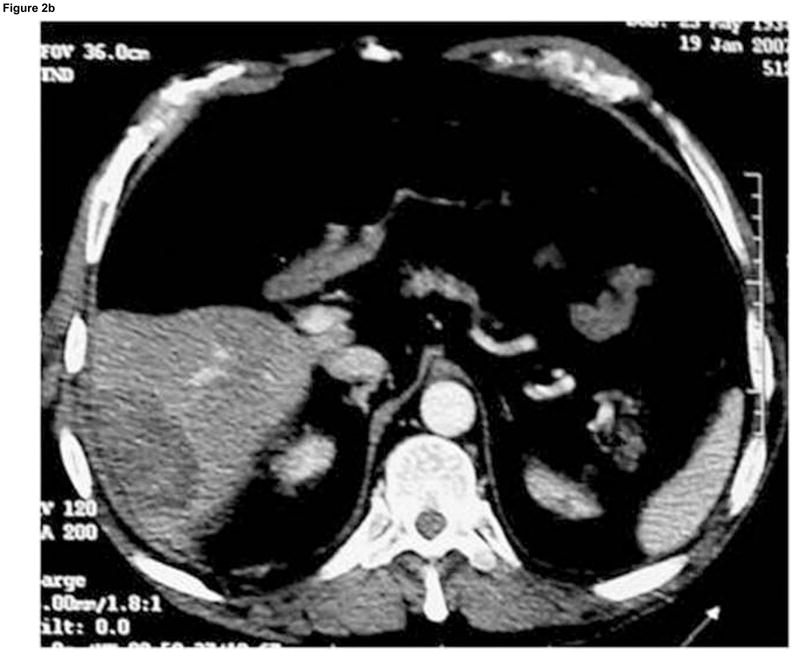
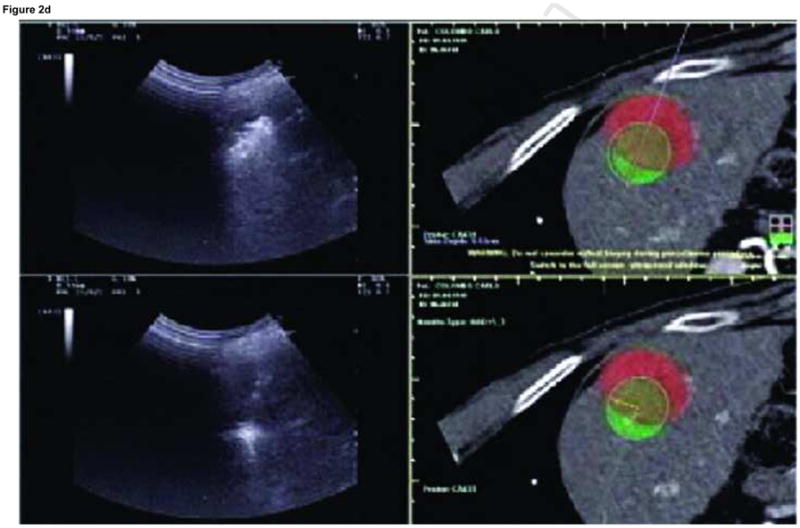
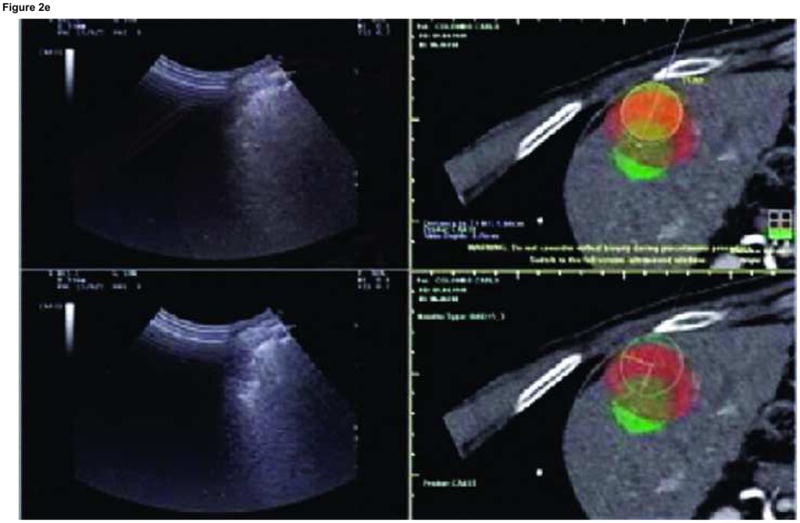
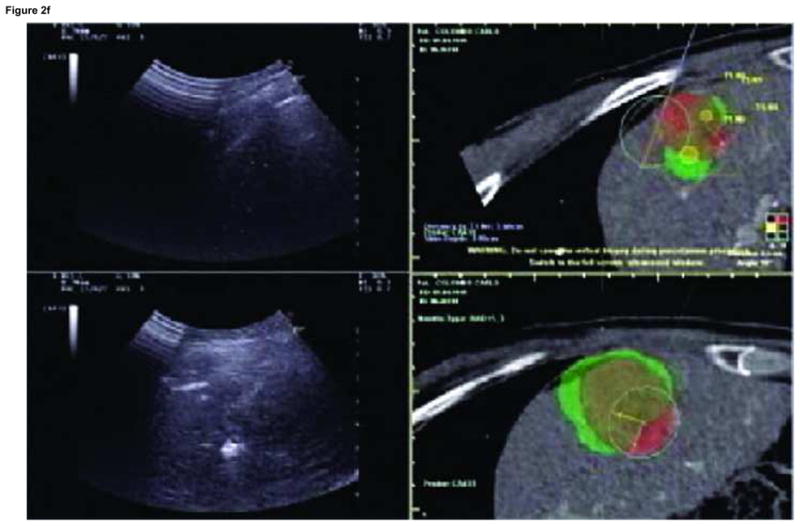
Enhanced CT scan before (a) and after (b) RFA with navigation shows complete treatment of enhancing tumor. Treatment planning sequence (c–f) with sequential overlapping of planned treatment volumes (green) superimposed on estimated tumor location (red) which was manually segmented at the beginning of the procedure. The treatment volume covers the tumor plus a margin of normal tissue (f).
Figure 2
Figure 2
Enhanced CT scan before (a) and after (b) RFA with navigation shows complete treatment of enhancing tumor. Treatment planning sequence (c–f) with sequential overlapping of planned treatment volumes (green) superimposed on estimated tumor location (red) which was manually segmented at the beginning of the procedure. The treatment volume covers the tumor plus a margin of normal tissue (f).
Figure 2
Figure 2
Enhanced CT scan before (a) and after (b) RFA with navigation shows complete treatment of enhancing tumor. Treatment planning sequence (c–f) with sequential overlapping of planned treatment volumes (green) superimposed on estimated tumor location (red) which was manually segmented at the beginning of the procedure. The treatment volume covers the tumor plus a margin of normal tissue (f).
Figure 2
Figure 2
Enhanced CT scan before (a) and after (b) RFA with navigation shows complete treatment of enhancing tumor. Treatment planning sequence (c–f) with sequential overlapping of planned treatment volumes (green) superimposed on estimated tumor location (red) which was manually segmented at the beginning of the procedure. The treatment volume covers the tumor plus a margin of normal tissue (f).
Figure 2
Figure 2
Enhanced CT scan before (a) and after (b) RFA with navigation shows complete treatment of enhancing tumor. Treatment planning sequence (c–f) with sequential overlapping of planned treatment volumes (green) superimposed on estimated tumor location (red) which was manually segmented at the beginning of the procedure. The treatment volume covers the tumor plus a margin of normal tissue (f).
Figure 2
Figure 2
Enhanced CT scan before (a) and after (b) RFA with navigation shows complete treatment of enhancing tumor. Treatment planning sequence (c–f) with sequential overlapping of planned treatment volumes (green) superimposed on estimated tumor location (red) which was manually segmented at the beginning of the procedure. The treatment volume covers the tumor plus a margin of normal tissue (f).
Figure 3
Figure 3
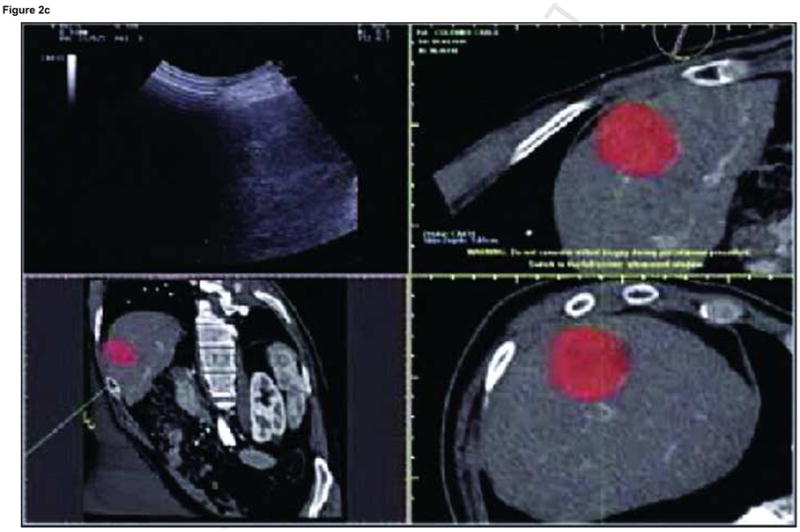
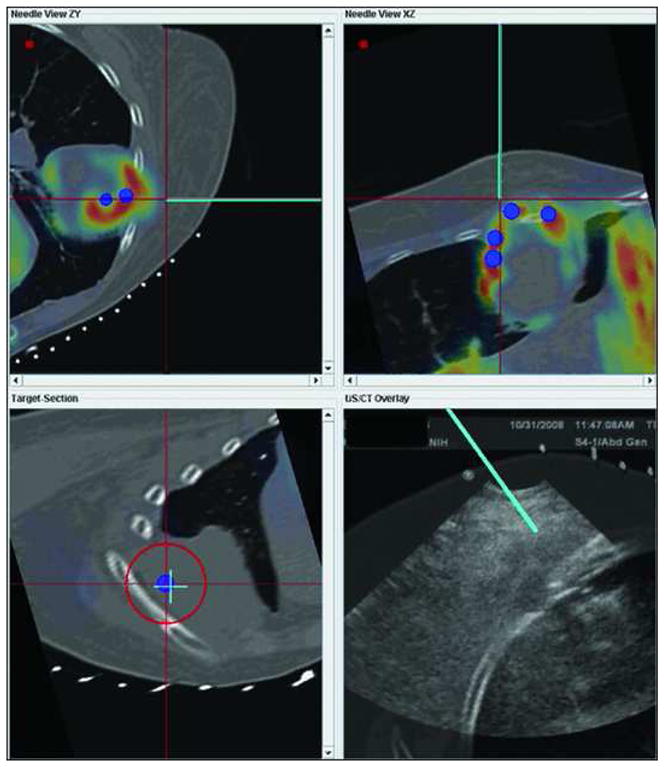
Patient with recurrent tumor and recent non-diagnostic biopsy. Graphical user interface (GUI) showing metabolic activity (blue dots) on PET scan targeted with navigation in order to sample viable part of tumor. PET data was registered to procedural multiplanar reconstructed CT and procedural ultrasound for real time feedback. Virtual needle represented by blue line. Multiplanar/multimodality navigation is displayed as well as down the needle shaft view (lower left).

References

    1. Banovac F, Cheng P, Campos-Nanez E, et al. Radiofrequency ablation of lung tumors in swine assisted by a navigation device with preprocedural volumetric planning. J Vasc Interv Radiol. 2010;21:122–129. - PMC - PubMed
    1. Wood BJ, Locklin JK, Viswanathan A, et al. Technologies for guidance of radiofrequency ablation in the multimodality interventional suite of the future. J Vasc Interv Radio. 2007;18:9–24. - PMC - PubMed
    1. Wood BJ, Zhang H, Durrani A, et al. Navigation with electromagnetic tracking for interventional radiology procedures: a feasibility study. J Vasc Interv Radiol. 2005;16:493–505. - PMC - PubMed
    1. Yaniv Z, Wilson E, Lindisch D, Cleary K. Electromagnetic tracking in the clinical environment. Med Phys. 2009;36:876–892. - PMC - PubMed
    1. Krucker J, Xu S, Glossop N, et al. Electromagnetic tracking for thermal ablation and biopsy guidance: clinical evaluation of spatial accuracy. J Vasc Interv Radiol. 2007;18:1141–1150. - PMC - PubMed

Publication types