


Scent of danger: floc formation by a freshwater bacterium is induced by supernatants from a predator-prey coculture
- PMID: 20656874
- PMCID: PMC2937497
- DOI: 10.1128/AEM.01455-10
Scent of danger: floc formation by a freshwater bacterium is induced by supernatants from a predator-prey coculture
Abstract
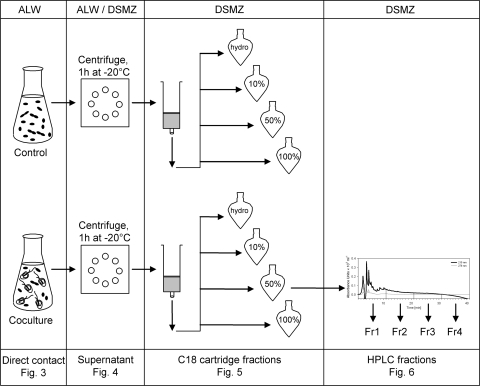
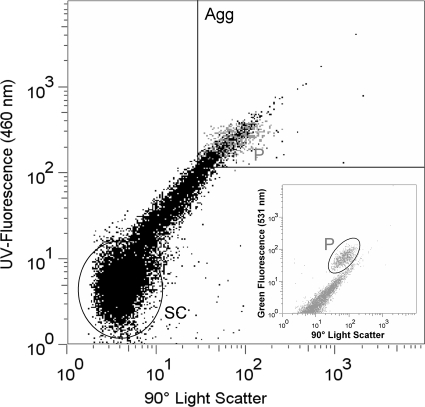
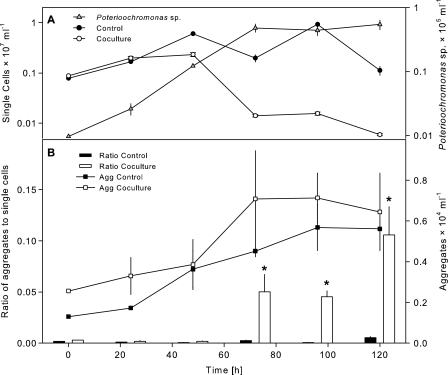
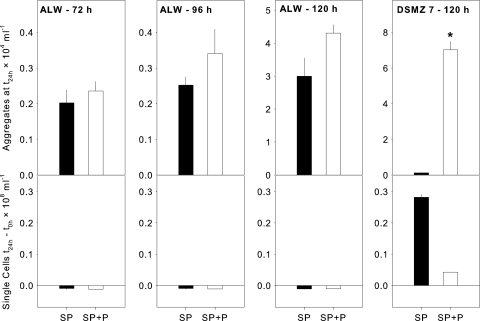
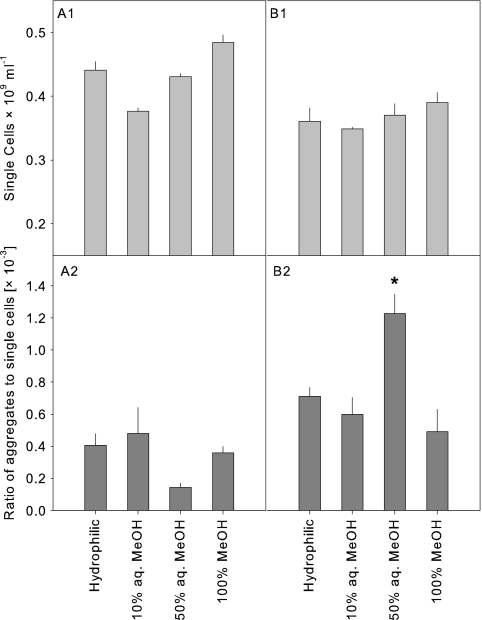
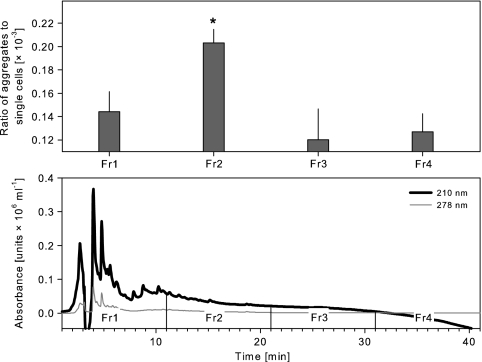
We investigated predator-prey interactions in a model system consisting of the bacterivorous flagellate Poterioochromonas sp. strain DS and the freshwater bacterium Sphingobium sp. strain Z007. This bacterial strain tends to form a subpopulation of grazing-resistant microscopic flocs, presumably by aggregation. Enhanced formation of such flocs could be demonstrated in static batch culture experiments in the presence of the predator. The ratio of aggregates to single cells reached >0.1 after 120 h of incubation in an oligotrophic growth medium. The inoculation of bacteria into supernatants from cocultures of bacteria and flagellates (grown in oligotrophic or in rich media) also resulted in a substantially higher level of floc formation than that in supernatants from bacterial monocultures only. After separation of supernatants on a C(18) cartridge, the aggregate-inducing activity could be assigned to the 50% aqueous methanolic fraction, and further separation of this bioactive fraction could be achieved by high-pressure liquid chromatography. These results strongly suggest the involvement of one or several chemical factors in the induction of floc formation by Sphingobium sp. strain Z007 that are possibly released into the surrounding medium by flagellate grazing.
Figures
References
-
- Billen, G., P. Servais, and S. Becquevort. 1990. Dynamics of bacterioplankton in oligotrophic and eutrophic aquatic environments: bottom-up or top-down control? Hydrobiologia 207:37-42.
-
- Blom, J. F., K. Horňák, K. Šimek, and J. Pernthaler. 19 April 2010. Aggregate formation in a freshwater bacterial strain induced by growth state and conspecific chemical cues. Environ. Microbiol. [Epub ahead of print.] - PubMed
-
- Blom, J. F., and J. Pernthaler. 2010. Antibiotic effects of three strains of chrysophytes (Ochromonas, Poterioochromonas) on freshwater bacterial isolates. FEMS Microbiol. Ecol. 71:281-290. - PubMed
-
- Boenigk, J., K. Pfandl, and P. J. Hansen. 2006. Exploring strategies for nanoflagellates living in a ‘wet desert.’ Aquat. Microb. Ecol. 44:71-83.
-
- Caron, D. A., J. C. Goldman, and M. R. Dennett. 1988. Experimental demonstration of the roles of bacteria and bacterivorous protozoa in plankton nutrient cycles. Hydrobiologia 159:27-40.
Publication types
MeSH terms
LinkOut - more resources
Full Text Sources
