


Prevalence and predictors of chronic health conditions after hematopoietic cell transplantation: a report from the Bone Marrow Transplant Survivor Study
- PMID: 20656930
- PMCID: PMC2995350
- DOI: 10.1182/blood-2009-06-229369
Prevalence and predictors of chronic health conditions after hematopoietic cell transplantation: a report from the Bone Marrow Transplant Survivor Study
Abstract
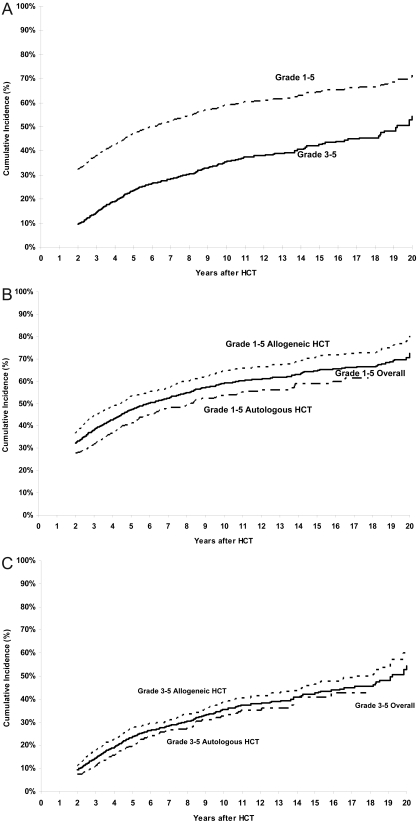
Long-term survival is now an expected outcome after hematopoietic cell transplantation (HCT). However, the burden of morbidity long-term after HCT remains unknown. We examined the magnitude of risk of chronic health conditions reported by 1022 HCT survivors and their siblings (n = 309). A severity score (grades 1 [mild] through 4 [life-threatening]) was assigned to each health condition using the Common Terminology Criteria for Adverse Events, Version 3. Sixty-six percent of the HCT survivors reported at least one chronic condition; 18% reported severe/life-threatening conditions; comparable values in siblings were 39% and 8%, respectively (P < .001). The cumulative incidence of a chronic health condition among HCT survivors was 59% (95% confidence interval [CI], 56%-62%) at 10 years after HCT; for severe/life-threatening conditions or death from chronic health conditions, the 10-year cumulative incidence approached 35% (95% CI, 32%-39%). HCT survivors were twice as likely as siblings to develop a chronic condition (95% CI, 1.6-2.1), and 3.5 times to develop severe/life-threatening conditions (95% CI, 2.3-5.4). HCT survivors with chronic graft-versus-host disease were 4.7 times as likely to develop severe/life-threatening conditions (95% CI, 3.0-7.2). The burden of long-term morbidity borne by HCT survivors is substantial, and long-term follow-up of patients who received transplantation is recommended.
Figures
Comment in
-
Transplant survivorship: a call to arms.Blood. 2010 Oct 28;116(17):3126-7. doi: 10.1182/blood-2010-08-299420. Blood. 2010. PMID: 21030570
References
-
- Socie G, Stone JV, Wingard JR, et al. Long-term survival and late deaths after allogeneic bone marrow transplantation: Late Effects Working Committee of the International Bone Marrow Transplant Registry. N Engl J Med. 1999;341(1):14–21. - PubMed
Publication types
MeSH terms
Grants and funding
LinkOut - more resources
Full Text Sources
Medical
