


Female X-chromosome mosaicism for gp91phox expression diversifies leukocyte responses during endotoxemia
- PMID: 20657276
- PMCID: PMC3045076
- DOI: 10.1097/CCM.0b013e3181eb9ed6
Female X-chromosome mosaicism for gp91phox expression diversifies leukocyte responses during endotoxemia
Abstract
Objective: To test the hypothesis, using an animal model, whether female X-chromosome mosaicism for inflammatory gene expression could contribute to the gender dimorphic response during the host response. X-chromosome-linked genetic polymorphisms present a unique biological condition because females display heterozygous cellular mosaicism, due to the fact that either the maternal or the paternal X chromosomes are inactivated in each individual cell in females. This is in contrast with the conditions in males who carry exclusively the maternal X chromosome.
Design: Prospective, randomized, laboratory investigation.
Settings: University research laboratory.
Subjects: Female mice deficient, heterozygous (mosaic) or WT for the X-linked gp91phox.
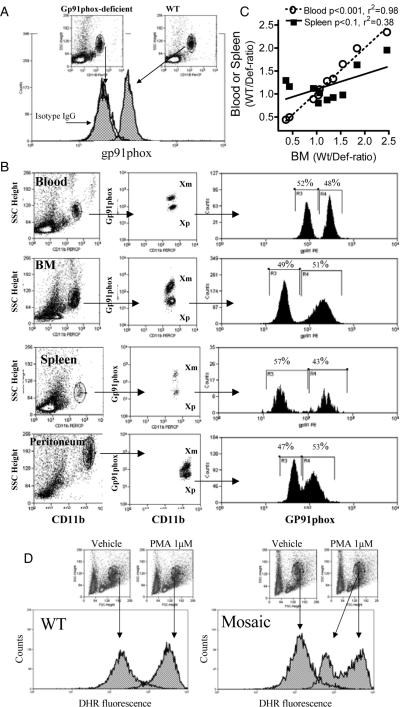
Interventions: We compared selected inflammatory markers among heterozygous (mosaics), WT and homozygous deficient animals in response to in vivo lipopolysaccharide (Escherichia coli, 20 mg/kg body weight). To test individual mosaic subpopulations of polymorphonuclear neutrophil responses, we also developed a flow cytometry assay that identifies the active parental X chromosomes in individual cells, using gp91phox expression as a marker.
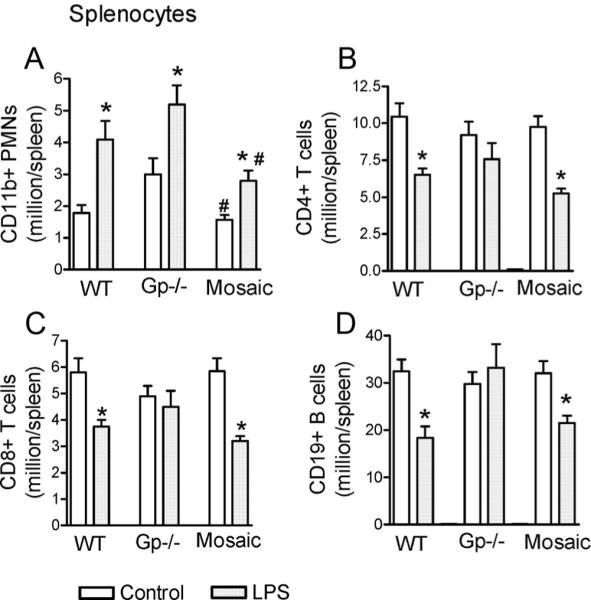
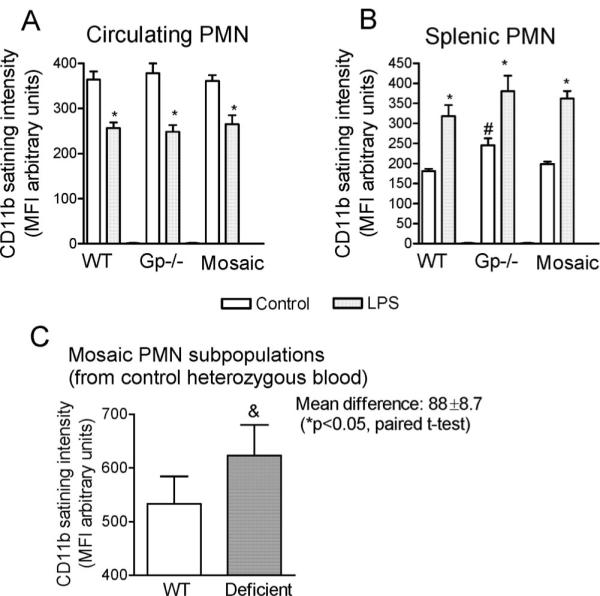
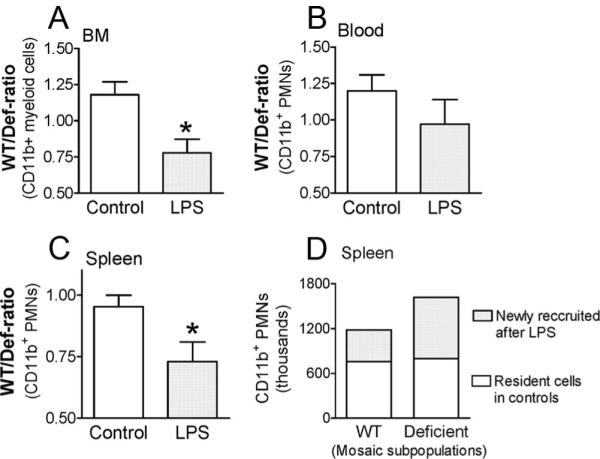
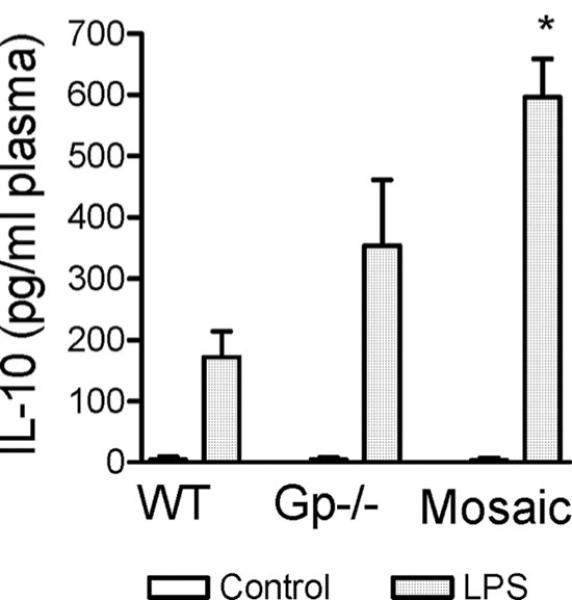
Measurements and main results: Heterozygous mosaic mice presented white blood cell trafficking patterns similar to that observed in WT mice, despite the fact that the deficient subpopulation in mosaic animals displayed increased cell activation as reflected in elevated neutrophil CD11b expression and splenic infiltration. Mosaic animals also displayed splenic neutrophil infiltration, which was skewed toward the deficient subpopulation. Observations on splenic T-cell depletion and post lipopolysaccharide interleukin-10 responses indicated that the inflammatory response in mosaic animals does not simply display an average of the deficient and WT responses, but the mosaic subjects display a uniquely characteristic response.
Conclusions: The study supports the notion that female X chromosome mosaicism for polymorphic gene expression represents a unique condition, which may contribute to the gender dimorphic character of the inflammatory response. Mosaicism for X-linked polymorphisms may have clinical significance and needs consideration in genetic association or gender-related clinical studies.
Figures

References
-
- Liu PY, Death AK, Handelsman DJ. Androgens and cardiovascular disease. Endocr Rev. 2003;24:313–340. - PubMed
-
- Chen CC, Parker CR., Jr Adrenal androgens and the immune system. Semin Reprod Med. 2004;22:369–377. - PubMed
-
- Angele MK, Schwacha MG, Ayala A, et al. Effect of gender and sex hormones on immune responses following shock. Shock. 2000;14:81–90. - PubMed
-
- Kovacs EJ, Messingham KA, Gregory MS. Estrogen regulation of immune responses after injury. Mol Cell Endocrinol. 2002;193:129–135. - PubMed
-
- Choudhry MA, Bland KI, Chaudry IH. Gender and susceptibility to sepsis following trauma. Endocr Metab Immune Disord Drug Targets. 2006;6:127–135. - PubMed
Publication types
MeSH terms
Substances
Grants and funding
LinkOut - more resources
Full Text Sources
Research Materials
