


A screen for kinetochore-microtubule interaction inhibitors identifies novel antitubulin compounds
- PMID: 20657644
- PMCID: PMC2904697
- DOI: 10.1371/journal.pone.0011603
A screen for kinetochore-microtubule interaction inhibitors identifies novel antitubulin compounds
Abstract
Background: Protein assemblies named kinetochores bind sister chromatids to the mitotic spindle and orchestrate sister chromatid segregation. Interference with kinetochore activity triggers a spindle checkpoint mediated arrest in mitosis, which frequently ends in cell death. We set out to identify small compounds that inhibit kinetochore-microtubule binding for use in kinetochore-spindle interaction studies and to develop them into novel anticancer drugs.
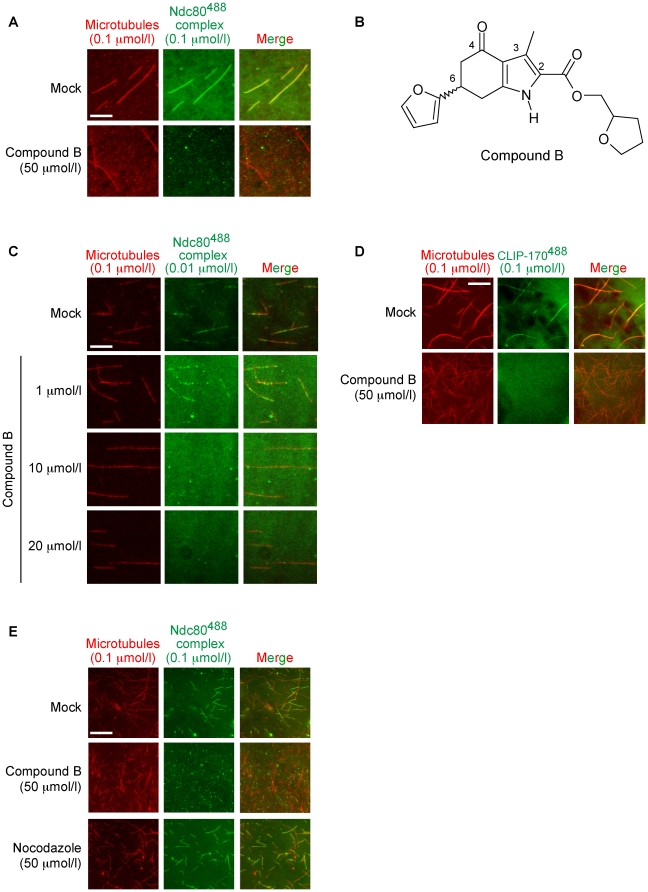
Methodology/principal findings: A fluorescence microscopy-based in vitro assay was developed to screen compound libraries for molecules that prevented the binding of a recombinant human Ndc80 kinetochore complex to taxol-stabilized microtubules. An active compound was identified that acted at the microtubule level. More specifically, by localizing to the colchicine-binding site in alphabeta-tubulin the hit compound prevented the Ndc80 complex from binding to the microtubule surface. Next, structure-activity analyses distinguished active regions in the compound and led to the identification of highly potent analogs that killed cancer cells with an efficacy equaling that of established spindle drugs.
Conclusions/significance: The compound identified in our screen and its subsequently identified analogs represent new antitubulin chemotypes that can be synthetically developed into a novel class of antimitotic spindle drugs. In addition, they are stereochemically unique as their R- and S-isomers mimic binding of colchicine and podophyllotoxin, respectively, two antitubulin drugs that interact differently with the tubulin interface. Model-driven manipulation of our compounds promises to advance insight into how antitubulin drugs act upon tubulin. These advances in turn may lead to tailor-made colchicine site agents which would be valuable new assets to fight a variety of tumors, including those that have become resistant to the (antispindle) drugs used today.
Conflict of interest statement
Figures



References
-
- Evan GI, Vousden KH. Proliferation, cell cycle and apoptosis in cancer. Nature. 2001;411:342–348. - PubMed
-
- Morgan DO. London: New Science Press Ltd.; 2007. The cell cycle: principles of control (Primers in biology).297
-
- Jordan MA, Wilson L. Microtubules as a target for anticancer drugs. Nature Rev Cancer. 2004;4:253–265. - PubMed
-
- Musacchio A, Salmon ED. The spindle-assembly checkpoint in space and time. Nat Rev Mol Cell Biol. 2007;8:379–393. - PubMed
-
- Gascoigne KE, Taylor SS. Cancer cells display profound intra- and interline variation following prolonged exposure to antimitotic drugs. Cancer Cell. 2009;14:111–122. - PubMed
Publication types
MeSH terms
Substances
Grants and funding
LinkOut - more resources
Full Text Sources
Other Literature Sources
Research Materials
