


Tissue-derived proinflammatory effect of adenosine A2B receptor in lung ischemia-reperfusion injury
- PMID: 20659747
- PMCID: PMC2943004
- DOI: 10.1016/j.jtcvs.2010.06.051
Tissue-derived proinflammatory effect of adenosine A2B receptor in lung ischemia-reperfusion injury
Abstract
Objective: Ischemia-reperfusion injury after lung transplantation remains a major source of morbidity and mortality. Adenosine receptors have been implicated in both pro- and anti-inflammatory roles in ischemia-reperfusion injury. This study tests the hypothesis that the adenosine A(2B) receptor exacerbates the proinflammatory response to lung ischemia-reperfusion injury.
Methods: An in vivo left lung hilar clamp model of ischemia-reperfusion was used in wild-type C57BL6 and adenosine A(2B) receptor knockout mice, and in chimeras created by bone marrow transplantation between wild-type and adenosine A(2B) receptor knockout mice. Mice underwent sham surgery or lung ischemia-reperfusion (1 hour ischemia and 2 hours reperfusion). At the end of reperfusion, lung function was assessed using an isolated buffer-perfused lung system. Lung inflammation was assessed by measuring proinflammatory cytokine levels in bronchoalveolar lavage fluid, and neutrophil infiltration was assessed via myeloperoxidase levels in lung tissue.
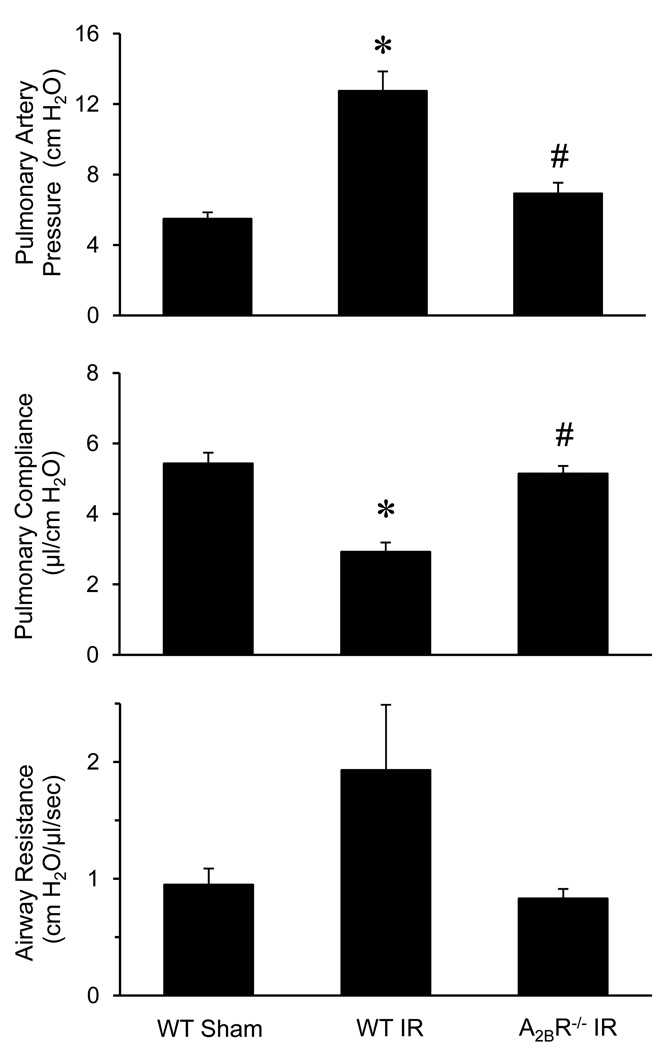
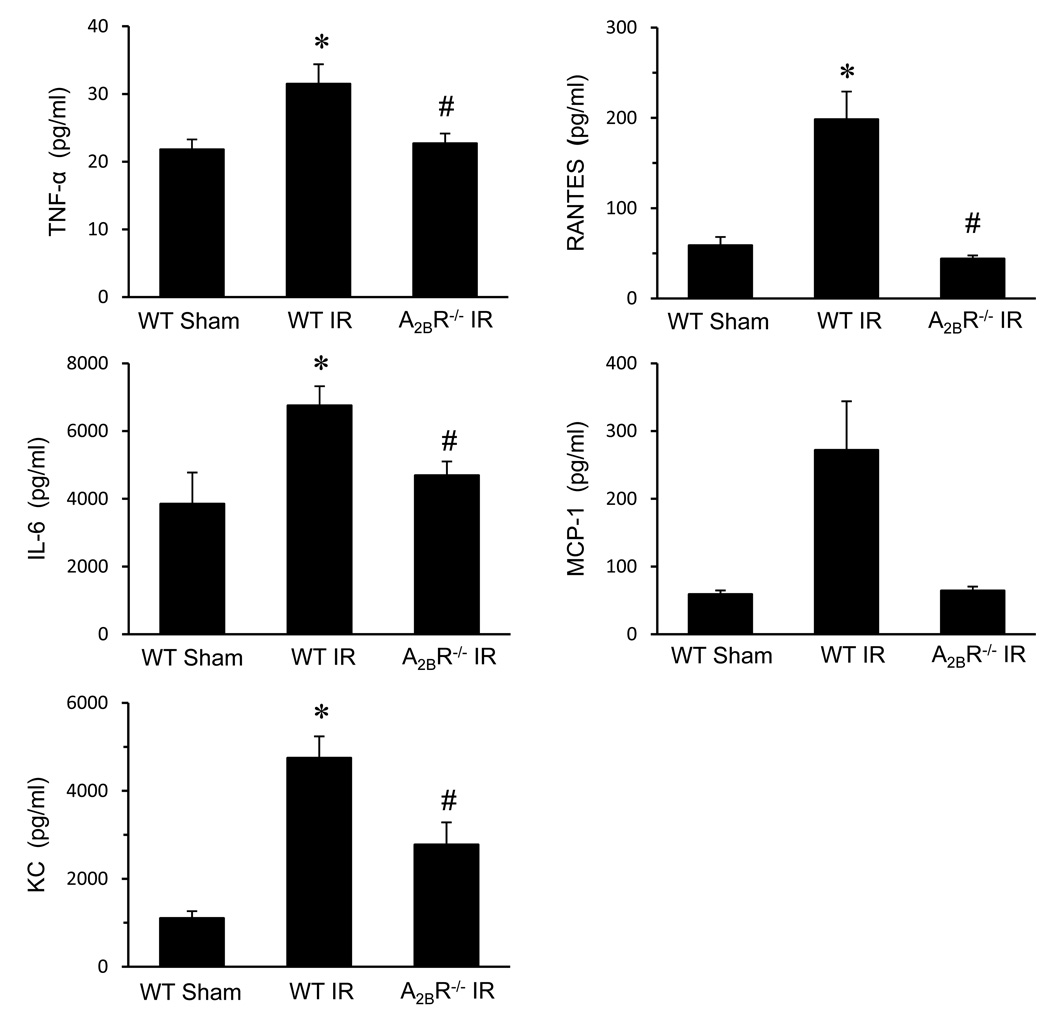
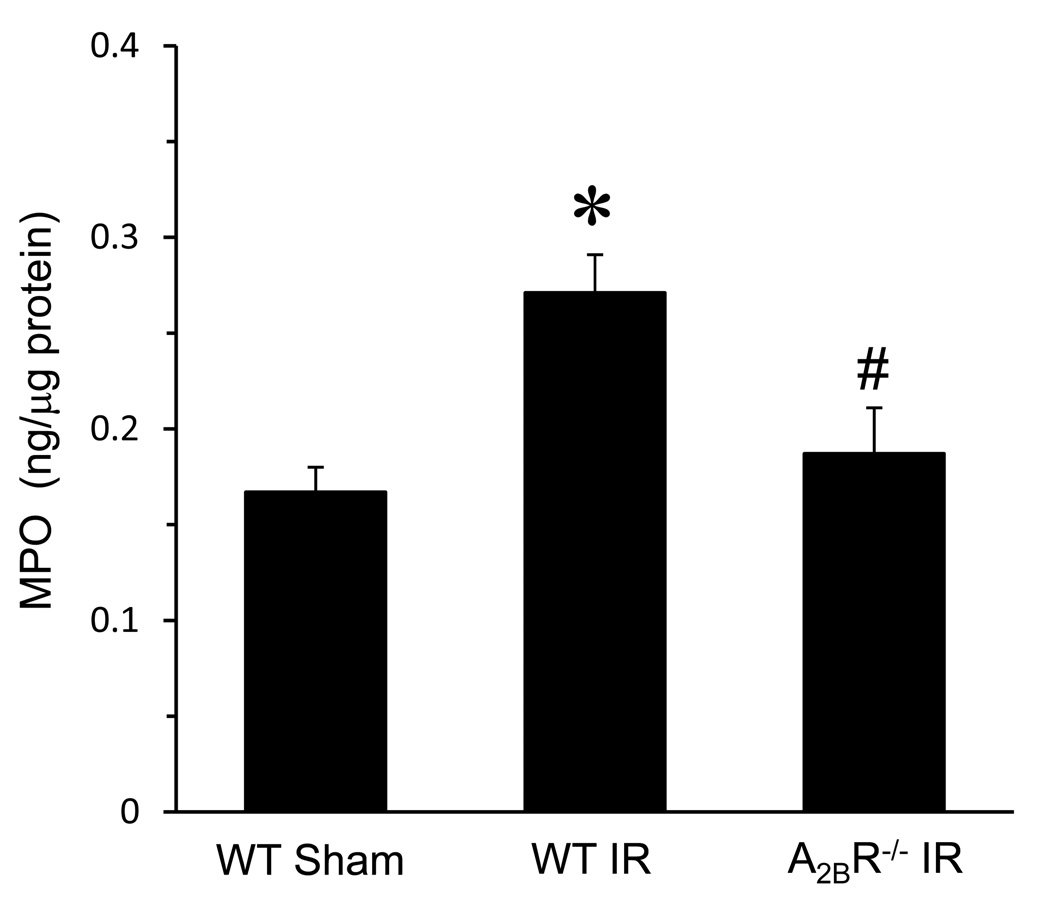
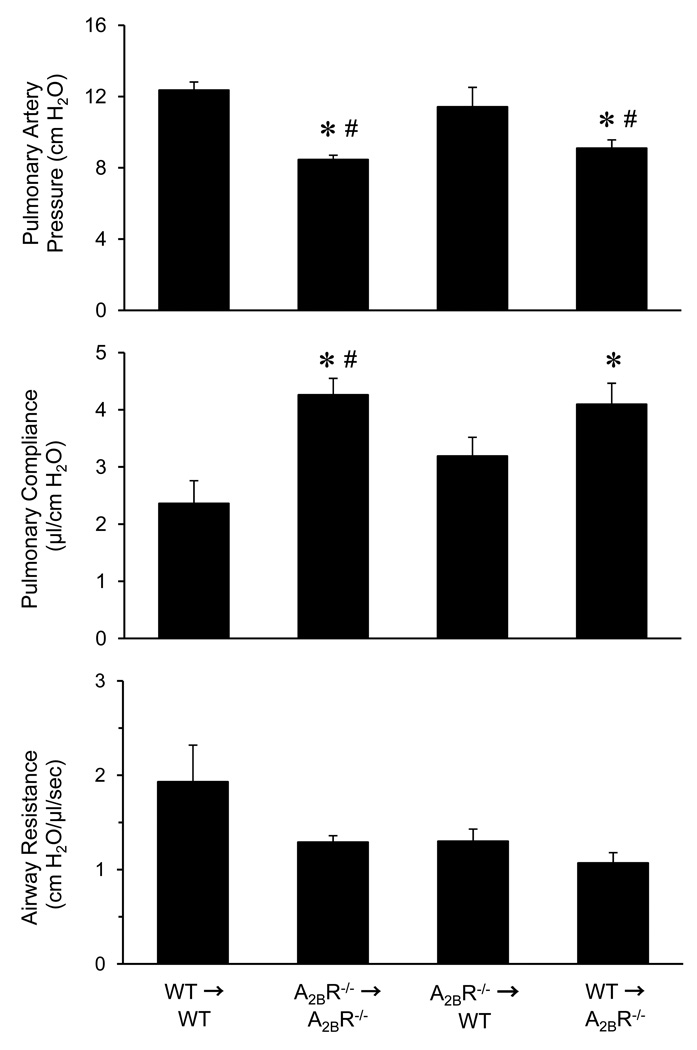
Results: Compared with wild-type mice, lungs of adenosine A(2B) receptor knockout mice were significantly protected after ischemia-reperfusion, as evidenced by significantly reduced pulmonary artery pressure, increased lung compliance, decreased myeloperoxidase, and reduced proinflammatory cytokine levels (tumor necrosis factor-α; interleukin-6; keratinocyte chemoattractant; regulated on activation, normal T-cell expressed and secreted; and monocyte chemotactic protein-1). Adenosine A(2B) receptor knockout → adenosine A(2B) receptor knockout (donor → recipient) and wild-type → adenosine A(2B) receptor knockout, but not adenosine A(2B) receptor knockout → wild-type, chimeras showed significantly improved lung function after ischemia-reperfusion.
Conclusions: These results suggest that the adenosine A(2B) receptor plays an important role in mediating lung inflammation after ischemia-reperfusion by stimulating cytokine production and neutrophil chemotaxis. The proinflammatory effects of adenosine A(2B) receptor seem to be derived by adenosine A(2B) receptor activation primarily on resident pulmonary cells and not bone marrow-derived cells. Adenosine A(2B) receptor may provide a therapeutic target for prevention of ischemia-reperfusion-related graft dysfunction in lung transplant recipients.
Copyright © 2010 The American Association for Thoracic Surgery. Published by Mosby, Inc. All rights reserved.
Figures
References
-
- Ailawadi G, Lau CL, Smith PW, Swenson BR, Hennessy SA, Kuhn CJ, et al. Does reperfusion injury still cause significant mortality after lung transplantation? J Thorac Cardiovasc Surg. 2009;137:688–694. - PubMed
-
- Christie JD, Edwards LB, Aurora P, Dobbels F, Kirk R, Rahmel AO, et al. The Registry of the International Society for Heart and Lung Transplantation: Twenty-sixth Official Adult Lung and Heart-Lung Transplantation Report-2009. J Heart Lung Transplant. 2009;28:1031–1049. - PubMed
-
- Beukers MW, den Dulk H, van Tilburg EW, Brouwer J, Ijzerman AP. Why are A(2B) receptors low-affinity adenosine receptors? Mutation of Asn273 to Tyr increases affinity of human A(2B) receptor for 2-(1-Hexynyl)adenosine. Mol Pharmacol. 2000;58:1349–1356. - PubMed
Publication types
MeSH terms
Substances
Grants and funding
LinkOut - more resources
Full Text Sources
Medical
Research Materials
