


Comparison of a minimally invasive posterior approach and the standard posterior approach for total hip arthroplasty A prospective and comparative study
- PMID: 20663200
- PMCID: PMC2918552
- DOI: 10.1186/1749-799X-5-46
Comparison of a minimally invasive posterior approach and the standard posterior approach for total hip arthroplasty A prospective and comparative study
Abstract
Background: It is not clear whether total hip arthroplasty performed via a minimally invasive approach leads to less muscle trauma compared to the standard approach.
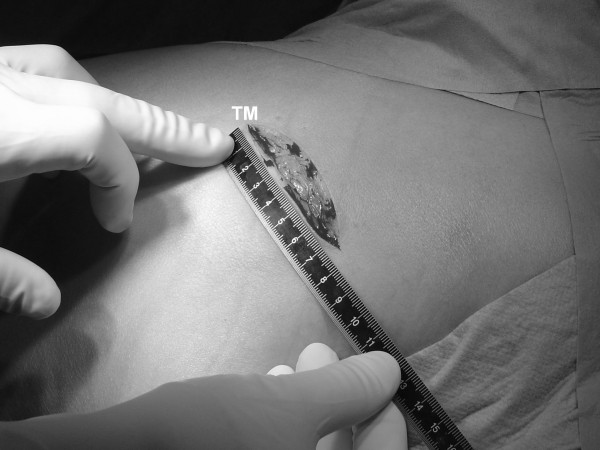
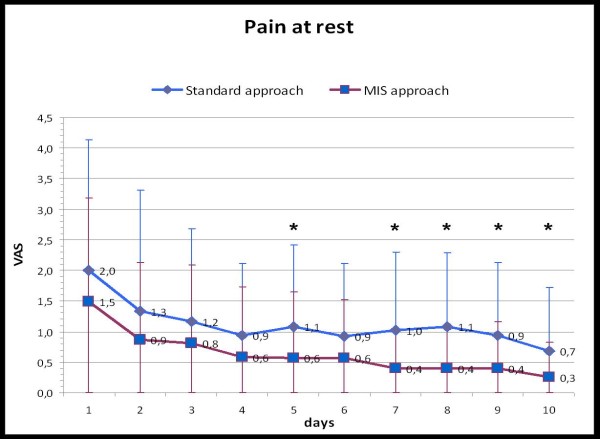
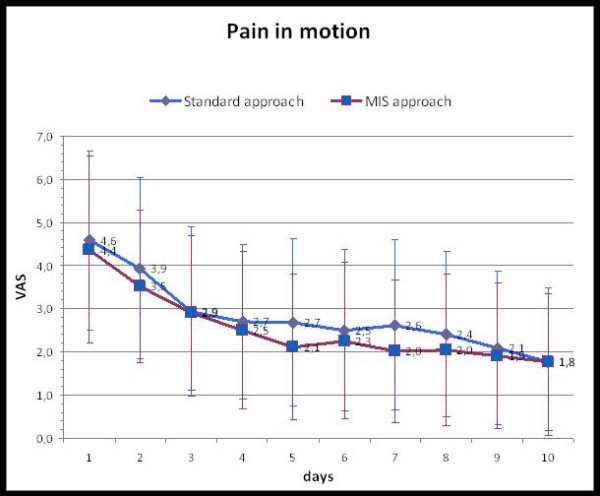
Materials and methods: To investigate whether a minimally invasive posterior approach for total hip arthroplasty results in lower levels of muscle-derived enzymes and better post-operative clinical results than those obtained with the standard posterolateral approach fifty patients in both groups were compared in a prospective and comparative study. The following parameters were examined: muscle-derived enzymes CPK, CK-MM and myoglobin pre-operatively, 24 and 48 hours post-operatively, CRP and hemoglobin on the third postoperative day, loss of blood, daily pain levels, the rate of recovery (time taken to attain predefined functional parameters), the Oxford Hip Score, the SF-36 score and the WOMAC score pre-operatively and six weeks post-surgery, the position of the implant and the cement coating by post-operative X-ray examination.
Results and conclusions: The minimally invasive operated patients exhibited a significantly lower loss of blood, significantly less pain at rest and a faster rate of recovery but the clinical chemistry values and the other clinical parameters were comparable.
Figures
References
-
- Berger RE. Mini-incisions; Two for the price of one! Orthopedics. 2002;25:472–498. - PubMed
-
- Mayr E, Nogler M, Benedetti MG, Kessler O, Reinthaler A, Krismer M, Leardini A. A prospective randomized assessment of earlier functional recovery in THA patients treated by minimally invasive direct anterior approach: a gait analysis study. Clin Biomech. 2009;24:812–818. doi: 10.1016/j.clinbiomech.2009.07.010. - DOI - PubMed
LinkOut - more resources
Full Text Sources
Research Materials
Miscellaneous
