Apoptosis in cardiovascular diseases: mechanism and clinical implications
- PMID: 20664736
- PMCID: PMC2910284
- DOI: 10.4070/kcj.2010.40.7.299
Apoptosis in cardiovascular diseases: mechanism and clinical implications
Abstract
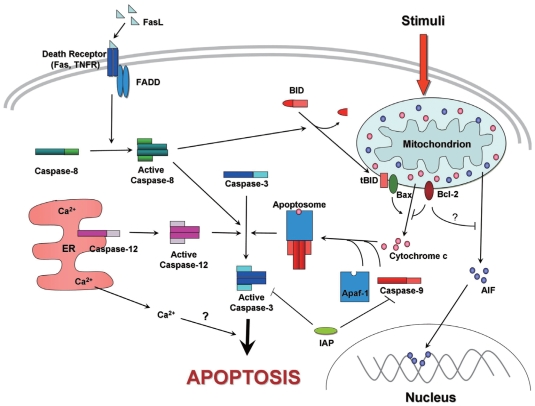
Apoptosis is a tightly regulated, cell deletion process that plays an important role in various cardiovascular diseases, such as myocardial infarction, reperfusion injury, and heart failure. Since cardiomyocyte loss is the most important determinant of patient morbidity and mortality, fully understanding the regulatory mechanisms of apoptotic signaling is crucial. In fact, the inhibition of cardiac apoptosis holds promise as an effective therapeutic strategy for cardiovascular diseases. Caspase, a critical enzyme in the induction and execution of apoptosis, has been the main potential target for achieving anti-apoptotic therapy. Studies suggest, however, that a caspase-independent pathway may also play an important role in cardiac apoptosis, although the mechanism and potential significance of caspase-independent apoptosis in the heart remain poorly understood. Herein we discuss the role of apoptosis in various cardiovascular diseases, provide an update on current knowledge about the molecular mechanisms that govern apoptosis, and discuss the clinical implications of anti-apoptotic therapies.
Keywords: Apoptosis inducing factor; Caspase; Cell death; Heart; Necrosis.
Figures
References
-
- Saraste A, Voipio-Pulkki LM, Parvinen M, Pulkki K. Apoptosis in the heart. N Engl J Med. 1997;336:1025–1026. discussion 6. - PubMed
-
- Kang PM, Izumo S. Apoptosis in heart: basic mechanisms and implications in cardiovascular diseases. Trends Mol Med. 2003;9:177–182. - PubMed
-
- Kang PM, Izumo S. Apoptosis and heart failure: a critical review of the literature. Circ Res. 2000;86:1107–1113. - PubMed
-
- Olivetti G, Abbi R, Quaini F, et al. Apoptosis in the failing human heart. N Engl J Med. 1997;336:1131–1141. - PubMed
Grants and funding
LinkOut - more resources
Full Text Sources