


Intravenous oxycodone, hydrocodone, and morphine in recreational opioid users: abuse potential and relative potencies
- PMID: 20665209
- PMCID: PMC2939200
- DOI: 10.1007/s00213-010-1942-4
Intravenous oxycodone, hydrocodone, and morphine in recreational opioid users: abuse potential and relative potencies
Abstract
Rationale: Nonmedical use and abuse of prescription opioids is an increasing public health problem. Intravenous (IV) administration of opioid analgesics intended for oral use is not uncommon; yet, little is known about the relative abuse potential of these drugs when administered intravenously to recreational opioid abusers without physical dependence.
Methods: This inpatient study employed a double-blind, randomized, within-subject, placebo-controlled design to examine the relative abuse potential of IV doses of oxycodone, hydrocodone, and morphine. Nine healthy adult participants reporting recreational opioid use and histories of IV opioid use completed 11 experimental sessions, including one active-dose practice session. IV doses were infused over 5 min and included three identical doses of each opioid (5, 10, and 20 mg/10 ml) and saline placebo. Physiological, subjective, and performance effects were collected before and for 6 h after drug administration.
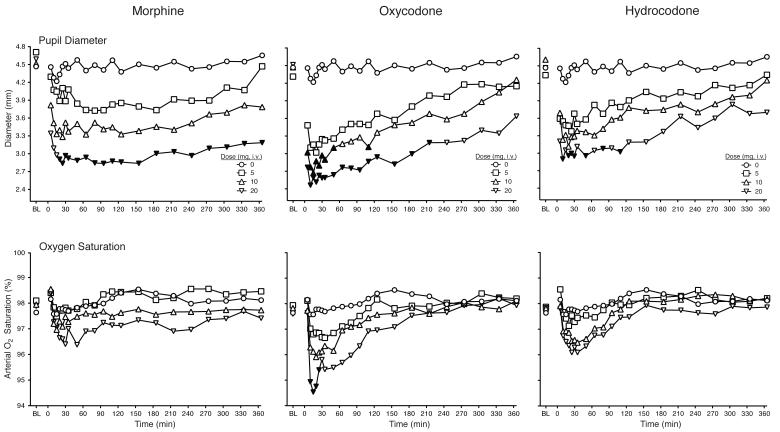
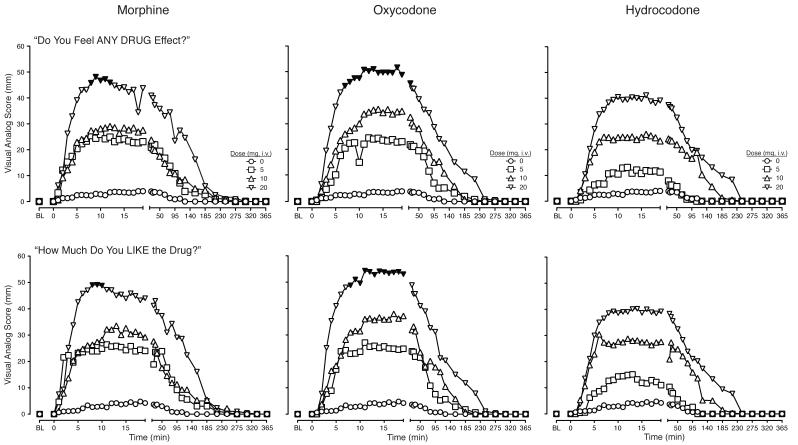
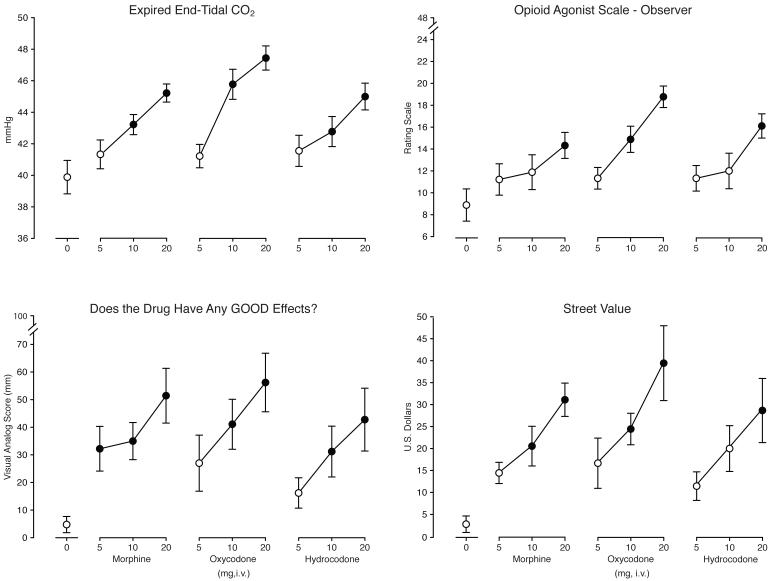
Results: All three opioids produced prototypical mu agonist effects (e.g., miosis; increased ratings of liking) that were generally dose-related. Pharmacodynamic effects were observed within 5 min of IV administration. Physiological effects were more prolonged than subjective effects for all three drugs. While the magnitude of effects was generally comparable across drugs and qualitatively similar, valid potency assays indicated the following potency relationship: oxycodone > morphine > hydrocodone.
Conclusions: There were modest potency differences between oxycodone, hydrocodone, and morphine, but their overall profile of effects was similar, indicating significant abuse potential when administered intravenously.
Figures
References
-
- Abreu ME, Bigelow GE, Fleisher L, Walsh SL. Effect of intravenous injection speed on responses to cocaine and hydromorphone in humans. Psychopharmacology. 2001;154:76–84. - PubMed
-
- Comer SD, Ashworth JB, Sullivan MA, Vosburg SK, Saccone PA, Foltin RW. Relationship between rate of infusion and reinforcing strength of oxycodone in humans. J Opioid Manag. 2009;5:203–212. - PubMed
-
- Finney DJ. Statistical Method in Biological Assay. 2nd edn Hafner; New York: 1964.
Publication types
MeSH terms
Substances
Grants and funding
LinkOut - more resources
Full Text Sources
Medical
Research Materials
