


Human microglia transplanted in rat focal ischemia brain induce neuroprotection and behavioral improvement
- PMID: 20668522
- PMCID: PMC2909196
- DOI: 10.1371/journal.pone.0011746
Human microglia transplanted in rat focal ischemia brain induce neuroprotection and behavioral improvement
Abstract
Background and purpose: Microglia are resident immunocompetent and phagocytic cells of central nervous system (CNS), which produce various cytokines and growth factors in response to injury and thereby regulate disease pathology. The purpose of this study is to investigate the effects of microglial transplantation on focal cerebral ischemia model in rat.
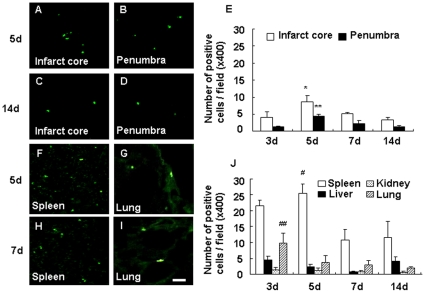
Methods: Transient middle cerebral artery occlusion (MCAO) in rats was induced by the intraluminal filament technique. HMO6 cells, human microglial cell line, were transplanted intravenously at 48 hours after MCAO. Functional tests were performed and the infarct volume was measured at 7 and 14 days after MCAO. Migration and cell survival of transplanted microglial cells and host glial reaction in the brain were studied by immunohistochemistry. Gene expression of neurotrophic factors, cytokines and chemokines in transplanted cells and host rat glial cells was determined by laser capture microdissection (LCM) and quantitative real time-PCR.
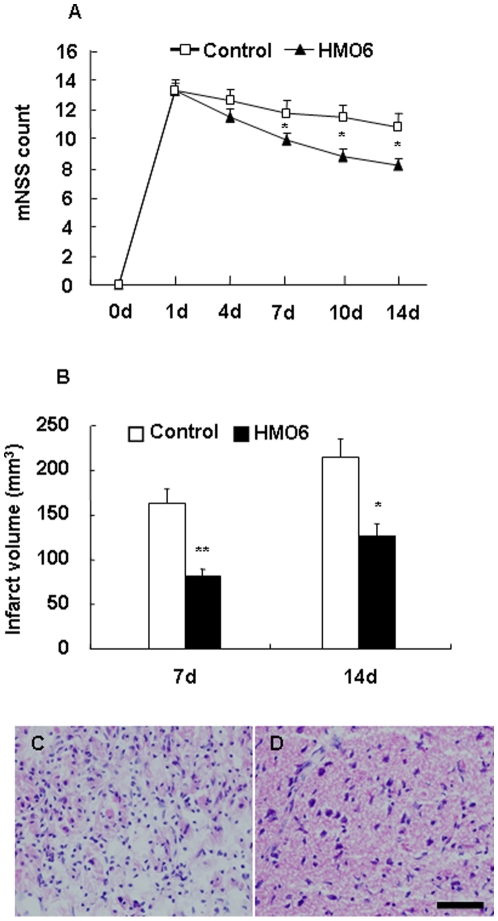
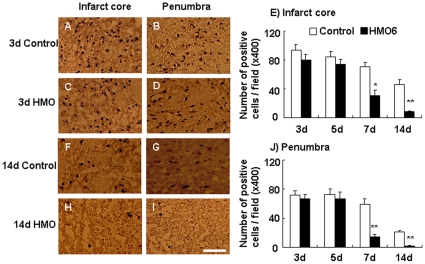
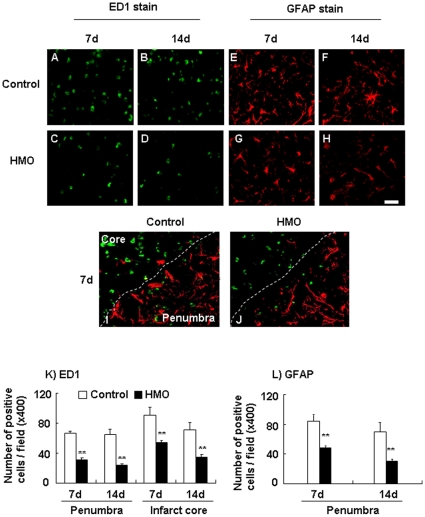
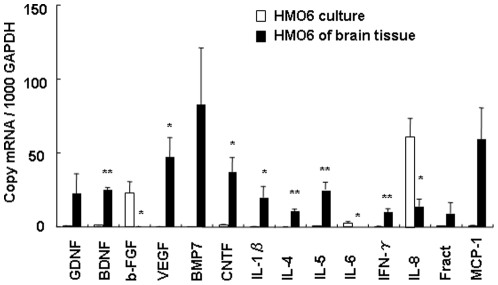
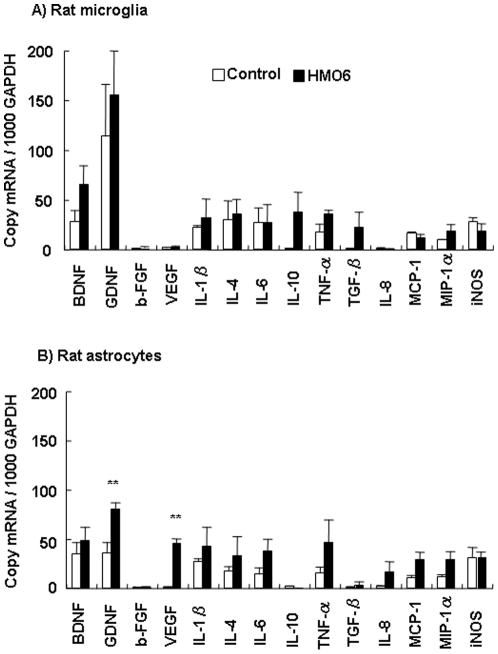
Results: HMO6 human microglial cells transplantation group demonstrated significant functional recovery compared with control group. At 7 and 14 days after MCAO, infarct volume was significantly reduced in the HMO group. In the HMO6 group, number of apoptotic cells was time-dependently reduced in the infarct core and penumbra. In addition, number of host rat microglia/macrophages and reactive astrocytes was significantly decreased at 7 and 14 days after MCAO in the penumbra. Gene expression of various neurotrophic factors (GDNF, BDNF, VEGF and BMP7) and anti-inflammatory cytokines (IL4 and IL5) was up-regulated in transplanted HMO6 cells of brain tissue compared with those in culture. The expression of GDNF and VEGF in astrocytes in penumbra was significantly up-regulated in the HMO6 group.
Conclusions: Our results indicate that transplantation of HMO6 human microglial cells reduces ischemic deficits and apoptotic events in stroke animals. The results were mediated by modulation of gliosis and neuroinflammation, and neuroprotection provided by neurotrophic factors of endogenous and transplanted cells-origin.
Conflict of interest statement
Figures
References
-
- Gonzalez-Scarano F, Baltuch G. Microglia as mediators of inflammatory and degenerative diseases. Annu Rev Neurosci. 1999;22:219–240. - PubMed
-
- Kim SU, de Vellis J. Microglia in health and disease. J Neurosci Res. 2005;81:302–313. - PubMed
-
- Lee YB, Nagai A, Kim SU. Cytokines, chemokines, and cytokine receptors in human microglia. J Neurosci Res. 2002;69:94–103. - PubMed
-
- McGeer PL, McGeer EG. The inflammatory response system of brain: implications for therapy of Alzheimer and other neurodegenerative diseases. Brain Res Rev. 1995;21:195–218. - PubMed
-
- Block F, Peters M, Nolden-Koch M. Expression of IL-6 in the ischemic penumbra. Neuroreport. 2000;11:963–967. - PubMed
Publication types
MeSH terms
Substances
LinkOut - more resources
Full Text Sources
