Review
. 2010 Jul 29:9:202.
doi: 10.1186/1476-4598-9-202.

Personalized therapies in the cancer "omics" era

Affiliations
Review

Personalized therapies in the cancer "omics" era

Alberto Ocaña et al. Mol Cancer. .

Abstract

A molecular hallmark of cancer is the presence of genetic alterations in the tumoral DNA. Understanding how these alterations translate into the malignant phenotype is critical for the adequate treatment of oncologic diseases. Several cancer genome sequencing reports have uncovered the number and identity of proteins and pathways frequently altered in cancer. In this article we discuss how integration of these genomic data with other biological and proteomic studies may help in designing anticancer therapies "a la carte". An important conclusion is that next generation treatment of neoplasias must be based on rational drug combinations that target various pathways and cellular entities that sustain the survival of cancer cells.


Figures

Figure 1
Figure 1
Stepwise selection of antitumoral therapies based on individual oncogenic alterations. Analyses of oncogenic alterations in individual tumour samples using "omics" techniques should allow the identification of candidate targets for therapeutic intervention. Experimental preclinical validation of these targets is critical in order to proceed to the clinical testing of drugs that act on the selected targets.
Figure 2
Figure 2
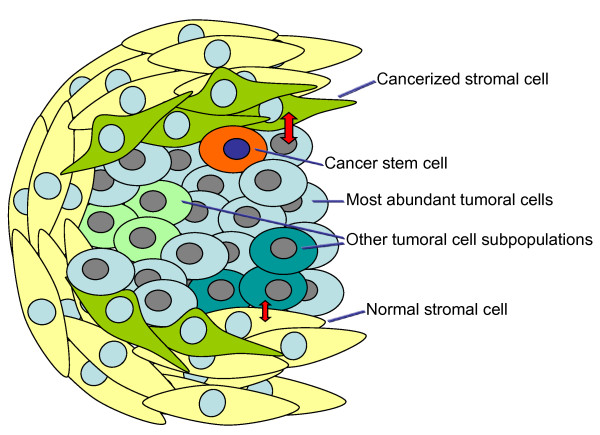
Tumoral cell types that contribute to the heterogeneity of tumours. In addition to the most abundant tumoral cells, the genetic instability of tumours is responsible for the establishment of genetically distinct tumoral cell subpopulations, which may escape genomic detection as they may be diluted within the tumoral mass by the most abundant tumoral cells. Another important cellular component that usually bears genomic and transcriptomic differences with respect to the majority of tumoral cells are the cancer initiating/stem cells. The stromal cells that surround or are included into the tumoral mass may provide/receive proliferation/survival signals by crosstalking with tumoral cells. In certain neoplastic diseases, the stromal cells critically contribute to the survival or dissemination of the tumoral cells, and may bear genomic alterations that favour their tumor-supporting properties. These cancerized stromal cells and the rest of the cellular components of tumours must be targetted to achieve an efficient antitumoral response.

References

    1. Sawyers CL. Chronic myeloid leukemia. N Engl J Med. 1999;340:1330–1340. doi: 10.1056/NEJM199904293401706. - DOI - PubMed
    1. Druker BJ, Talpaz M, Resta DJ, Peng B, Buchdunger E, Ford JM, Lydon NB, Kantarjian H, Capdeville R, Ohno-Jones S, Sawyers CL. Efficacy and safety of a specific inhibitor of the BCR-ABL tyrosine kinase in chronic myeloid leukemia. N Engl J Med. 2001;344:1031–1037. doi: 10.1056/NEJM200104053441401. - DOI - PubMed
    1. Hanahan D, Weinberg RA. The hallmarks of cancer. Cell. 2000;100:57–70. doi: 10.1016/S0092-8674(00)81683-9. - DOI - PubMed
    1. Sawyers CL. Cancer: mixing cocktails. Nature. 2007;449:993–996. doi: 10.1038/449993a. - DOI - PubMed
    1. Kwak EL, Clark JW, Chabner B. Targeted agents: the rules of combination. Clin Cancer Res. 2007;13:5232–5237. doi: 10.1158/1078-0432.CCR-07-1385. - DOI - PubMed

Publication types