


Cytokine overproduction, T-cell activation, and defective T-regulatory functions promote nephritis in systemic lupus erythematosus
- PMID: 20671931
- PMCID: PMC2910555
- DOI: 10.1155/2010/457146
Cytokine overproduction, T-cell activation, and defective T-regulatory functions promote nephritis in systemic lupus erythematosus
Abstract
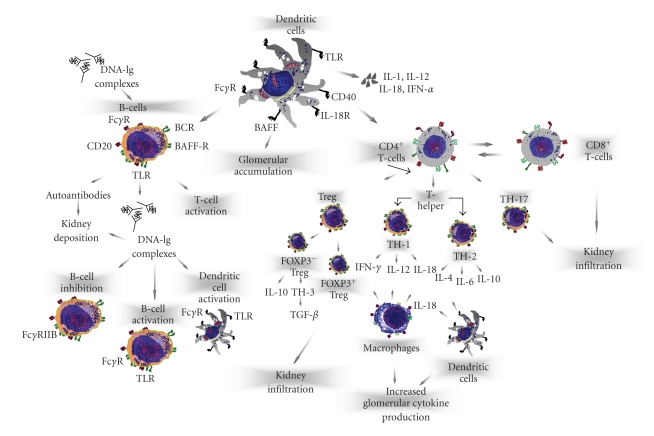
Lupus nephritis (LN) occurs in more than one-third of patients with systemic lupus erythematosus. Its pathogenesis is mostly attributable to the glomerular deposition of immune complexes and overproduction of T helper- (Th-) 1 cytokines. In this context, the high glomerular expression of IL-12 and IL-18 exerts a major pathogenetic role. These cytokines are locally produced by both macrophages and dendritic cells (DCs) which attract other inflammatory cells leading to maintenance of the kidney inflammation. However, other populations including T-cells and B-cells are integral for the development and worsening of renal damage. T-cells include many pathogenetic subsets, and the activation of Th-17 in keeping with defective T-regulatory (Treg) cell function regards as further event contributing to the glomerular damage. These populations also activate B-cells to produce nephritogenic auto-antibodies. Thus, LN includes a complex pathogenetic mechanism that involves different players and the evaluation of their activity may provide an effective tool for monitoring the onset of the disease.
Figures
References
-
- Scheinecker C, Zwolfer B, Koller M, Manner G, Smolen JS. Alterations of dendritic cells in systemic lupus erythematosus: phenotypic and functional deficiencies. Arthritis and Rheumatism. 2001;44(4):856–865. - PubMed
-
- Penna G, Vulcano M, Sozzani S, Adorini L. Differential migration behavior and chemokine production by myeloid and plasmacytoid dendritic cells. Human Immunology. 2002;63(12):1164–1171. - PubMed
-
- Penna G, Vulcano M, Roncari A, Facchetti F, Sozzani S, Adorini L. Cutting edge: differential chemokine production by myeloid and plasmacytoid dendritic cells. Journal of Immunology. 2002;169(12):6673–6676. - PubMed
-
- Kelley VR, Wuthrich RP. Cytokines in the pathogenesis of systemic lupus erythematosus. Seminars in Nephrology. 1999;19(1):57–66. - PubMed
Publication types
MeSH terms
Substances
LinkOut - more resources
Full Text Sources
Other Literature Sources
Miscellaneous
