


Preferential induction of G1 arrest in androgen-responsive human prostate cancer cells by androgen receptor signaling antagonists DL3 and antiandrogen bicalutamide
- PMID: 20675041
- PMCID: PMC2956783
- DOI: 10.1016/j.canlet.2010.07.012
Preferential induction of G1 arrest in androgen-responsive human prostate cancer cells by androgen receptor signaling antagonists DL3 and antiandrogen bicalutamide
Abstract
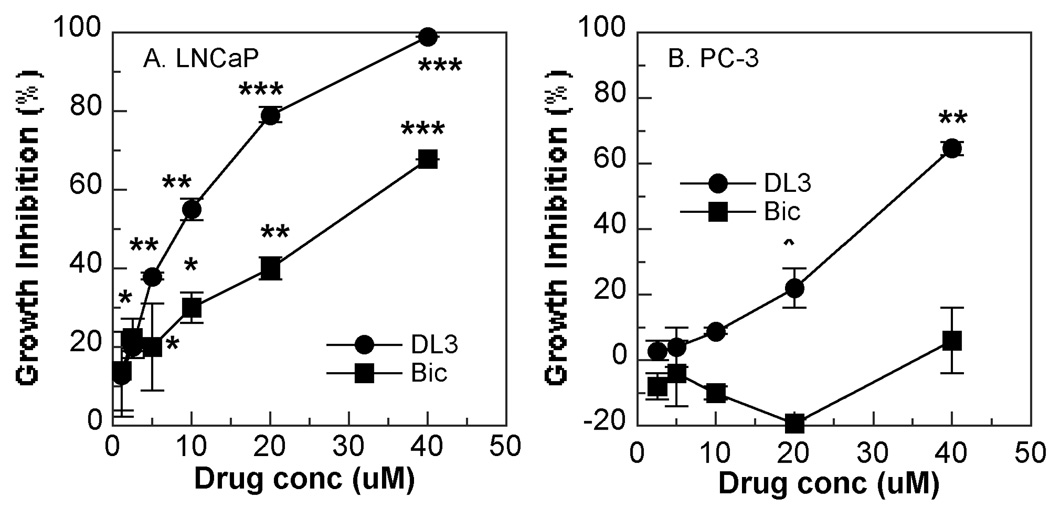
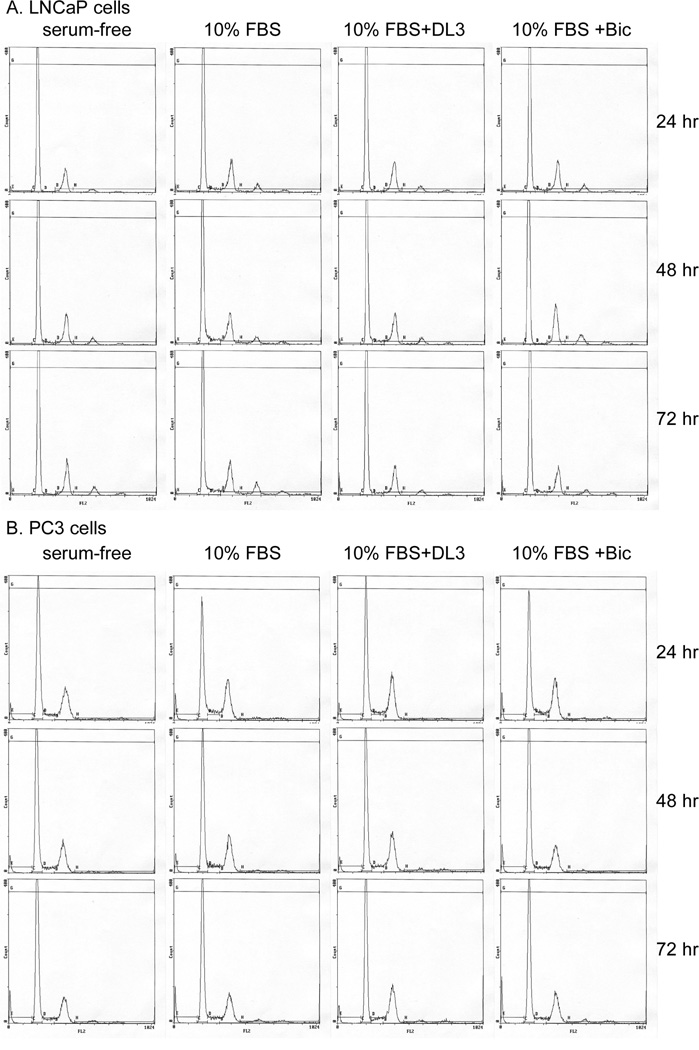
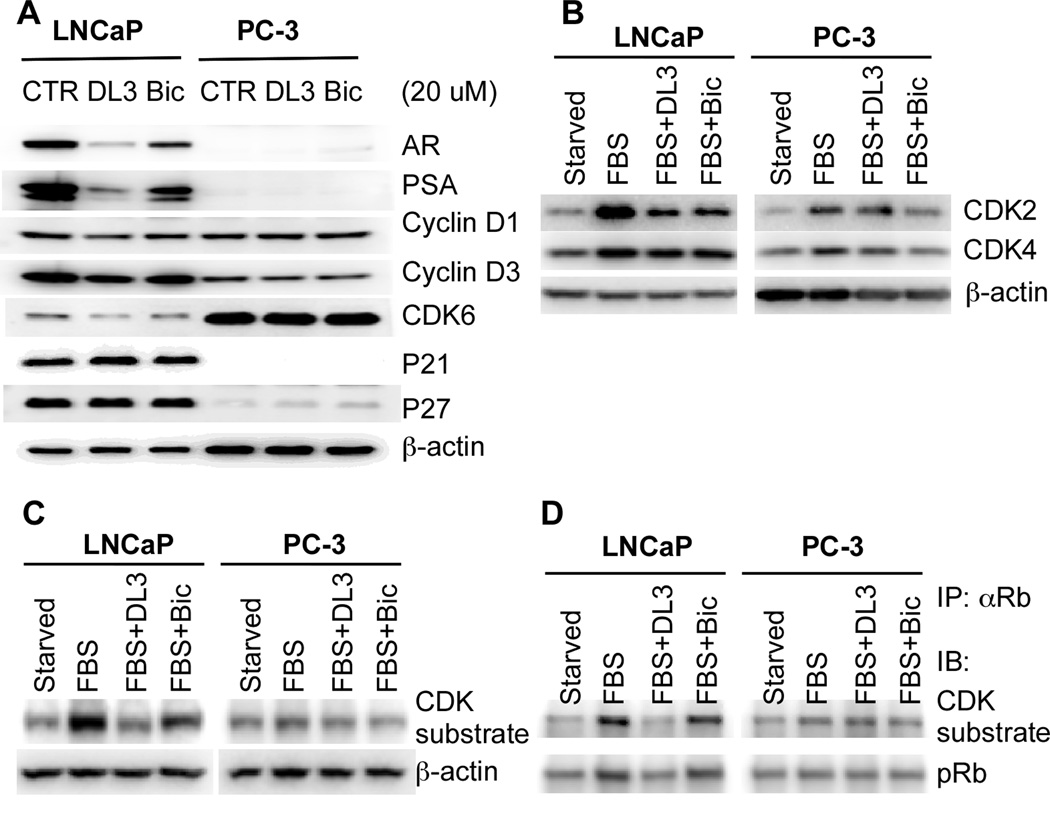
The purpose of this study was to further characterize cell growth-inhibitory effects of a recently identified androgen receptor (AR) signaling inhibitor 6-amino-2-[2-(4-tert-butyl-pnenoxy)-ethylsulfanyl]-1H-pyrimidin-4-one (DL3)(5) and antiandrogen bicalutamide (Bic). DL3 was more potent than Bic in induction of G1 arrest and reduction of G1-related cell cycle protein expression in AR-positive LNCaP cells. DL3, but not Bic, moderately inhibited growth of AR-negative PC-3 cells independent of G1 arrest. The data indicated that DL3 inhibit cell growth in both AR-dependent and -independent manners and is potentially a potent therapeutic agent for the management of advanced human prostate cancer.
Published by Elsevier Ireland Ltd.
Conflict of interest statement
The authors declare no conflicts of interest.
Figures
References
-
- Jemal A, Murray T, Ward E, Samuels A, Tiwari RC, Ghafoor A, Feuer EJ, Thun MJ. Cancer statistics, 2005. CA Cancer J. Clin. 2005;55:10–30. - PubMed
-
- Crawford ED. Challenges in the management of prostate cancer. Br. J. Urol. 1992;70 Suppl 1:33–38. - PubMed
-
- Miyamoto H, Rahman MM, Chang C. Molecular basis for the antiandrogen withdrawal syndrome. J. Cell. Biochem. 2004;91:3–12. - PubMed
-
- Aziz MH, Nihal M, Fu VX, Jarrard DF, Ahmad N. Resveratrol-caused apoptosis of human prostate carcinoma LNCaP cells is mediated via modulation of phosphatidylinositol 3'-kinase/Akt pathway and Bcl-2 family proteins. Mol. Cancer Ther. 2006;5:1335–1341. - PubMed
-
- Yuan H, Gong A, Young CY. Involvement of transcription factor Sp1 in quercetin-mediated inhibitory effect on the androgen receptor in human prostate cancer cells. Carcinogenesis. 2005;26:793–801. - PubMed
MeSH terms
Substances
Grants and funding
LinkOut - more resources
Full Text Sources
Research Materials
