


In utero exposure to bisphenol A shifts the window of susceptibility for mammary carcinogenesis in the rat
- PMID: 20675265
- PMCID: PMC2974702
- DOI: 10.1289/ehp.1002148
In utero exposure to bisphenol A shifts the window of susceptibility for mammary carcinogenesis in the rat
Abstract
Background: Bisphenol A (BPA) is a ubiquitous environmental chemical with reported endocrine-disrupting properties.
Objective: Our goal in this study was to determine whether prenatal exposure to BPA predisposes the adult rat mammary gland to carcinogenesis.
Methods: Pregnant rats were treated orally with 0, 25, or 250 microg BPA/kg body weight (BW) from gestation day (GD) 10 to GD21. For tumorigenesis experiments, prenatally exposed female offspring received a single gavage of 7,12-dimethylbenz(a)anthracene (DMBA; 30 mg/kg BW) on postnatal day (PND) 50, or PND100.
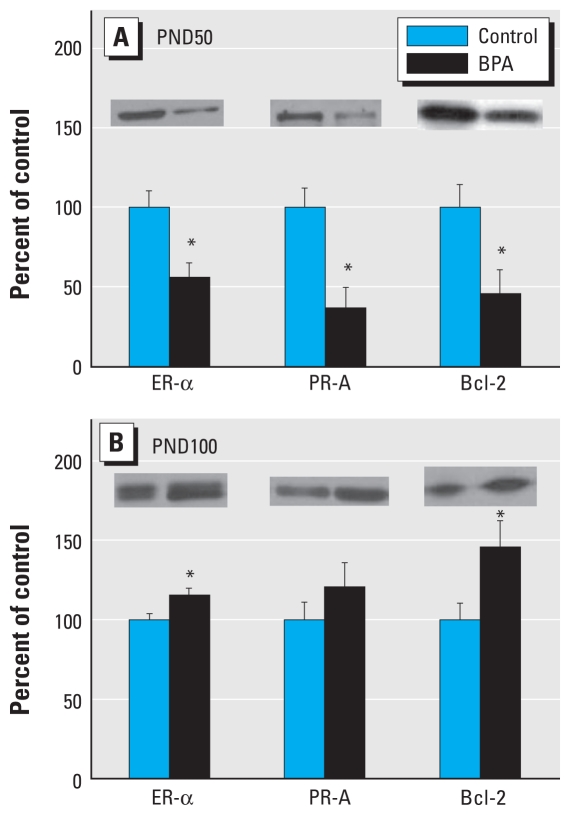
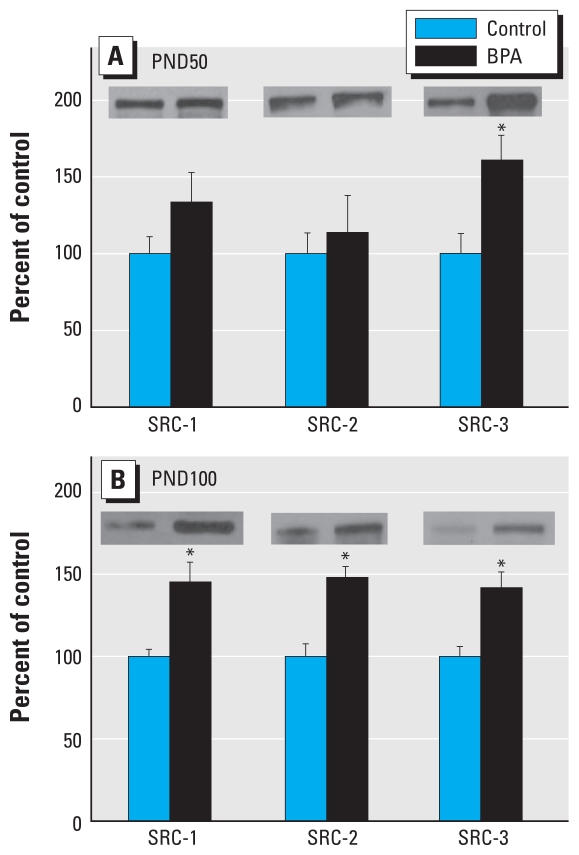
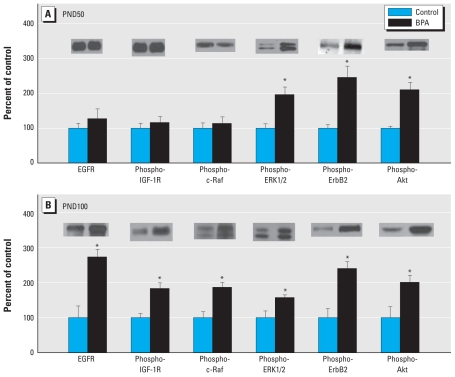
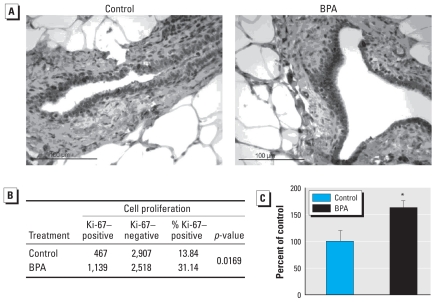
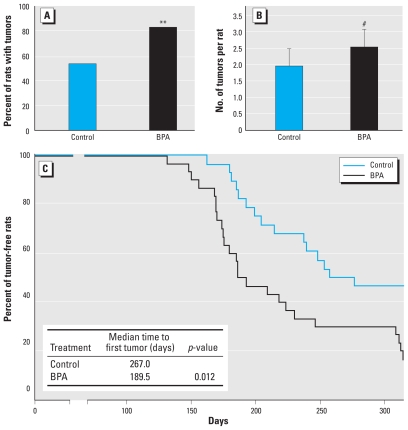
Results: Prenatal exposure of the dam to 250 microg BPA/kg BW combined with a single exposure of female offspring to DMBA on PND100, but not on PND50, significantly increased tumor incidence while decreasing tumor latency compared with the control group. Prenatal exposure of the dam to 250 microg BPA/kg BW, in the absence of DMBA to the female offspring, increased cell proliferation and elicited differential effects at the protein level at PND100 compared with PND50. Differentially regulated proteins in the mammary gland included estrogen receptor-alpha, progesterone receptor-A, Bcl-2, steroid receptor coactivators, epidermal growth factor receptor, phospho-insulinlike growth factor 1 receptor, and phospho-Raf.
Conclusions: Our study demonstrates that oral prenatal exposure to BPA increases mammary cancer susceptibility in offspring and shifts the window of susceptibility for DMBA-induced tumorigenesis in the rat mammary gland from PND50 to PND100. These changes are accompanied by differential effects of prenatal BPA exposure on the expression of key proteins involved in cell proliferation.
Figures
Comment in
-
Opening the window to cancer. Potential mechanism behind increased susceptibility in rats exposed prenatally to BPA.Environ Health Perspect. 2010 Nov;118(11):A490. doi: 10.1289/ehp.118-a490b. Environ Health Perspect. 2010. PMID: 21465746 Free PMC article. No abstract available.
References
-
- Baylin SB, Herman JG, Graff JR, Vertino PM, Issa JP. Alterations in DNA methylation: a fundamental aspect of neoplasia. Adv Cancer Res. 1998;72:141–196. - PubMed
-
- Betancourt AM, Mobley JA, Russo J, Lamartiniere CA. Proteomic analysis in mammary glands of rat offspring exposed in utero to bisphenol A. J Proteomics. 2010;73(6):1241–1253. - PubMed
-
- Biles JE, McNeal TP, Begley TH. Determination of bisphenol A migrating from epoxy can coatings to infant formula liquid concentrates. J Agric Food Chem. 1997;45:4697–4700.
-
- Bouras T, Southey MC, Venter DJ. Overexpression of the steroid receptor coactivator AIB1 in breast cancer correlates with the absence of estrogen and progesterone receptors and positivity for p53 and HER2/neu. Cancer Res. 2001;61(3):903–907. - PubMed
-
- Bradley CJ, Kledzik GS, Meites J. Prolactin and estrogen dependency of rat mammary cancers at early and late stages of development. Cancer Res. 1976;36:319–324. - PubMed
Publication types
MeSH terms
Substances
Grants and funding
LinkOut - more resources
Full Text Sources
Medical
Research Materials
Miscellaneous