


Cardiac conduction is required to preserve cardiac chamber morphology
- PMID: 20675583
- PMCID: PMC2930423
- DOI: 10.1073/pnas.0909432107
Cardiac conduction is required to preserve cardiac chamber morphology
Abstract
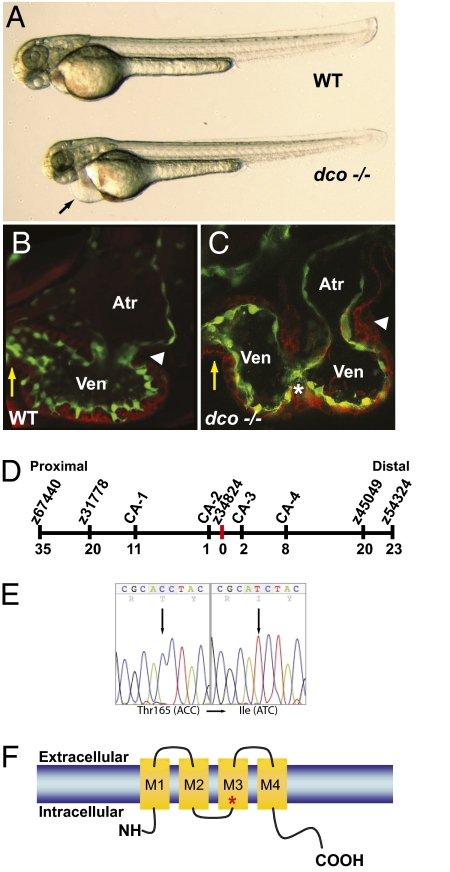
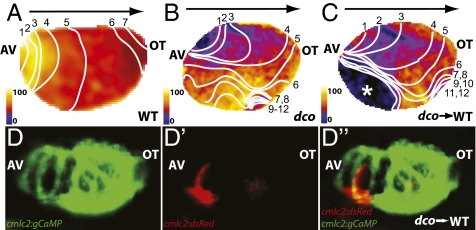
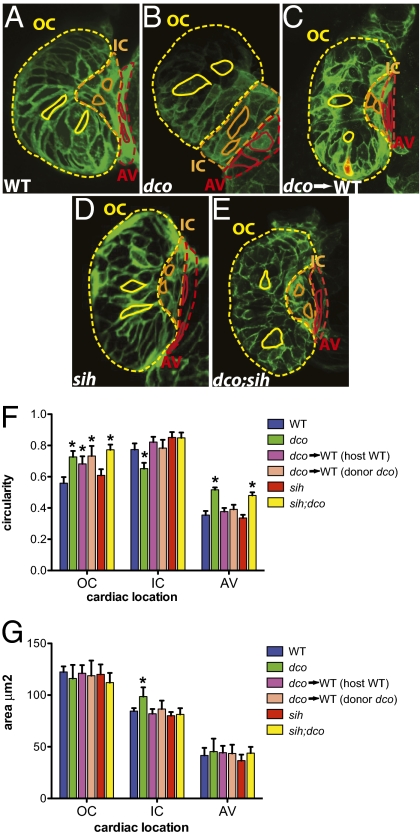
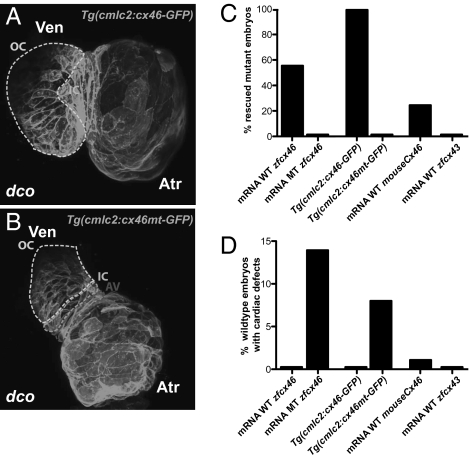
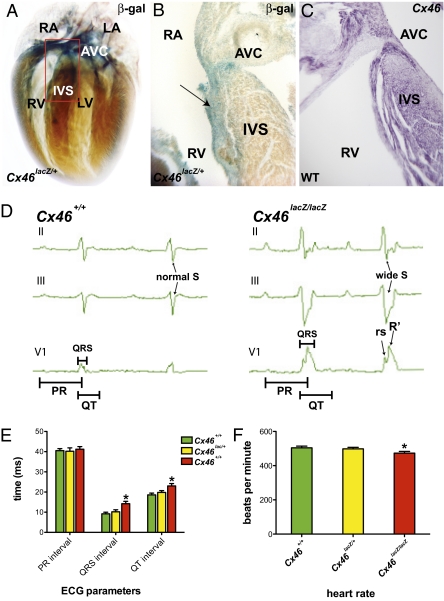
Electrical cardiac forces have been previously hypothesized to play a significant role in cardiac morphogenesis and remodeling. In response to electrical forces, cultured cardiomyocytes rearrange their cytoskeletal structure and modify their gene expression profile. To translate such in vitro data to the intact heart, we used a collection of zebrafish cardiac mutants and transgenics to investigate whether cardiac conduction could influence in vivo cardiac morphogenesis independent of contractile forces. We show that the cardiac mutant dco(s226) develops heart failure and interrupted cardiac morphogenesis following uncoordinated ventricular contraction. Using in vivo optical mapping/calcium imaging, we determined that the dco cardiac phenotype was primarily due to aberrant ventricular conduction. Because cardiac contraction and intracardiac hemodynamic forces can also influence cardiac development, we further analyzed the dco phenotype in noncontractile hearts and observed that disorganized ventricular conduction could affect cardiomyocyte morphology and subsequent heart morphogenesis in the absence of contraction or flow. By positional cloning, we found that dco encodes Gja3/Cx46, a gap junction protein not previously implicated in heart formation or function. Detailed analysis of the mouse Cx46 mutant revealed the presence of cardiac conduction defects frequently associated with human heart failure. Overall, these in vivo studies indicate that cardiac electrical forces are required to preserve cardiac chamber morphology and may act as a key epigenetic factor in cardiac remodeling.
Conflict of interest statement
The authors declare no conflict of interest.
Figures
References
-
- Hove JR, et al. Intracardiac fluid forces are an essential epigenetic factor for embryonic cardiogenesis. Nature. 2003;421:172–177. - PubMed
Publication types
MeSH terms
Substances
Grants and funding
LinkOut - more resources
Full Text Sources
Molecular Biology Databases
Miscellaneous
