


Negotiating the Relationship Between Addiction, Ethics, and Brain Science
- PMID: 20676352
- PMCID: PMC2910924
- DOI: 10.1080/21507740903508609
Negotiating the Relationship Between Addiction, Ethics, and Brain Science
Abstract
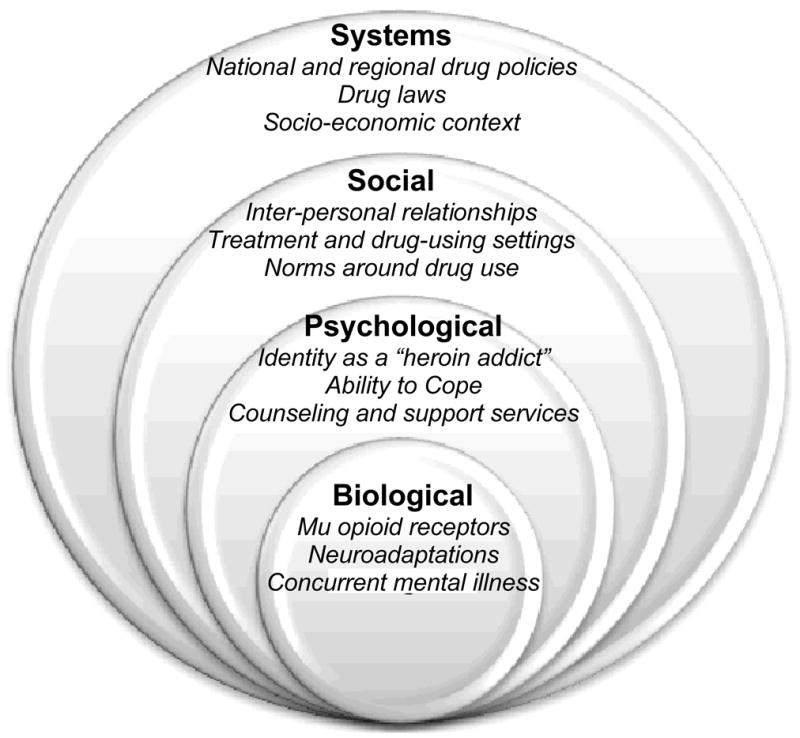
Advances in neuroscience are changing how mental health issues such as addiction are understood and addressed as a brain disease. Although a brain disease model legitimizes addiction as a medical condition, it promotes neuro-essentialist thinking, categorical ideas of responsibility and free choice, and undermines the complexity involved in its emergence. We propose a 'biopsychosocial systems' model where psycho-social factors complement and interact with neurogenetics. A systems approach addresses the complexity of addiction and approaches free choice and moral responsibility within the biological, lived experience and socio-historical context of the individual. We examine heroin-assisted treatment as an applied case example within our framework. We conclude with a discussion of the model and its implications for drug policy, research, addiction health care systems and delivery, and treatment of substance use problems.
Figures
References
-
- American Psychiatric Association. Diagnostic and statistical manual of mental disorders DSM-IV-TR fourth edition text revision. Washington, DC: American Psychiatric Association; 2004.
-
- Andreou C. Making a clean break: Addiction and Ulysses contracts. Bioethics. 2008;22:25–31. - PubMed
-
- Anstice S, Strike CJ, Brands B. Supervised methadone consumption: Client issues and stigma. Substance Use and Misuse. 2009;44(6):794–808. - PubMed
-
- Irwin T, translator. Aristotle. Nicomachean ethics. 2. Indianapolis: Hackett Publishing Company, Inc; 1999.
-
- Ashcroft R, Campbell AV, Capps B. Ethical aspects of developments in neuroscience and drug addiction. In: Nutt D, Robbins TW, Stimson GV, Ince M, Jackson A, editors. Drugs and the future. London: Elselvier; 2007. pp. 439–465.
Grants and funding
LinkOut - more resources
Full Text Sources
