


Central crosstalk for somatic tinnitus: abnormal vergence eye movements
- PMID: 20676372
- PMCID: PMC2911381
- DOI: 10.1371/journal.pone.0011845
Central crosstalk for somatic tinnitus: abnormal vergence eye movements
Abstract
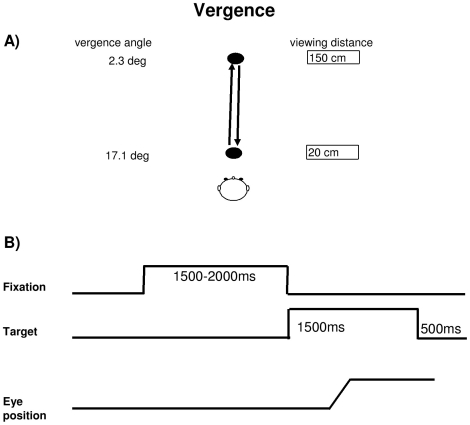
Background: Frequent oulomotricity problems with orthoptic testing were reported in patients with tinnitus. This study examines with objective recordings vergence eye movements in patients with somatic tinnitus patients with ability to modify their subjective tinnitus percept by various movements, such as jaw, neck, eye movements or skin pressure.
Methods: Vergence eye movements were recorded with the Eyelink II video system in 15 (23-63 years) control adults and 19 (36-62 years) subjects with somatic tinnitus.
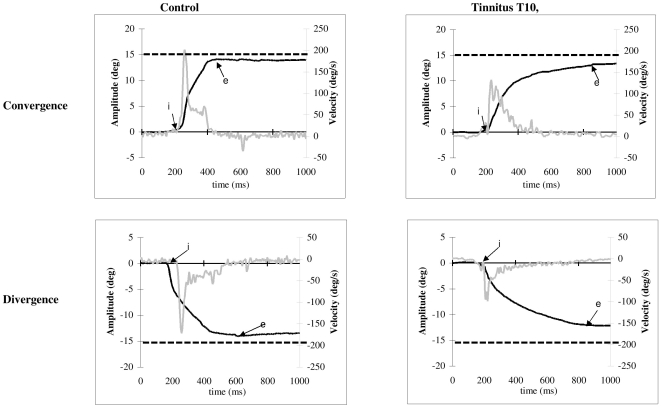
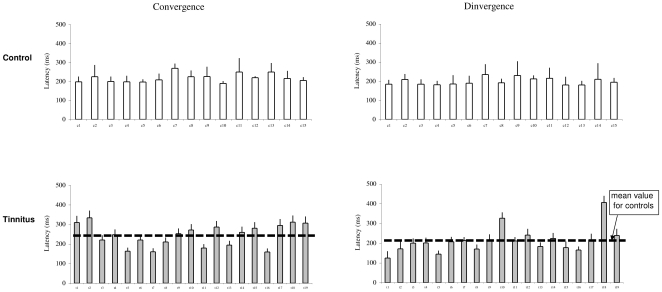
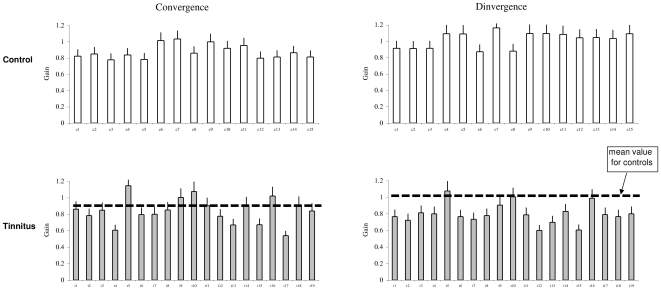
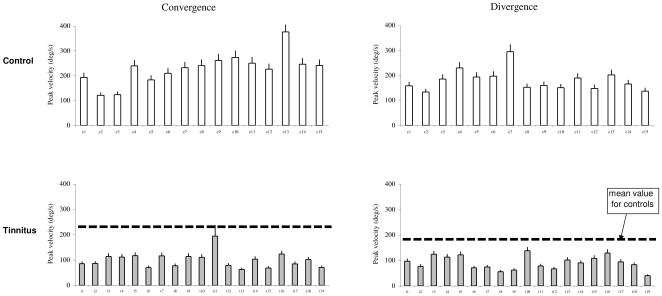
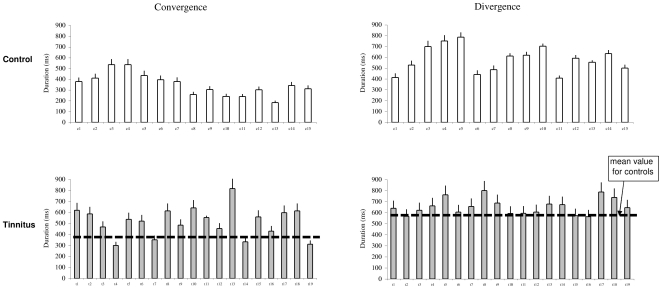
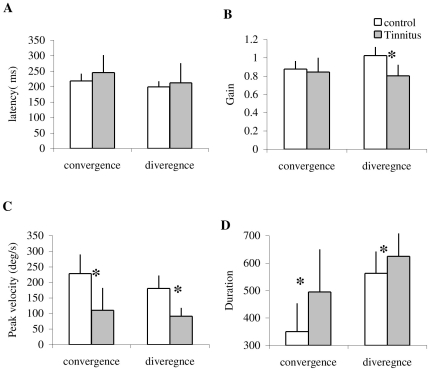
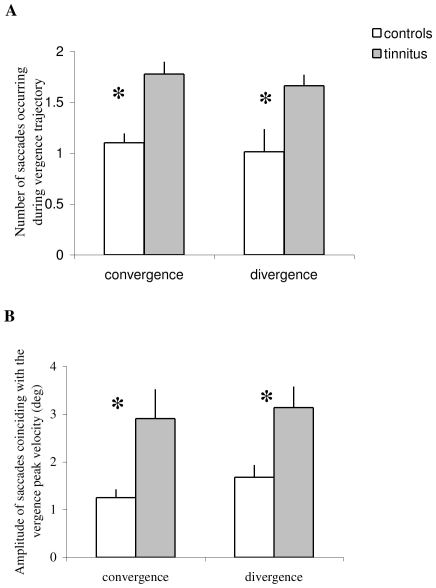
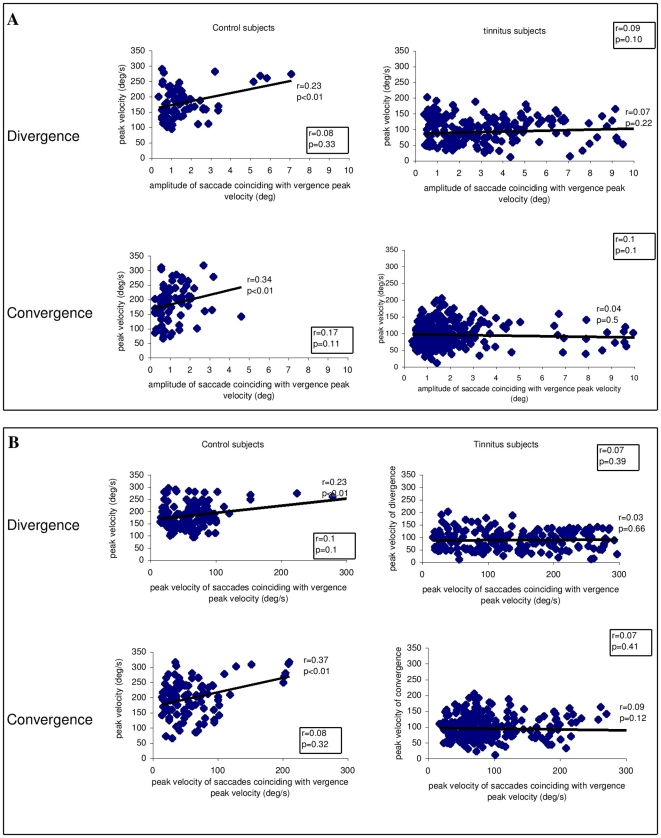
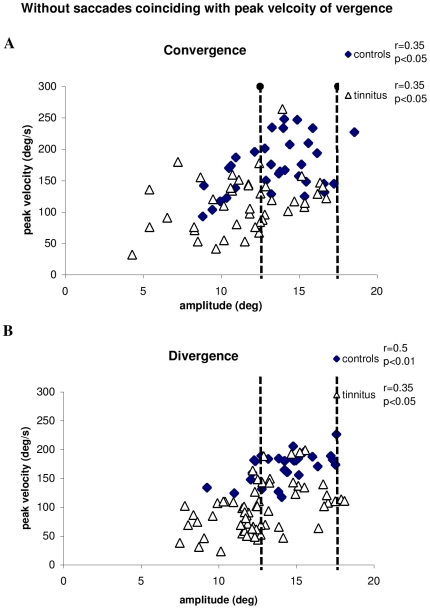
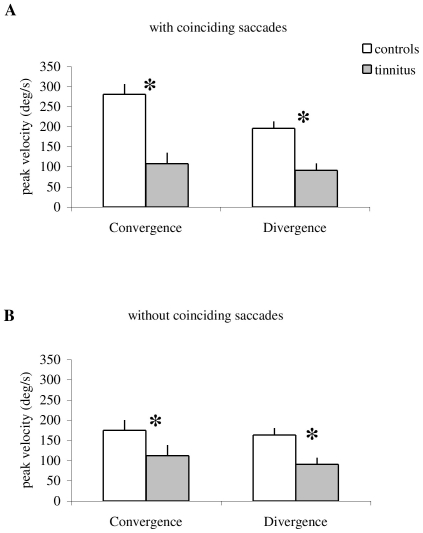
Findings: 1) Accuracy of divergence but not of convergence was lower in subjects with somatic tinnitus than in control subjects. 2) Vergence duration was longer and peak velocity was lower in subjects with somatic tinnitus than in control subjects. 3) The number of embedded saccades and the amplitude of saccades coinciding with the peak velocity of vergence were higher for tinnitus subjects. Yet, saccades did not increase peak velocity of vergence for tinnitus subjects, but they did so for controls. 4) In contrast, there was no significant difference of vergence latency between these two groups.
Interpretation: The results suggest dysfunction of vergence areas involving cortical-brainstem-cerebellar circuits. We hypothesize that central auditory dysfunction related to tinnitus percept could trigger mild cerebellar-brainstem dysfunction or that tinnitus and vergence dysfunction could both be manifestations of mild cortical-brainstem-cerebellar syndrome reflecting abnormal cross-modality interactions between vergence eye movements and auditory signals.
Conflict of interest statement
Figures
References
-
- Eggermont JJ, Roberts LE. The neuroscience of tinnitus. Trends Neurosci. 2004;27:676–682. - PubMed
-
- Norena A, Micheyl C, Chery-Croze S, Collet L. Psychoacoustic characterization of the tinnitus spectrum: implications for the underlying mechanisms of tinnitus. Audiol Neurootol. 2002;7:358–369. - PubMed
-
- Levine RA, Abel M, Cheng H. CNS somatosensory-auditory interactions elicit or modulate tinnitus. Exp Brain Res. 2003;153:643–648. - PubMed
-
- Kapoula Z, Yang Q, Vernet M, Bonfils P, Londero A. Eye movement abnormalities in somatic tinnitus: Fixation, smooth pursuit and optokinetic nystagmus. Auris Nasus Larynx 2009 - PubMed
-
- Jozefowicz-Korczynska M, Pajor A. Evaluation of oculomotor tests in patients with tinnitus. Int Tinnitus J. 2002;8:100–103. - PubMed
MeSH terms
LinkOut - more resources
Full Text Sources
Medical
