


Characterization of the ebp(fm) pilus-encoding operon of Enterococcus faecium and its role in biofilm formation and virulence in a murine model of urinary tract infection
- PMID: 20676385
- PMCID: PMC2910428
- DOI: 10.4161/viru.1.4.11966
Characterization of the ebp(fm) pilus-encoding operon of Enterococcus faecium and its role in biofilm formation and virulence in a murine model of urinary tract infection
Abstract
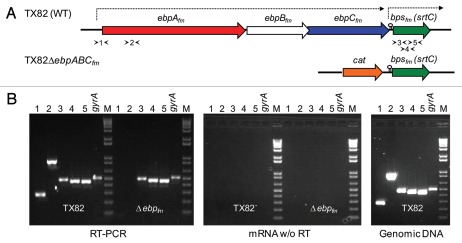
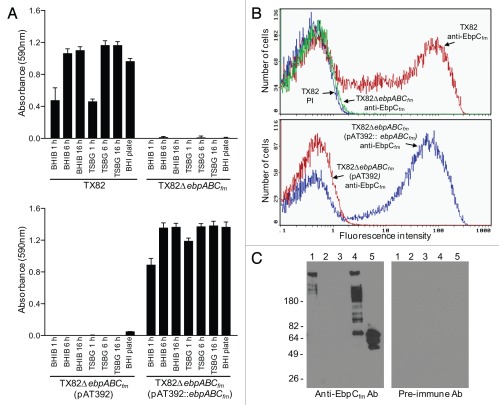
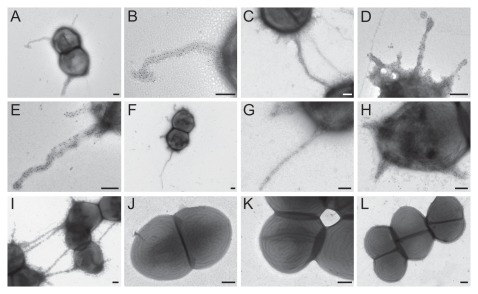
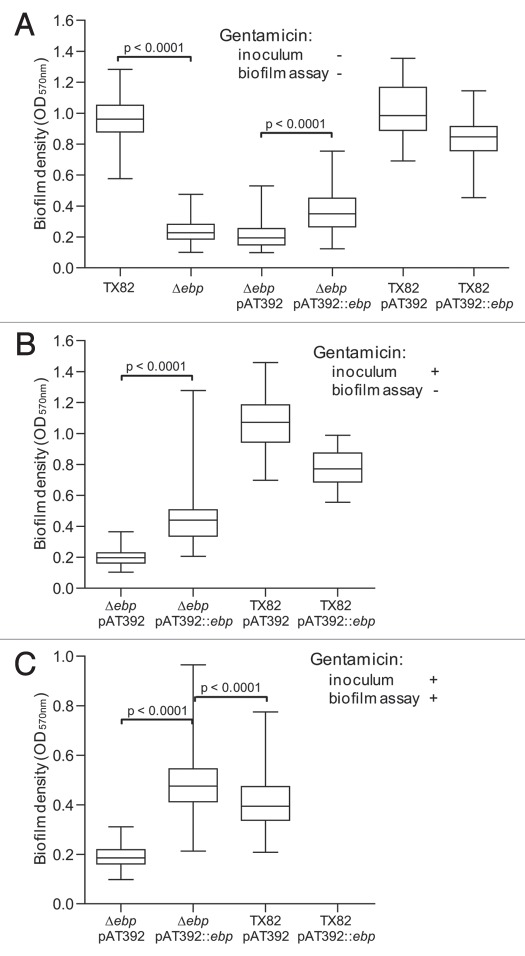
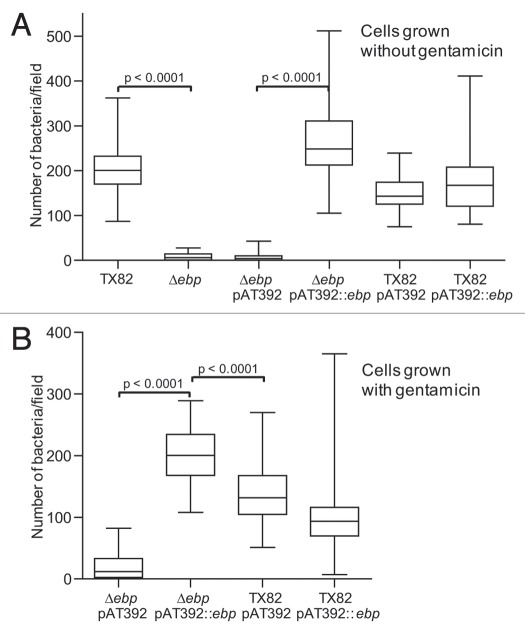
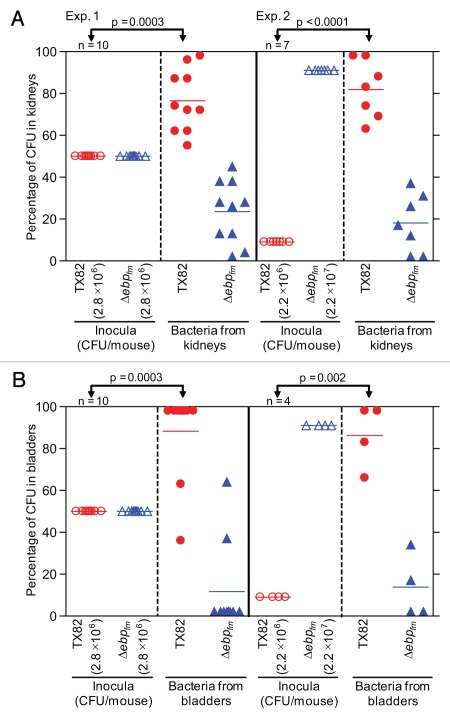
We recently identified 15 genes encoding putative surface proteins with features of MSCRAMMs and/or pili in the Enterococcus faecium TX0016 (DO) genome, including four predicted pilus-encoding gene clusters; we also demonstrated that one of these, ebpABC(fm), is transcribed as an operon, that its putative major pilus subunit, EbpC(fm) (also called pilB), is polymerized into high molecular weight complexes, and that it is enriched among clinical E. faecium isolates. Here, we created a deletion of the ebpABC(fm) operon in an endocarditis-derived E. faecium strain (TX82) and showed, by a combination of whole-cell ELISA, flow cytometry, immunoblot and immunogold electron microscopy, that this deletion abolished EbpC(fm) expression and eliminated EbpC(fm)-containing pili from the cell surface. However, transcription of the downstream sortase, bps(fm), was not affected. Importantly, the ebpABC(fm) deletion resulted in significantly reduced biofilm formation (p < 0.0001) and initial adherence (p < 0.0001) versus the wild-type; both were restored by complementing ebpABC(fm) in trans, which also restored cell surface expression of EbpC(fm) and pilus production. Furthermore, the deletion mutant was significantly attenuated in two independent mixed infection mouse urinary tract experiments, i.e., outnumbered by the wild-type in kidneys (p = 0.0003 and < 0.0001, respectively) and urinary bladders (p = 0.0003 and = 0.002). In conclusion, we have shown that the ebpABC(fm) locus encodes pili on the E. faecium TX82 cell surface and provide the first evidence that pili of this emerging pathogen are important for its ability to form biofilm and to cause infection in an ascending UTI model.
Keywords: Enterococcus faecium; UTI; biofilm; ebp; pathogenesis; pilus; virulence.
Figures
Comment in
-
Insights into the biofilm lifestyle of enterococci.Virulence. 2010 Jul-Aug;1(4):219-21. doi: 10.4161/viru.1.4.12073. Virulence. 2010. PMID: 21178446 No abstract available.
References
-
- Hidron AI, Edwards JR, Patel J, Horan TC, Sievert DM, Pollock DA, et al. NHSN annual update: antimicrobial-resistant pathogens associated with healthcare-associated infections: annual summary of data reported to the National Healthcare Safety Network at the Centers for Disease Control and Prevention, 2006–2007. Infect Control Hosp Epidemiol. 2008;29:996–1011. - PubMed
-
- Hooton TM, Stamm WE. Diagnosis and treatment of uncomplicated urinary tract infection. Infect Dis Clin North Am. 1997;11:551–581. - PubMed
-
- Arias CA, Murray BE. Emergence and management of drug-resistant enterococcal infections. Expert Rev Anti Infect Ther. 2008;6:637–655. - PubMed
-
- Arias CA, Murray BE. Antibiotic-resistant bugs in the 21st century—a clinical super-challenge. N Engl J Med. 2009;360:439–443. - PubMed
Publication types
MeSH terms
Substances
Grants and funding
LinkOut - more resources
Full Text Sources
Medical
