


Sex differences in striatal dopamine release in young adults after oral alcohol challenge: a positron emission tomography imaging study with [¹¹C]raclopride
- PMID: 20678752
- PMCID: PMC2949533
- DOI: 10.1016/j.biopsych.2010.06.005
Sex differences in striatal dopamine release in young adults after oral alcohol challenge: a positron emission tomography imaging study with [¹¹C]raclopride
Abstract
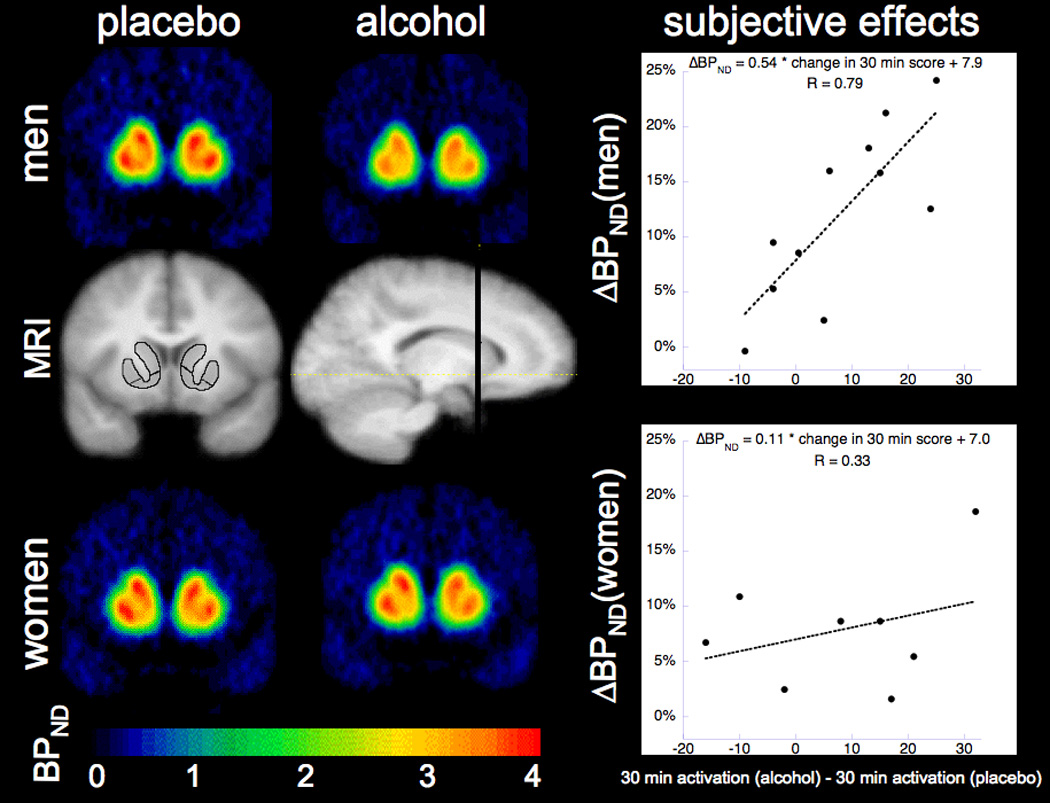
Background: We used a positron emission tomography paradigm with the D2/3 radiotracer [¹¹C]raclopride and an alcohol challenge to examine the magnitude of alcohol-induced dopamine release and compare it between young men and women.
Methods: Twenty-one nonalcohol-dependent young social drinkers completed two positron emission tomography scans on separate days following ingestion of a juice mix containing either ethanol (.75 mg/kg body water) or trace ethanol only. The extent of dopamine released after alcohol was estimated by the percentage difference in [¹¹C]raclopride binding potential (ΔBP(ND)) between days.
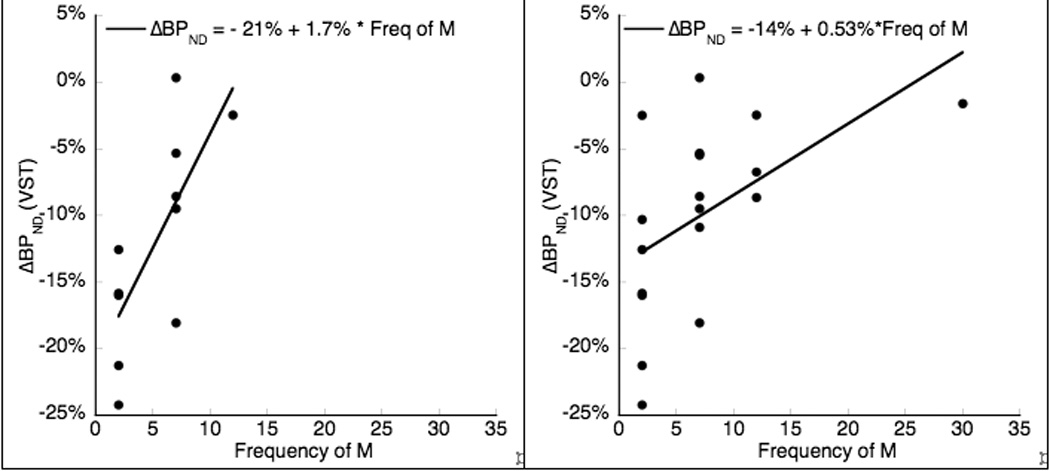
Results: Alcohol administration significantly displaced [¹¹C]raclopride in all striatal subregions, indicating dopamine release, with the largest effect observed in the ventral striatum. Linear mixed model analysis across all striatal subregions of regional ΔBP(ND) with region of interest as repeated measure showed a highly significant effect of sex (p < .001). Ventrostriatal dopamine release in men, but not in women, showed a significant positive correlation to alcohol-induced measures of subjective activation. Furthermore, we found a significant negative correlation between the frequency of maximum alcohol consumption per 24 hours and ventrostriatal ΔBP(ND) (r = .739, p = .009) in men.
Conclusions: This study provides definitive evidence that oral alcohol induces dopamine release in nonalcoholic human subjects and shows sex differences in the magnitude of this effect. The ability of alcohol to stimulate dopamine release may contribute to its rewarding effects and, thereby, to its abuse liability in humans. Our report further suggests several biological mechanisms that may mediate the difference in vulnerability for alcoholism between men and women.
Copyright © 2010 Society of Biological Psychiatry. All rights reserved.
Conflict of interest statement
All other authors reported no biomedical financial interests or potential conflicts of interest.
Figures
Comment in
-
Opioid-dopamine interactions: implications for substance use disorders and their treatment.Biol Psychiatry. 2010 Oct 15;68(8):685-6. doi: 10.1016/j.biopsych.2010.08.002. Biol Psychiatry. 2010. PMID: 20888455 Free PMC article. No abstract available.
References
-
- Hasin DS, Stinson FS, Ogburn E, Grant BF. Prevalence, correlates, disability, and comorbidity of DSM-IV alcohol abuse and dependence in the United States: results from the National Epidemiologic Survey on Alcohol and Related Conditions. Arch Gen Psychiatry. 2007;64(7):830–842. - PubMed
-
- Saxena S. Alcohol, Europe and the developing countries. Addiction. 1997;92 Suppl 1:S43–S48. - PubMed
-
- Teesson M, Baillie A, Lynskey M, Manor B, Degenhardt L. Substance use, dependence and treatment seeking in the United States and Australia: a cross-national comparison. Drug Alcohol Depend. 2006;81(2):149–155. - PubMed
-
- Schuckit MA. Alcohol-use disorders. Lancet. 2009;373(9662):492–501. - PubMed
Publication types
MeSH terms
Substances
Grants and funding
LinkOut - more resources
Full Text Sources
Medical
