


Sex differences in phase angle of entrainment and melatonin amplitude in humans
- PMID: 20679498
- PMCID: PMC3792014
- DOI: 10.1177/0748730410374943
Sex differences in phase angle of entrainment and melatonin amplitude in humans
Abstract
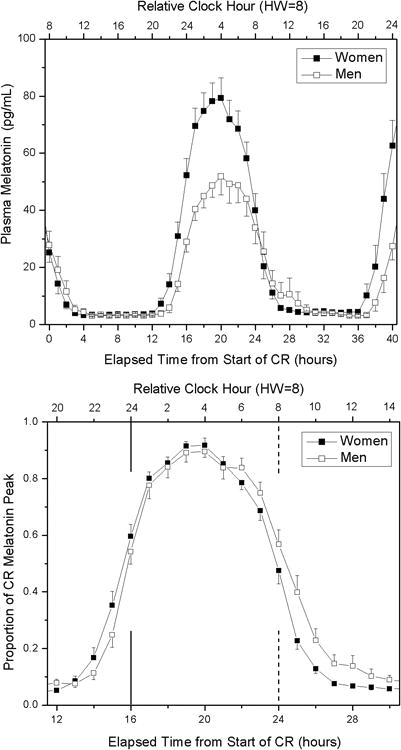
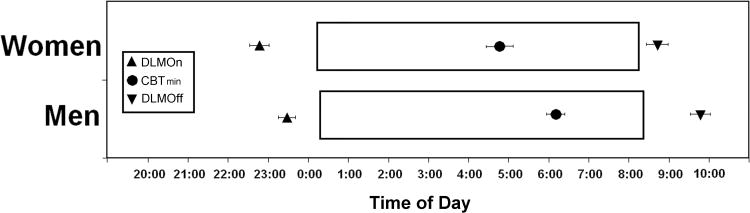
Studies of sex differences in the timing of human circadian rhythms have reported conflicting results. This may be because the studies conducted to date have not controlled for the masking effects of the rest activity cycle on the circadian rhythms being assessed. In the present analysis of data collected under controlled conditions, we examined sex differences in the timing of circadian rhythms while minimizing masking from behavioral and environmental factors using a constant routine (CR) protocol. All participants (28 women and 28 men paired by habitual wake time; age range, 18 30 years) maintained a regular self selected sleep wake schedule at home prior to the study. After 3 baseline days in the laboratory, participants began a CR. Women were found to have a significantly higher melatonin amplitude and lower temperature amplitude than men. While sleep timing was the same between the 2 groups, the timing of the circadian rhythms of core body temperature and pineal melatonin secretion was earlier relative to sleep time in women as compared to men. Sleep therefore occurred at a later biological time for women than men, despite being at the same clock time. Given that sleep propensity and structure vary with circadian phase and are impacted by circulating melatonin, these findings may have important implications for understanding sex differences in sleep timing and duration, diurnal preference, and the prevalence of sleep disorders such as insomnia.
Figures
References
-
- Adan A, Natale V. Gender differences in morningness-eveningness preference. Chronobiology International. 2002;19:709–720. - PubMed
-
- Baehr EK, Revelle W, Eastman CI. Individual differences in the phase and amplitude of the human circadian temperature rhythm: With an emphasis on morningness-eveningness. Journal of Sleep Research. 2000;9:117–127. - PubMed
-
- Baker FC, Driver HS. Circadian rhythms, sleep, and the menstrual cycle. Sleep Medicine. 2007;3 - PubMed
Publication types
MeSH terms
Substances
Grants and funding
LinkOut - more resources
Full Text Sources
Other Literature Sources
