


Regulation of jaw-specific isoforms of myosin-binding protein-C and tropomyosin in regenerating cat temporalis muscle innervated by limb fast and slow motor nerves
- PMID: 20679518
- PMCID: PMC2958141
- DOI: 10.1369/jhc.2010.956847
Regulation of jaw-specific isoforms of myosin-binding protein-C and tropomyosin in regenerating cat temporalis muscle innervated by limb fast and slow motor nerves
Abstract
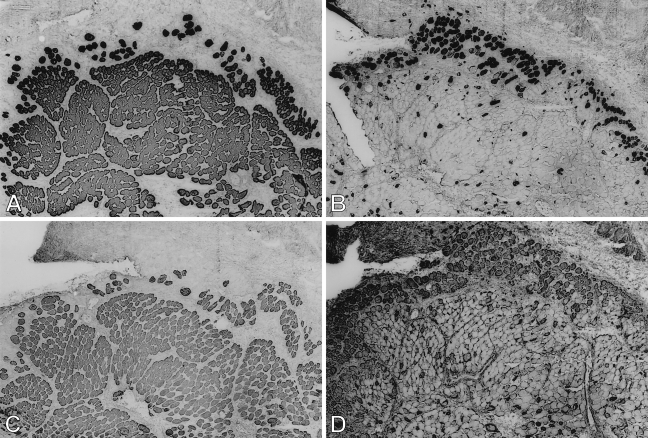
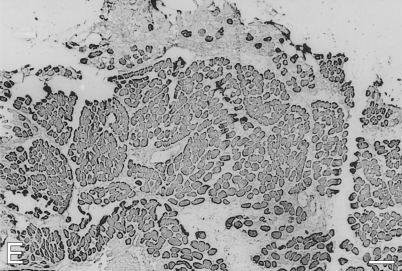
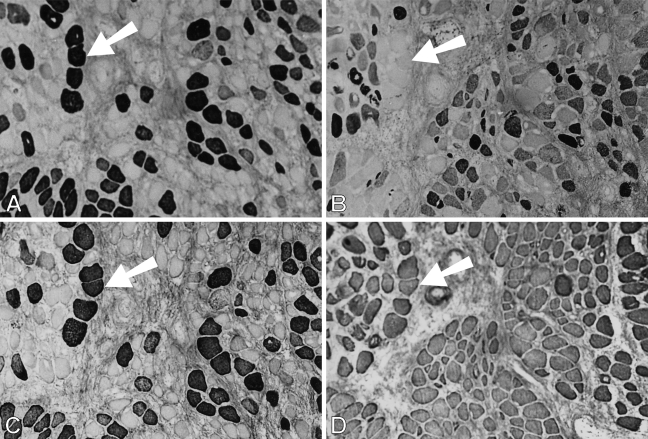
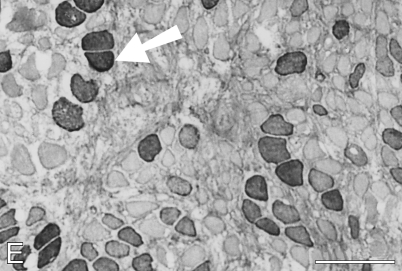
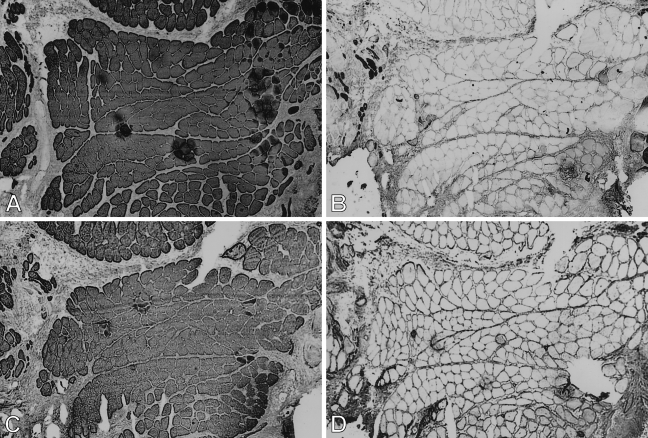
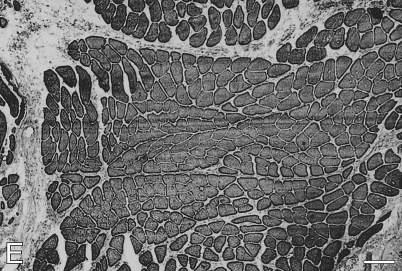
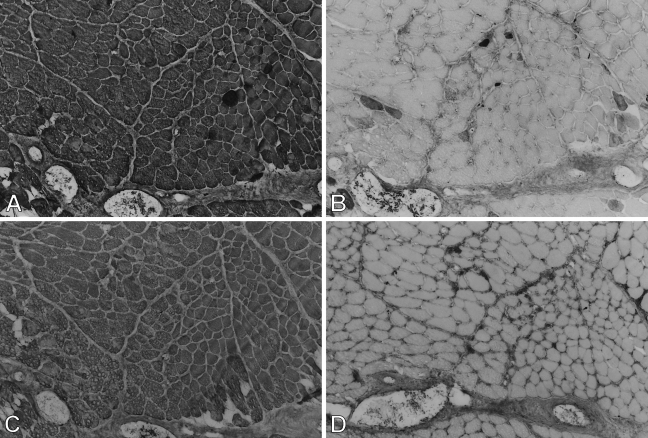
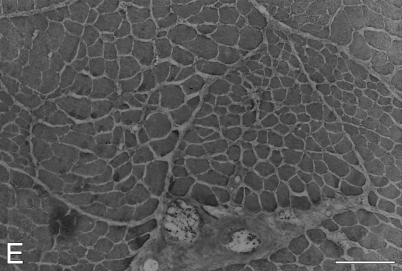
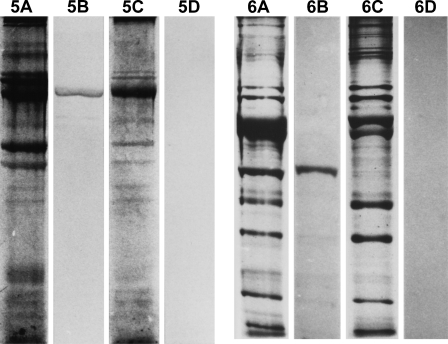
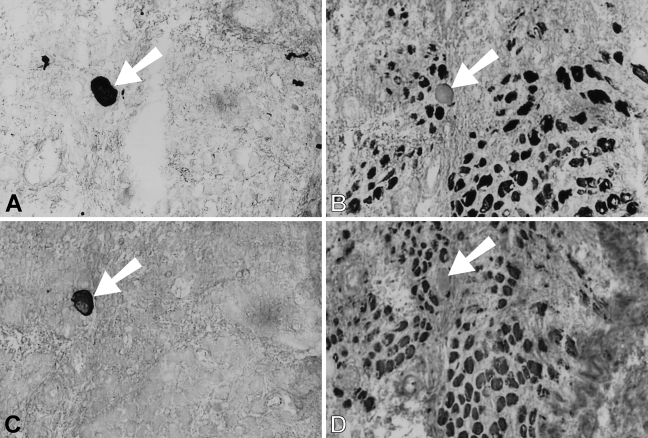
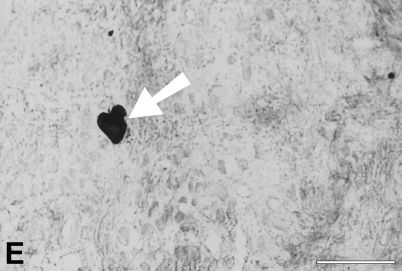
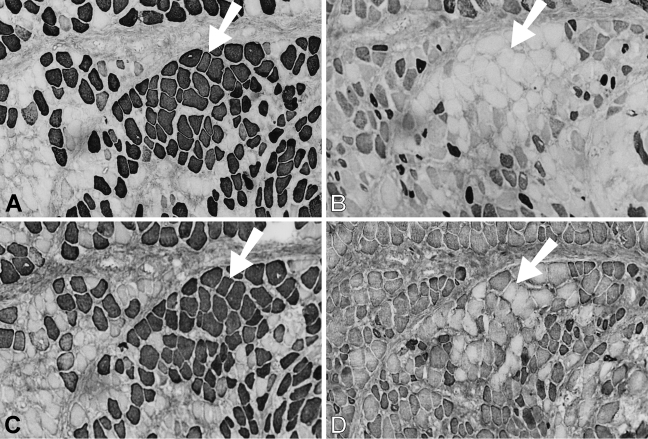
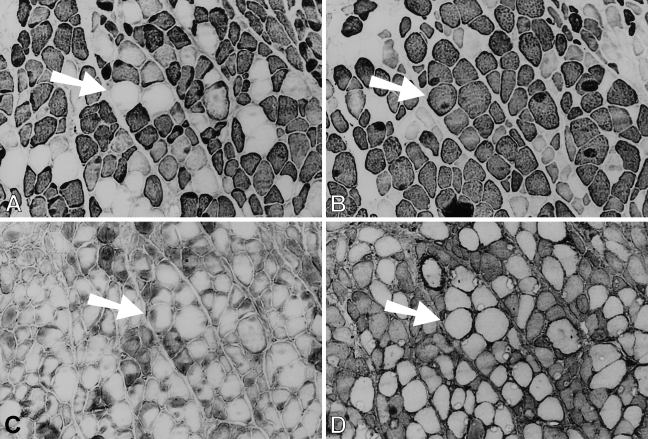
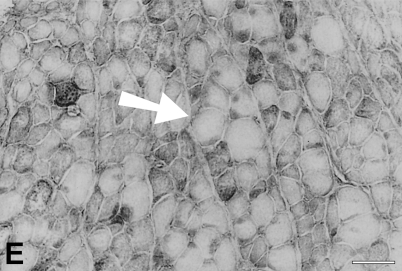
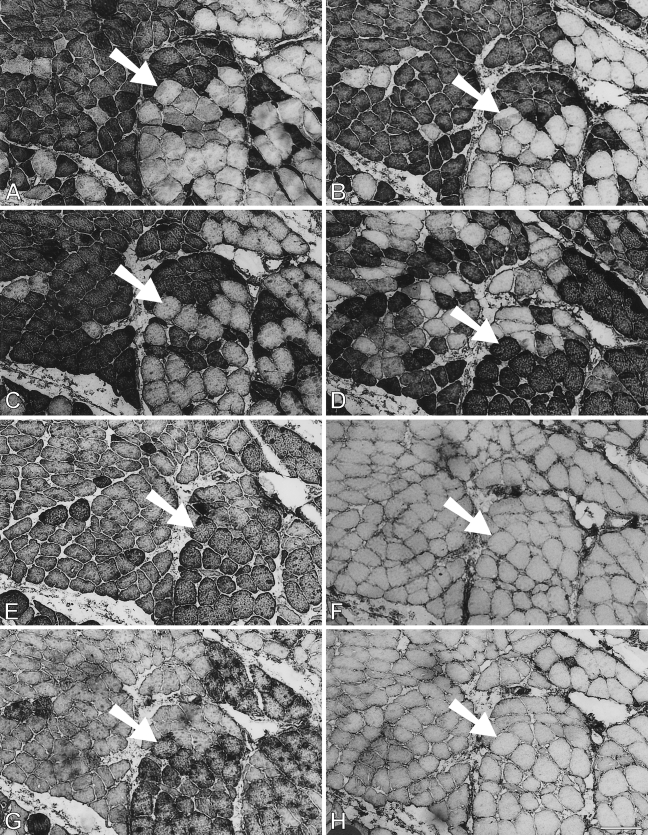
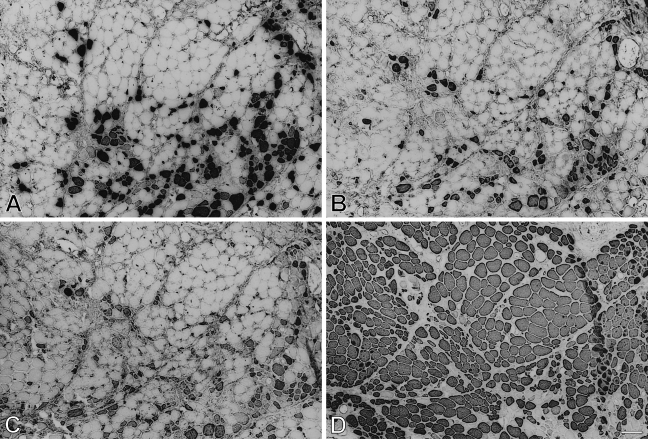
Cat jaw-closing muscles are a distinct muscle allotype characterized by the expression of masticatory-specific myofibrillar proteins. Transplantation studies showed that expression of masticatory myosin heavy chain (m-MyHC) is promoted by fast motor nerves, but suppressed by slow motor nerves. We investigated whether masticatory myosin-binding protein-C (m-MBP-C) and masticatory tropomyosin (m-Tm) are similarly regulated. Temporalis muscle strips were transplanted into limb muscle beds to allow innervation by fast or slow muscle nerve during regeneration. Regenerated muscles were examined postoperatively up to 168 days by peroxidase IHC using monoclonal antibodies to m-MyHC, m-MBP-C, and m-Tm. Regenerates in both muscle beds expressed fetal and slow MyHCs, m-MyHC, m-MBP-C, and m-Tm during the first 4 weeks. Longer-term regenerates innervated by fast nerve suppressed fetal and slow MyHCs, retaining m-MyHC, m-MBP-C, and m-Tm, whereas fibers innervated by slow nerve suppressed fetal MyHCs and the three masticatory-specific proteins, induced slow MyHC, and showed immunohistochemical characteristics of jaw-slow fibers. We concluded that expression of m-MBP-C and m-Tm is coregulated by m-MyHC and that neural impulses to limb slow muscle are capable of suppressing masticatory-specific proteins and to channel gene expression along the jaw-slow phenotype unique to jaw-closing muscle.
Figures

References
-
- Adams GR, McCue SA, Zeng M, Baldwin KM (1999) Time course of myosin heavy chain transitions in neonatal rats: importance of innervation and thyroid state. Am J Physiol 276:R954–961 - PubMed
-
- Allen DL, Sartorius CA, Sycuro LK, Leinwand LA (2001) Different pathways regulate expression of the skeletal myosin heavy chain genes. J Biol Chem 276:43524–43533 - PubMed
-
- Bar A, Pette D (1988) Three fast myosin heavy chains in adult rat skeletal muscle. FEBS Lett 235:153–155 - PubMed
Publication types
MeSH terms
Substances
LinkOut - more resources
Full Text Sources
Miscellaneous
