


Central nervous system delivery of the antipsychotic olanzapine induces hepatic insulin resistance
- PMID: 20682682
- PMCID: PMC3279549
- DOI: 10.2337/db10-0449
Central nervous system delivery of the antipsychotic olanzapine induces hepatic insulin resistance
Abstract
Objective: Olanzapine (OLZ) is an atypical antipsychotic whose clinical efficacy is hampered by side effects including weight gain and diabetes. Recent evidence shows that OLZ alters insulin sensitivity independent of changes in body weight and composition. The present study addresses whether OLZ-induced insulin resistance is driven by its central actions.
Research design and methods: Sprague-Dawley rats received an intravenous (OLZ-IV group) or intracerebroventricular (OLZ-ICV group) infusion of OLZ or vehicle. Glucose kinetics were assessed before (basal period) and during euglycemic-hyperinsulinemic clamp studies.
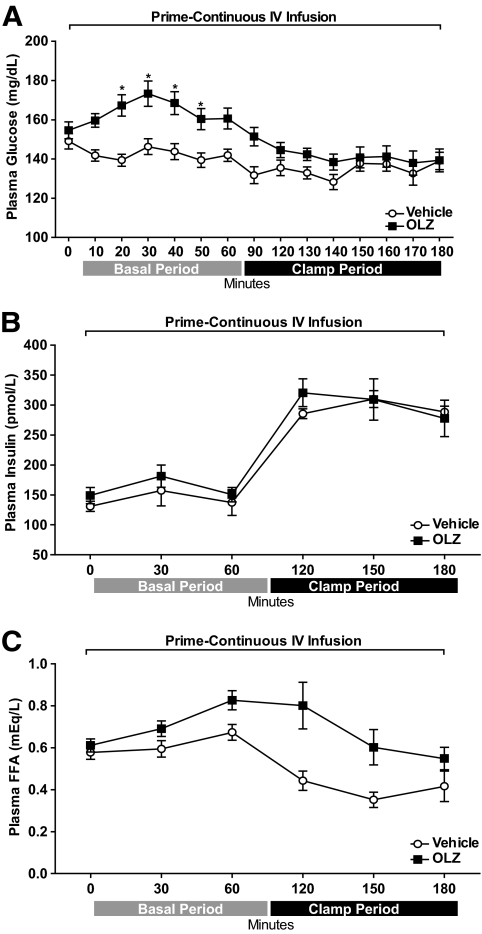
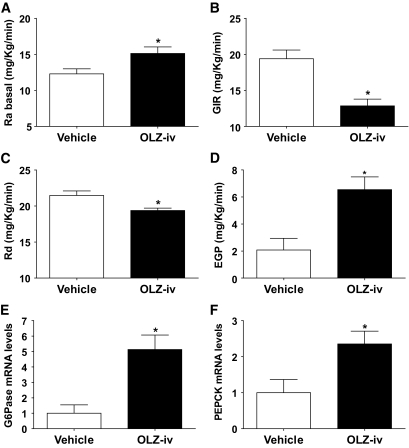
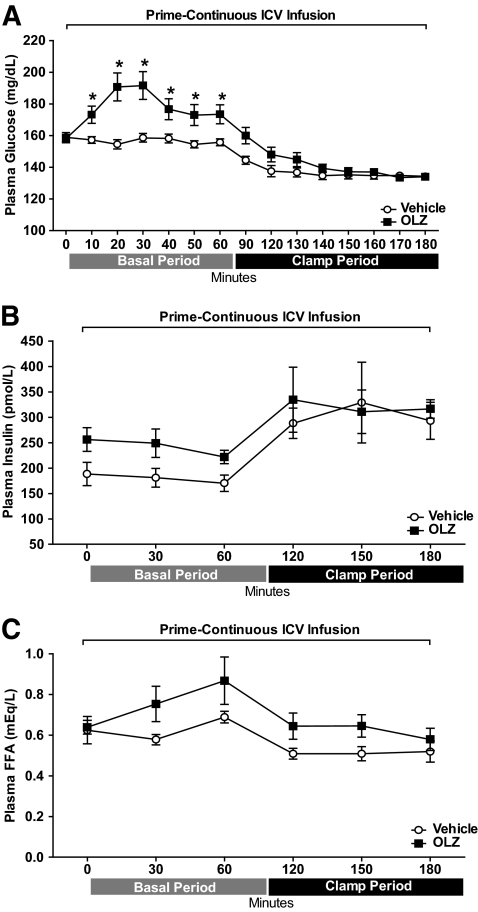
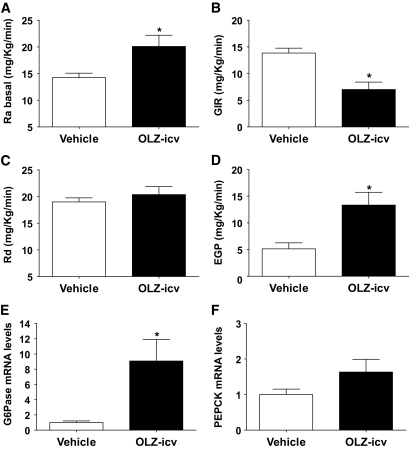
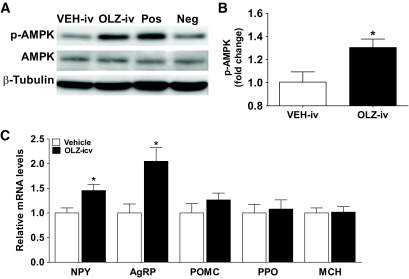
Results: OLZ-IV caused a transient increase in glycemia and a higher rate of glucose appearance (R(a)) in the basal period. During the hyperinsulinemic clamp, the glucose infusion rate (GIR) required to maintain euglycemia and the rate of glucose utilization (R(d)) were decreased in OLZ-IV, whereas endogenous glucose production (EGP) rate was increased compared with vehicle-IV. Consistent with an elevation in EGP, the OLZ-IV group had higher hepatic mRNA levels for the enzymes glucose-6-phosphatase and phosphoenolpyruvate carboxykinase. Phosphorylation of hypothalamic AMP-activated protein kinase (AMPK) was increased in OLZ-IV rats compared with controls. Similarly, an intracerebroventricular infusion of OLZ resulted in a transient increase in glycemia as well as a higher R(a) in the basal period. During the hyperinsulinemic period, OLZ-ICV caused a decreased GIR, an increased EGP, but no change in R(d). Furthermore, OLZ-ICV rats had increased hepatic gluconeogenic enzymes and elevated hypothalamic neuropeptide-Y and agouti-related protein mRNA levels.
Conclusions: Acute central nervous system exposure to OLZ induces hypothalamic AMPK and hepatic insulin resistance, pointing to a hypothalamic site of action for the metabolic dysregulation of atypical antipsychotics.
Figures
References
-
- Lieberman JA, Stroup TS, McEvoy JP, Swartz MS, Rosenheck RA, Perkins DO, Keefe RS, Davis SM, Davis CE, Lebowitz BD, Severe J, Hsiao JK. Effectiveness of antipsychotic drugs in patients with chronic schizophrenia. N Engl J Med 2005;353:1209–1223 - PubMed
-
- Keck PE, McElroy SL. Bipolar disorder, obesity, and pharmacotherapy-associated weight gain. J Clin Psychiatry 2003;64:1426–1435 - PubMed
-
- Bergman RN, Ader M. Atypical antipsychotics and glucose homeostasis. J Clin Psychiatry 2005;66:504–514 - PubMed
-
- Allison DB, Mentore JL, Heo M, Chandler LP, Cappelleri JC, Infante MC, Weiden PJ. Antipsychotic-induced weight gain: a comprehensive research synthesis. Am J Psychiatry 1999;156:1686–1696 - PubMed
-
- Hartfield AW, Moore NA, Clifton PG. Effects of clozapine, olanzapine and haloperidol on the microstructure of ingestive behaviour in the rat. Psychopharmacology (Berl) 2003;167:115–122 - PubMed
Publication types
MeSH terms
Substances
LinkOut - more resources
Full Text Sources
Miscellaneous
