


Fluorescence-based codetection with protein markers reveals distinct cellular compartments for altered MicroRNA expression in solid tumors
- PMID: 20682703
- PMCID: PMC3229296
- DOI: 10.1158/1078-0432.CCR-10-1152
Fluorescence-based codetection with protein markers reveals distinct cellular compartments for altered MicroRNA expression in solid tumors
Abstract
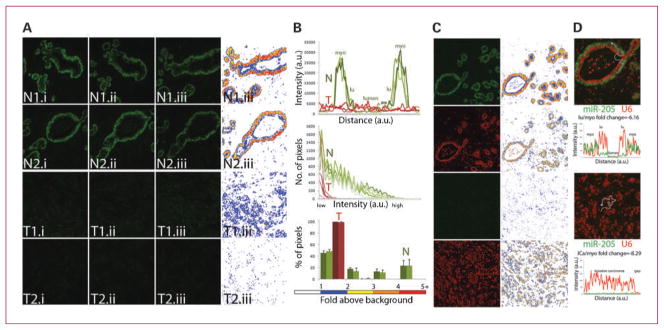
Purpose: High-throughput profiling experiments have linked altered expression of microRNAs (miRNA) to different types of cancer. Tumor tissues are a heterogeneous mixture of not only cancer cells, but also supportive and reactive tumor microenvironment elements. To clarify the clinical significance of altered miRNA expression in solid tumors, we developed a sensitive fluorescence-based in situ hybridization (ISH) method to visualize miRNA accumulation within individual cells in formalin-fixed, paraffin-embedded tissue specimens. This ISH method was implemented to be compatible with routine clinical immunohistochemical (IHC) assays to enable the detection of miRNAs and protein markers in the same tissue section for colocalization and functional studies.
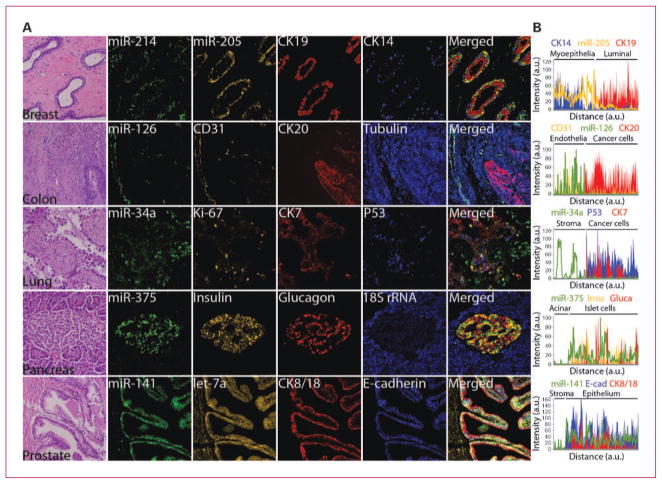
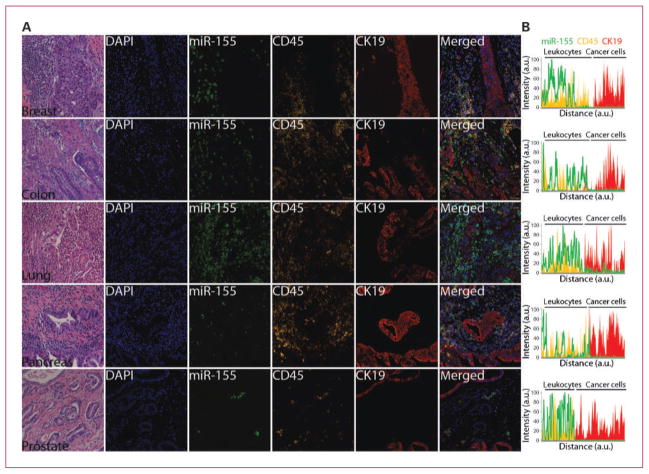
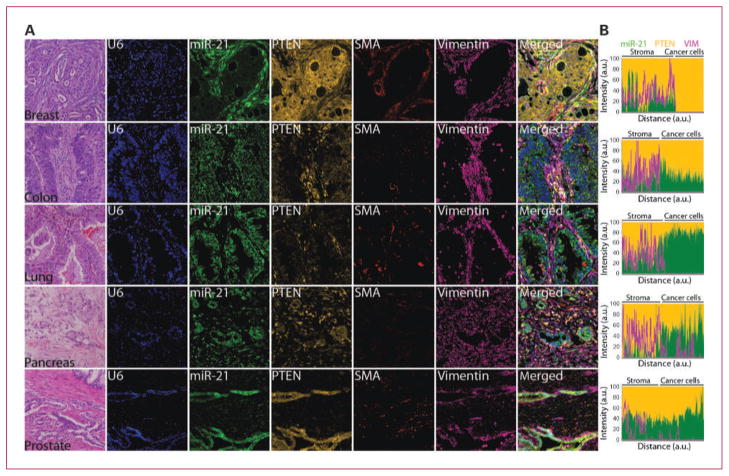
Experimental design: We used this combined ISH/IHC assay to study a subset of cancer-associated miRNAs, including miRNAs frequently detected at low (miR-34a and miR-126) and high (miR-21 and miR-155) levels, in a panel of breast, colorectal, lung, pancreas, and prostate carcinomas.
Results: Despite the distinct histopathologic alterations of each particular cancer type, general trends emerged that pinpointed distinct source cells of altered miRNA expression. Although altered expressions of miR-21 and miR-34a were manifested within cancer cells, those of miR-126 and miR-155 were predominantly confined to endothelial cells and immune cells, respectively. These results suggest a heterogeneous participation of miRNAs in carcinogenesis by intrinsically affecting cancer cell biology or by modulating stromal, vascular, and immune responses.
Conclusions: We described a rapid and sensitive multicolor ISH/IHC assay and showed that it could be broadly applied as an investigational tool to better understand the etiologic relevance of altered miRNA expression in cancer.
Conflict of interest statement
No potential conflicts of interest were disclosed.
Figures
References
-
- Lee RC, Ambros V. An extensive class of small RNAs in Caenorhabditis elegans. Science. 2001;294:862–4. - PubMed
-
- Lau NC, Lim LP, Weinstein EG, Bartel DP. An abundant class of tiny RNAs with probable regulatory roles in Caenorhabditis elegans. Science. 2001;294:858–62. - PubMed
-
- Lagos-Quintana M, Rauhut R, Lendeckel W, Tuschl T. Identification of novel genes coding for small expressed RNAs. Science. 2001;294:853–8. - PubMed
Publication types
MeSH terms
Substances
Grants and funding
LinkOut - more resources
Full Text Sources
