Epidemiologic and clinical aspects of a Rift Valley fever outbreak in humans in Tanzania, 2007
- PMID: 20682902
- PMCID: PMC2913502
- DOI: 10.4269/ajtmh.2010.09-0318
Epidemiologic and clinical aspects of a Rift Valley fever outbreak in humans in Tanzania, 2007
Abstract
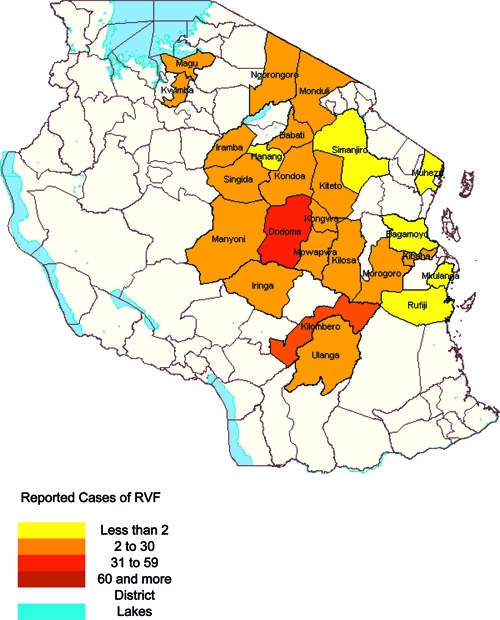
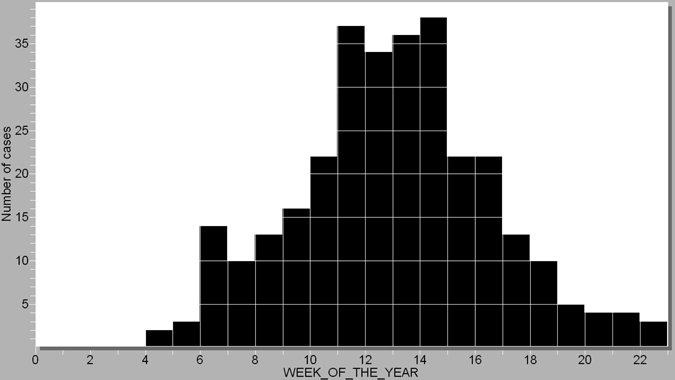
In January 2007, an outbreak of Rift Valley fever (RVF) was detected among humans in northern Tanzania districts. By the end of the outbreak in June, 2007, 511 suspect RVF cases had been recorded from 10 of the 21 regions of Tanzania, with laboratory confirmation of 186 cases and another 123 probable cases. All confirmed RVF cases were located in the north-central and southern regions of the country, with an eventual fatality rate of 28.2% (N = 144). All suspected cases had fever; 89% had encephalopathy, 10% hemorrhage, and 3% retinopathy. A total of 169 (55%) of the 309 confirmed or probable cases were also positive for malaria as detected by peripheral blood smear. In a cohort of 20 RVF cases with known outcome that were also positive for human immunodeficiency virus, 15 (75%) died. Contact with sick animals and animal products, including blood, meat, and milk, were identified as major risk factors of acquiring RVF.
Figures

References
-
- Peters CJ, Linthicum KJ. In: CRC Handbook Series in Zoonoses. Section B: Viral Zoonoses. Second edition. Beran GW, editor. Boca Raton, FL: CRC Press Inc; 1994. pp. 125–138. (Rift Valley fever).
-
- Davies FG, Highton RB. Possible vectors for Rift Valley fever in Kenya. Trans R Soc Trop Med Hyg. 1980;74:815–825. - PubMed
-
- Woods C, Karpati A, Grein T, McCarthy N, Gaturuku P, Muchiri E, Dunster E, Henderson A, Khan A, Swanepoel R, Bonmarin I, Martin L, Mann P, Smoak B, Ryan M, Ksiazek T, Ray R, Ndikuyeze A, Agata N, Peters C. An outbreak of Rift Valley fever in northeastern Kenya, 1997–1998. Emerg Infect Dis. 2002;8:138–144. - PMC - PubMed
Publication types
MeSH terms
Substances
LinkOut - more resources
Full Text Sources