


Promises and pitfalls in erythopoietin-mediated tissue protection: are nonerythropoietic derivatives a way forward?
- PMID: 20683348
- PMCID: PMC3023830
- DOI: 10.2310/JIM.0b013e3181ed30bf
Promises and pitfalls in erythopoietin-mediated tissue protection: are nonerythropoietic derivatives a way forward?
Abstract
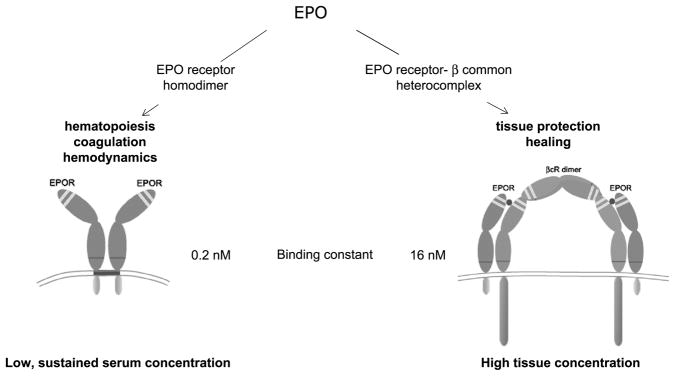
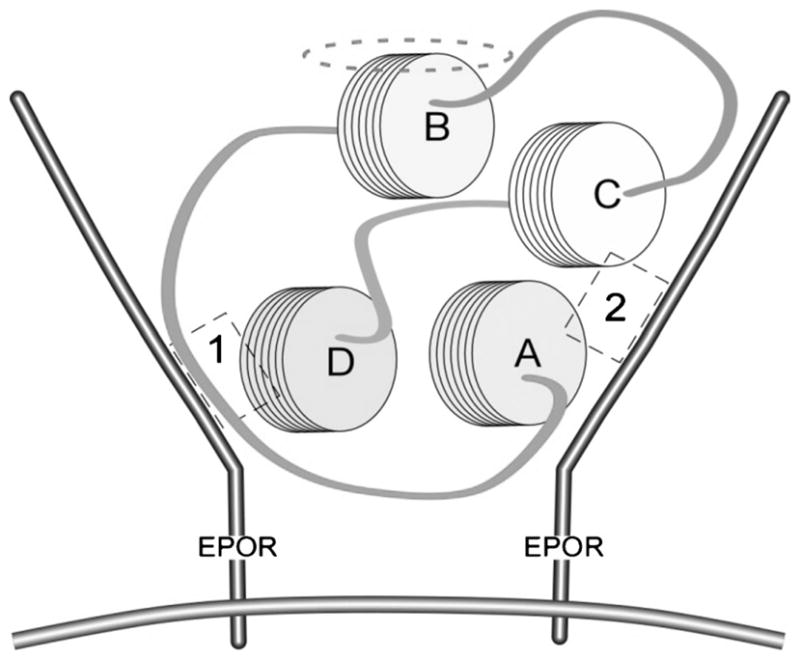
The essential biological role of erythropoietin (EPO) in maintaining erythrocyte mass has been well understood for many years. Although EPO is required for the maturation of red cells, it also has strong procoagulant effects on the vascular endothelium and platelets, which limit erythrocyte losses after hemorrhage. Like other members of the type 1 cytokine superfamily, EPO has multiple biological activities. For the past 10 years, multiple investigators have shown that EPO acts as a locally produced antagonist of proinflammatory cytokines that are generated by the innate immune response in response to infection, trauma, or metabolic stress. Specifically, EPO inhibits apoptosis of cells surrounding a locus of injury, reduces the influx of inflammatory cells, and recruits tissue-specific stem cells and endothelial progenitor cells. Available evidence suggests that these multiple, nonerythropoietic effects of EPO are mediated by a tissue protective receptor (TPR) that is distinct from the homodimeric receptor responsible for erythropoiesis. Notably, activation of the TPR requires a higher concentration of EPO than is needed for maximal erythropoiesis. Unfortunately, these higher concentrations of EPO also stimulate hematopoietic and procoagulant pathways, which can cause adverse effects and, therefore, potentially limit the clinical use of EPO for tissue protection. To circumvent these problems, the EPO molecule has been successfully modified in a variety of ways to interact only with the TPR. Early clinical experience has shown that these compounds appear to be safe, and proof of concept trials are ready to begin.
Figures
References
-
- Fisher JW. Erythropoietin: physiology and pharmacology update. Exp Med Biol. 2003;228:1–14. - PubMed
-
- Masuda S, Nagao M, Takahata K, et al. Functional erythropoietin receptor of the cells with neural characteristics. Comparison with receptor properties of erythroid cells. J Biol Chem. 1993;268:11208–11216. - PubMed
-
- Sautina L, Sautin Y, Beem E, et al. Induction of nitric oxide by erythropoietin is mediated by the {beta} common receptor and requires interaction with VEGF receptor 2. Blood. 2009;115:896–905. - PubMed
Publication types
MeSH terms
Substances
Grants and funding
LinkOut - more resources
Full Text Sources
Other Literature Sources
Research Materials
Miscellaneous
