


Relation of melatonin to sleep architecture in children with autism
- PMID: 20683768
- PMCID: PMC3746009
- DOI: 10.1007/s10803-010-1072-1
Relation of melatonin to sleep architecture in children with autism
Abstract
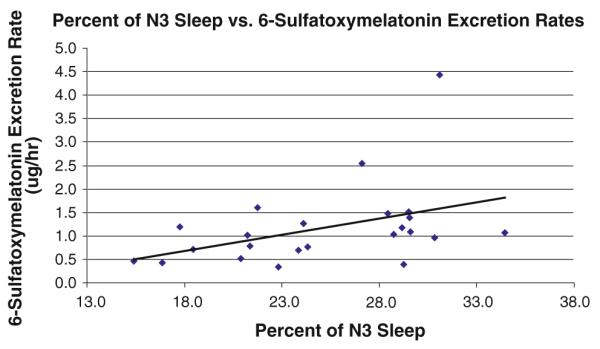
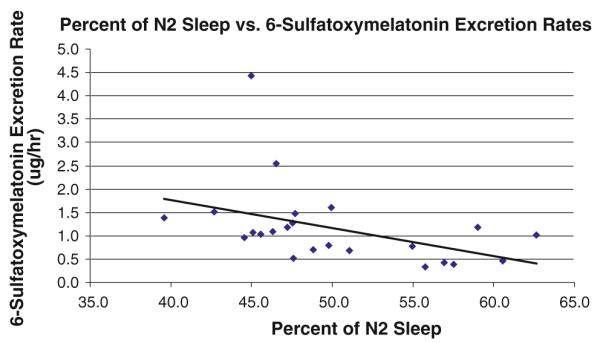
Children with autism often suffer from sleep disturbances, and compared to age-matched controls, have decreased melatonin levels, as indicated by urine levels of the primary melatonin metabolite, 6-sulfatoxymelatonin (6-SM). We therefore investigated the relationship between 6-SM levels and sleep architecture in children with autism spectrum disorders (ASD). Twenty-three children, aged 4-10 years, completed two nights of polysomnography and one overnight urine collection for measurement of urinary 6-SM excretion rate. Parents completed the Children's Sleep Habits Questionnaire. We found that higher urinary 6-SM excretion rates were associated with increased N3 sleep, decreased N2 sleep, and decreased daytime sleepiness. The results warrant further examination to examine the effects of supplemental melatonin on sleep architecture and daytime sleepiness.
Figures
References
-
- American Psychiatric Association . Diagnostic and statistical manual of mental disorders. 4th edition. text revision American Psychiatric Association; Washington, DC: 2000.
-
- Andersen IM, Kaczmarska J, McGrew SG, Malow BA. Melatonin for insomnia in children with autism spectrum disorders. Journal of Child Neurology. 2008;23(5):482–485. - PubMed
-
- Autism and Developmental Disabilities Monitoring Network. United States, 2006 Prevalence of autism spectrum disorders. MMWR Surveillance Summaries. 2009;58(1):57–66. - PubMed
-
- Beck-Friis J, von Rosen D, Kjellman BF, Ljunggren JG, Wetterberg L. Melatonin in relation to body measures, sex, age, season and the use of drugs in patients with major affective disorders and healthy subjects. Psychoneuroendocrinology. 1984;9(3):61–277. - PubMed
Publication types
MeSH terms
Substances
Grants and funding
LinkOut - more resources
Full Text Sources
Medical
