


Ca(2+) sensor GCAP1: A constitutive element of the ONE-GC-modulated odorant signal transduction pathway
- PMID: 20684533
- PMCID: PMC2936275
- DOI: 10.1021/bi101001v
Ca(2+) sensor GCAP1: A constitutive element of the ONE-GC-modulated odorant signal transduction pathway
Abstract
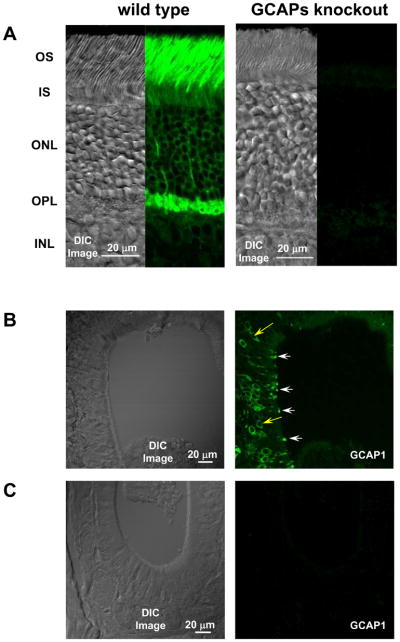
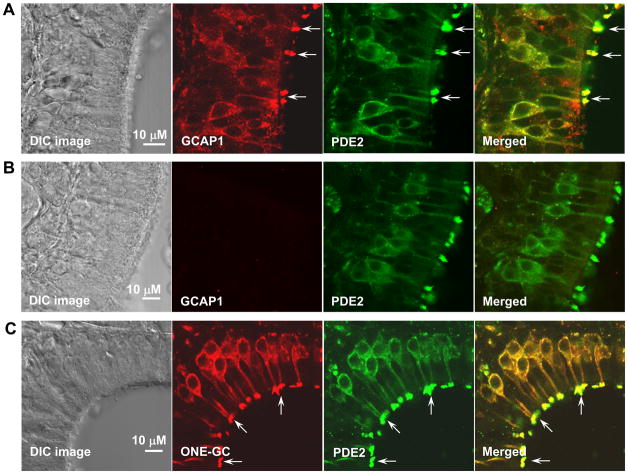
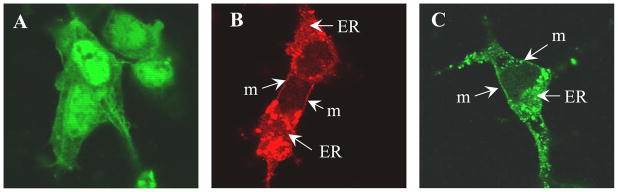
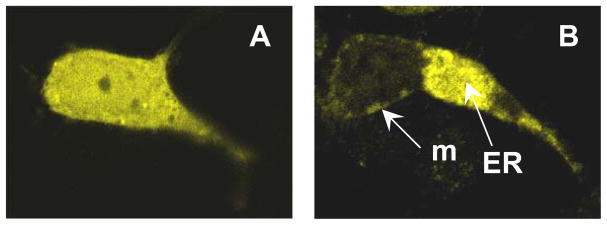
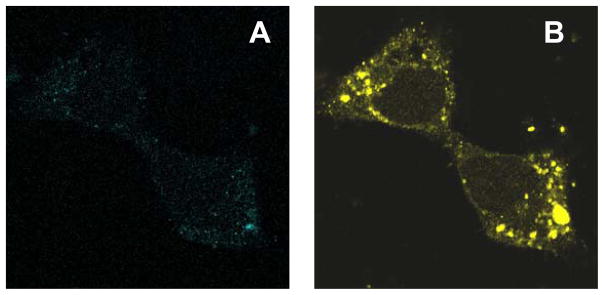
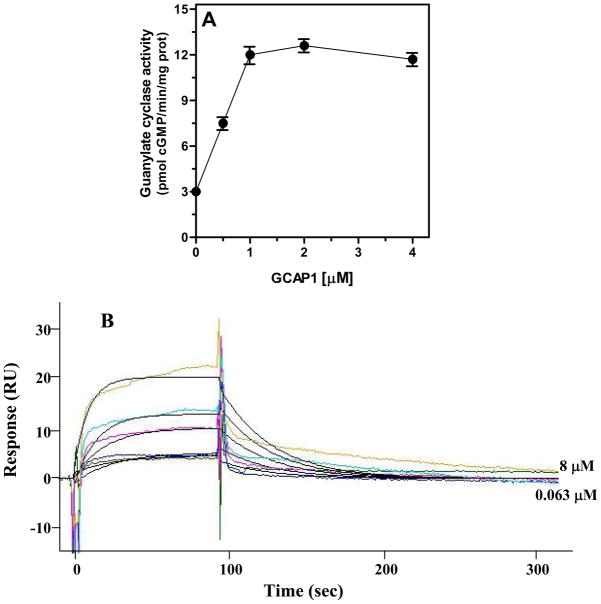
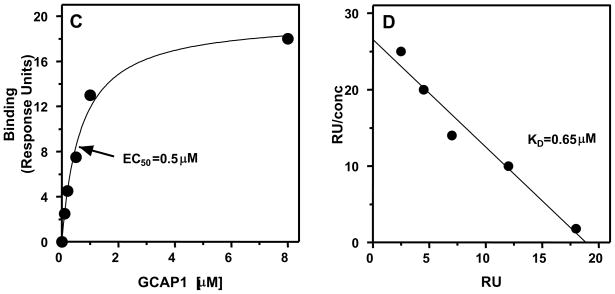
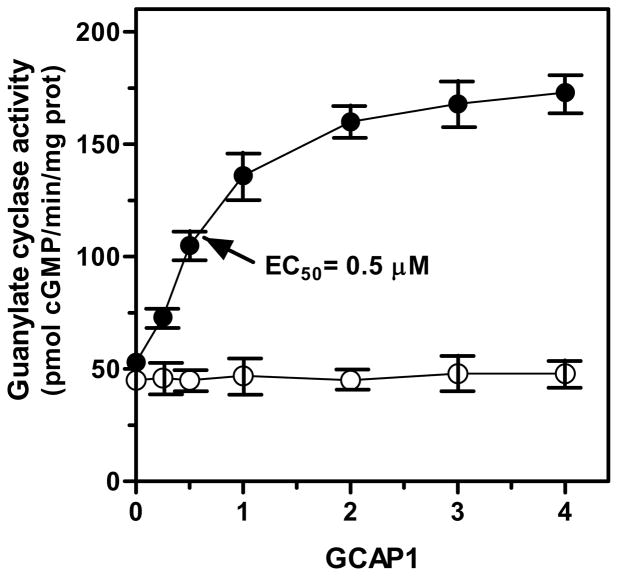
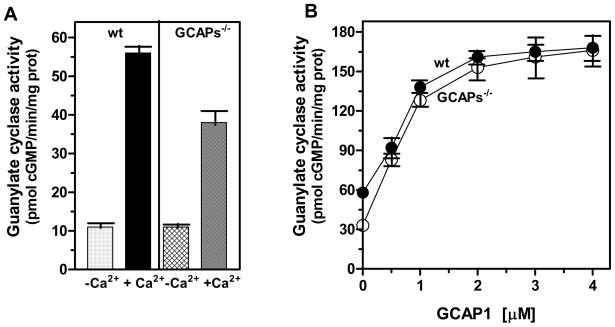
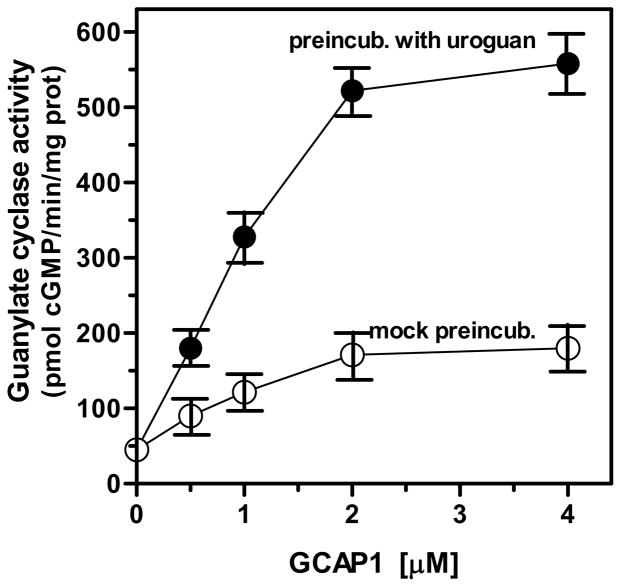
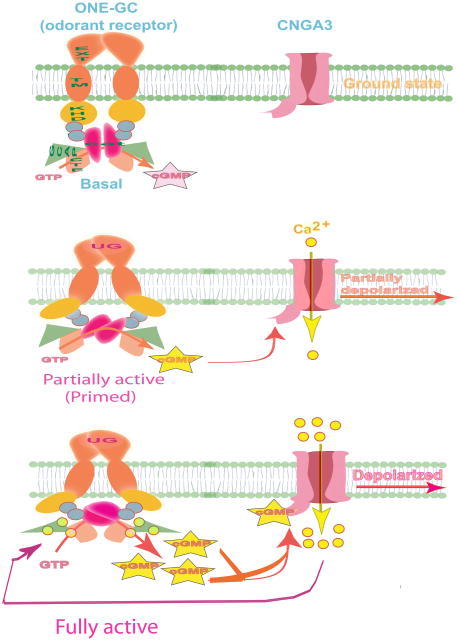
In a small subset of the olfactory sensory neurons, the odorant receptor ONE-GC guanylate cyclase is a central transduction component of the cyclic GMP signaling pathway. In a two-step transduction model, the odorant, uroguanylin, binds to the extracellular domain and activates its intracellular domain to generate the odorant second messenger, cyclic GMP. This study via comprehensive technology, including gene deletion, live cell Forster resonance energy transfer (FRET), and surface plasmon resonance (SPR) spectroscopy, documents the identity of a remarkably intriguing operation of a Ca(2+) sensor component of the ONE-GC transduction machinery, GCAP1. In the ciliary membranes, the sites of odorant transduction, GCAP1 is biochemically and physiologically coupled to ONE-GC. Strikingly, this coupling reverses its well- established function in ROS-GC1 signaling, linked with phototransduction. In response to the free Ca(2+) range from nanomolar to semimicromolar, it inhibits ROS-GC1, yet in this range, it incrementally stimulates ONE-GC. These two opposite modes of signaling two SENSORY processes by a single Ca(2+) sensor define a new transduction paradigm of membrane guanylate cyclases. This paradigm is pictorially presented.
Figures
References
-
- Munger SD, Leinders-Zufall T, Zufall F. Subsystem Organization of the mammalian sense of smell. Ann Rev Physiol. 2009;71:115–140T. - PubMed
-
- Nakamura T. Cellular and molecular constituents of olfactory sensation in vertebrates. Comp Biochem Physiol A Mol Integr Physiol. 2000;126:17–32. - PubMed
-
- Menini A. Calcium signaling and regulation in olfactory neurons. Curr Opin Neurobiol. 1999;9:419–426. - PubMed
-
- Schild D, Restrepo D. Transduction mechanisms in vertebrate olfactory receptor cells. Physiol Rev. 1998;78:429–466. - PubMed
-
- Belluscio L, Gold GH, Nemes A, Axel R. Mice deficient in G(olf) are anosmic. Neuron. 1998;20:69–81. - PubMed
Publication types
MeSH terms
Substances
Grants and funding
LinkOut - more resources
Full Text Sources
Molecular Biology Databases
Miscellaneous
