


Population screening for glucose-6-phosphate dehydrogenase deficiencies in Isabel Province, Solomon Islands, using a modified enzyme assay on filter paper dried bloodspots
- PMID: 20684792
- PMCID: PMC2924349
- DOI: 10.1186/1475-2875-9-223
Population screening for glucose-6-phosphate dehydrogenase deficiencies in Isabel Province, Solomon Islands, using a modified enzyme assay on filter paper dried bloodspots
Abstract
Background: Glucose-6-phosphate dehydrogenase deficiency poses a significant impediment to primaquine use for the elimination of liver stage infection with Plasmodium vivax and for gametocyte clearance, because of the risk of life-threatening haemolytic anaemia that can occur in G6PD deficient patients. Although a range of methods for screening G6PD deficiency have been described, almost all require skilled personnel, expensive laboratory equipment, freshly collected blood, and are time consuming; factors that render them unsuitable for mass-screening purposes.
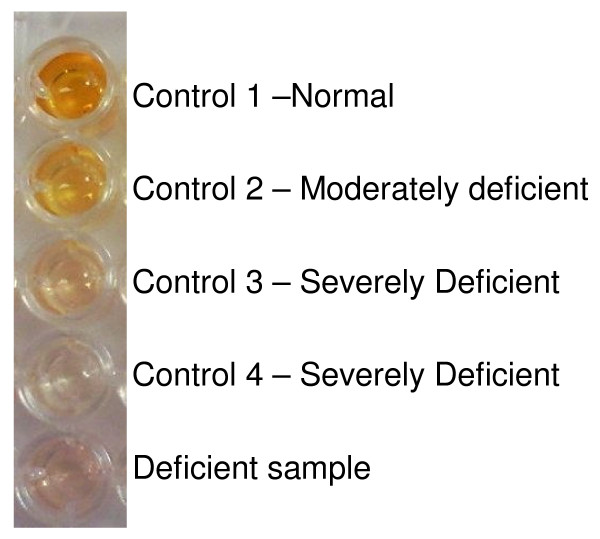
Methods: A published WST8/1-methoxy PMS method was adapted to assay G6PD activity in a 96-well format using dried blood spots, and used it to undertake population screening within a malaria survey undertaken in Isabel Province, Solomon Islands. The assay results were compared to a biochemical test and a recently marketed rapid diagnostic test.
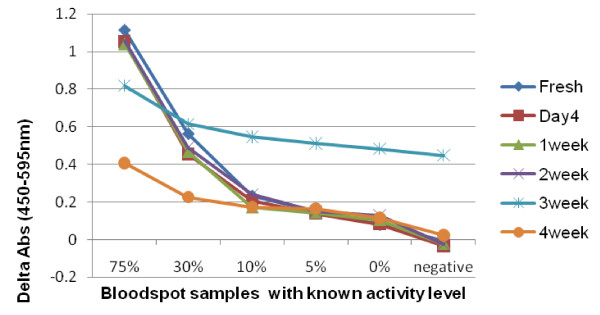
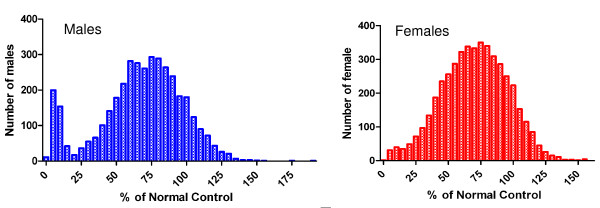
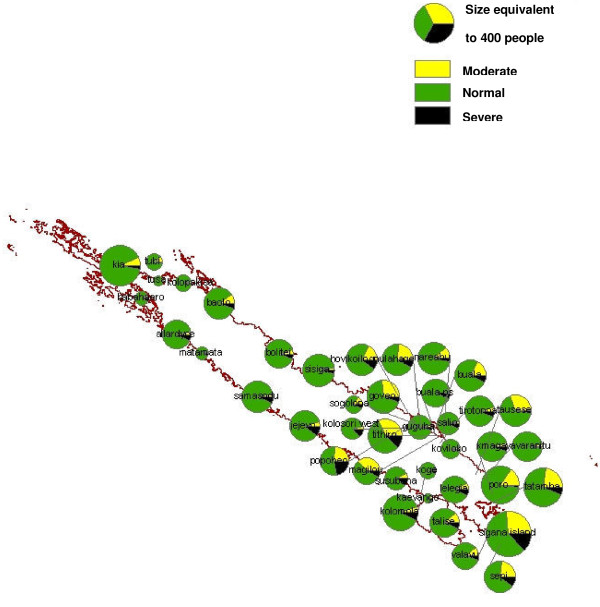
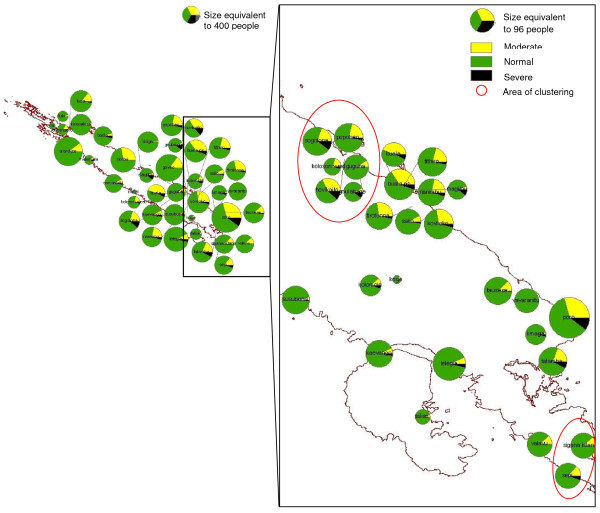
Results: Comparative testing with biochemical and rapid diagnostic test indicated that results obtained by filter paper assay were accurate providing that blood spots were assayed within 5 days when stored at ambient temperature and 10 days when stored at 4 degrees. Screening of 8541 people from 41 villages in Isabel Province, Solomon Islands revealed the prevalence of G6PD deficiency as defined by enzyme activity < 30% of normal control was 20.3% and a prevalence of severe deficiency that would predispose to primaquine-induced hemolysis (WHO Class I-II) of 6.9%.
Conclusions: The assay enabled simple and quick semi-quantitative population screening in a malaria-endemic region. The study indicated a high prevalence of G6PD deficiency in Isabel Province and highlights the critical need to consider G6PD deficiency in the context of P. vivax malaria elimination strategies in Solomon Islands, particularly in light of the potential role of primaquine mass drug administration.
Figures
References
-
- Vulliamy T, Mehta A, Luzzatto L. In: The Online Metabolic and Molecular Bases of Inherited Disease. Valle D, Beaudet A, Vogelstein B, Kinzler K, Antonarakis S, Ballabio A, editor. 2007. Chapter 179: Glucose 6-Phosphate Dehydrogenase Deficiency.http://www.ommbid.com/OMMBID/the_online_metabolic_and_molecular_bases_of...
Publication types
MeSH terms
Substances
LinkOut - more resources
Full Text Sources
Medical
Miscellaneous
