


A single-amino-acid substitution in herpes simplex virus 1 envelope glycoprotein B at a site required for binding to the paired immunoglobulin-like type 2 receptor alpha (PILRalpha) abrogates PILRalpha-dependent viral entry and reduces pathogenesis
- PMID: 20686018
- PMCID: PMC2950593
- DOI: 10.1128/JVI.01166-10
A single-amino-acid substitution in herpes simplex virus 1 envelope glycoprotein B at a site required for binding to the paired immunoglobulin-like type 2 receptor alpha (PILRalpha) abrogates PILRalpha-dependent viral entry and reduces pathogenesis
Abstract
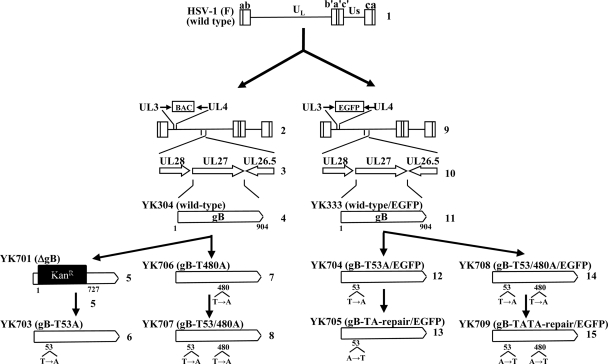
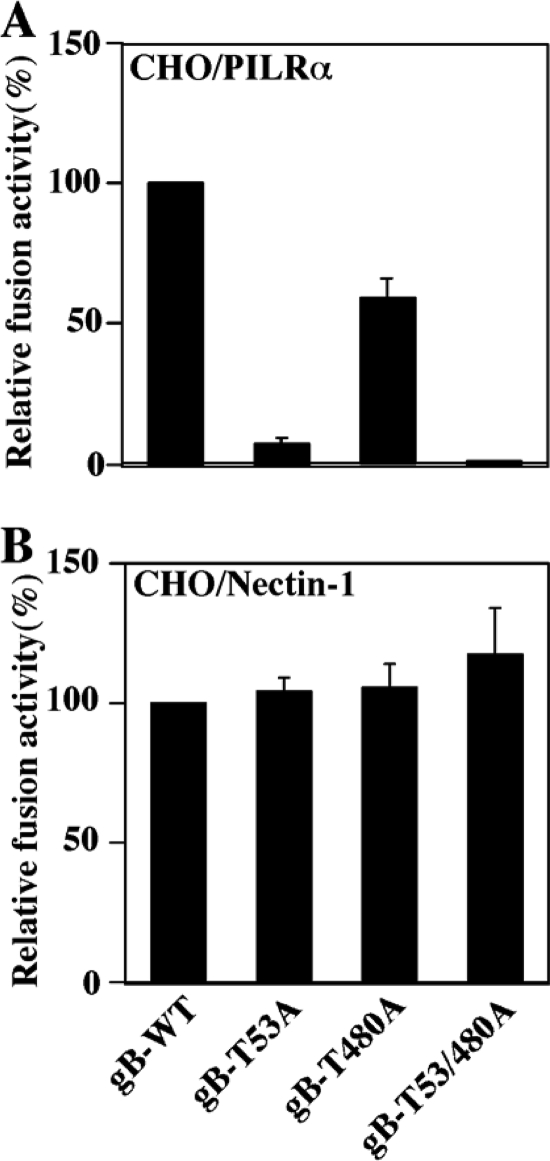
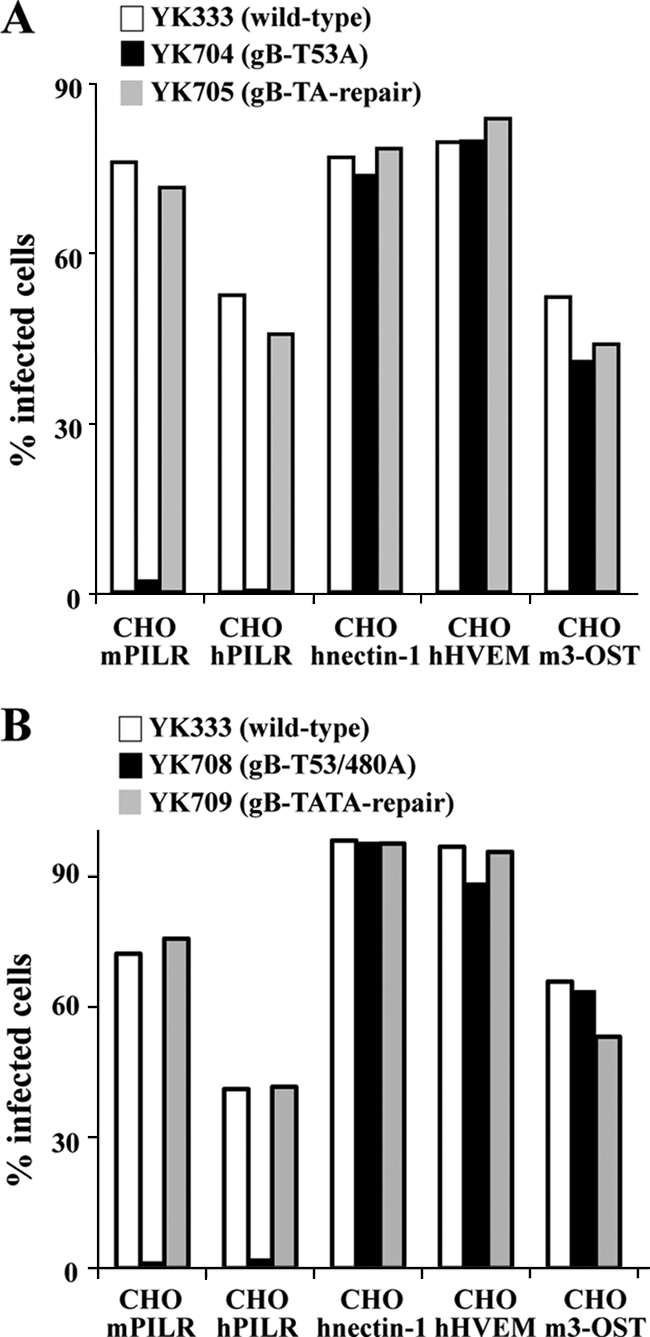
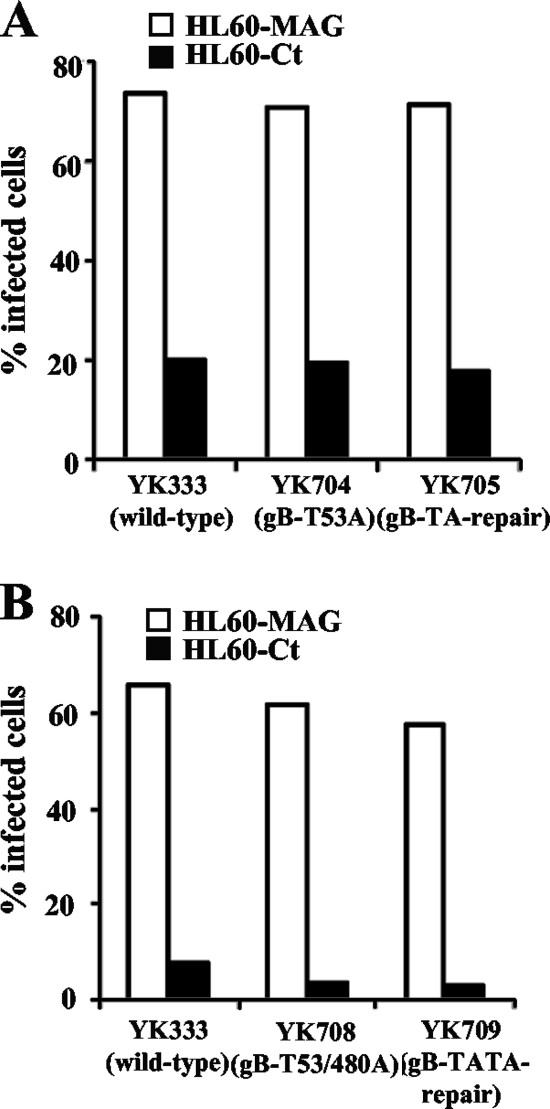
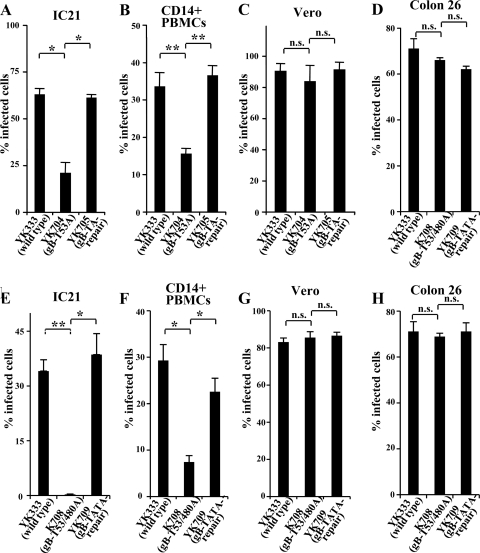
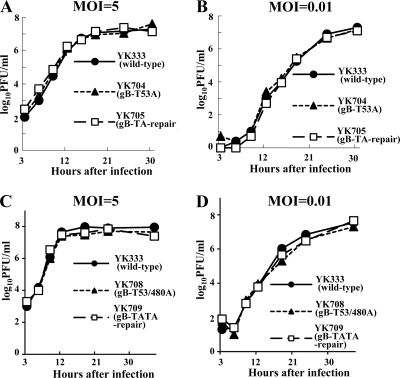
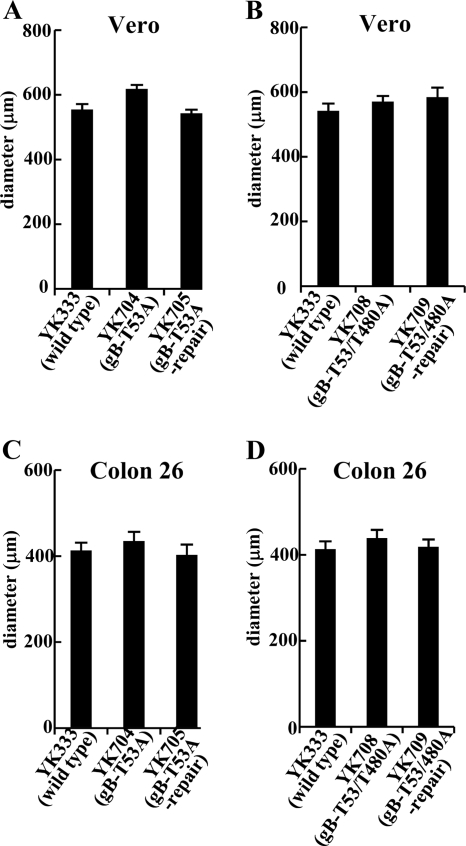
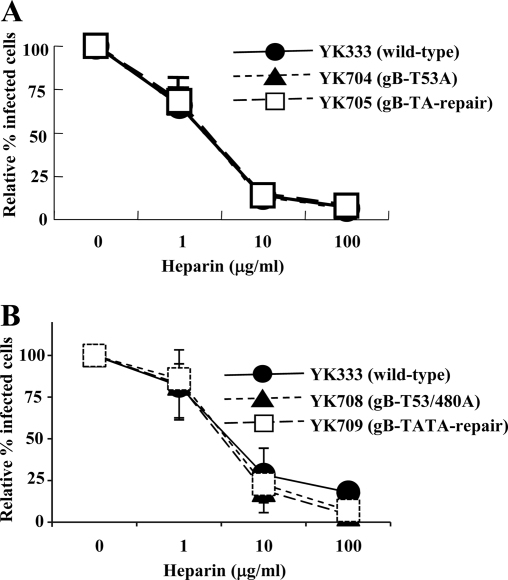
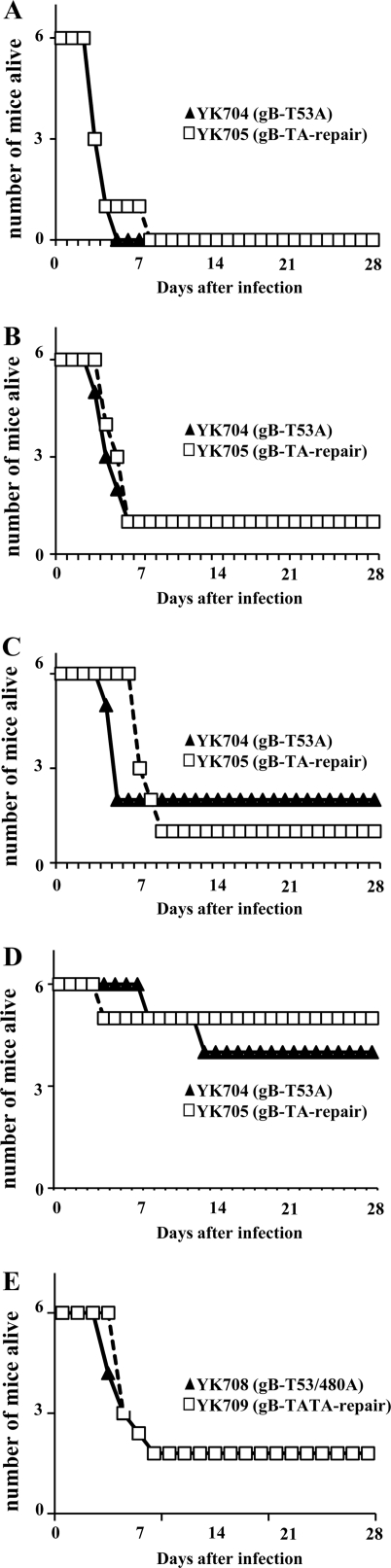
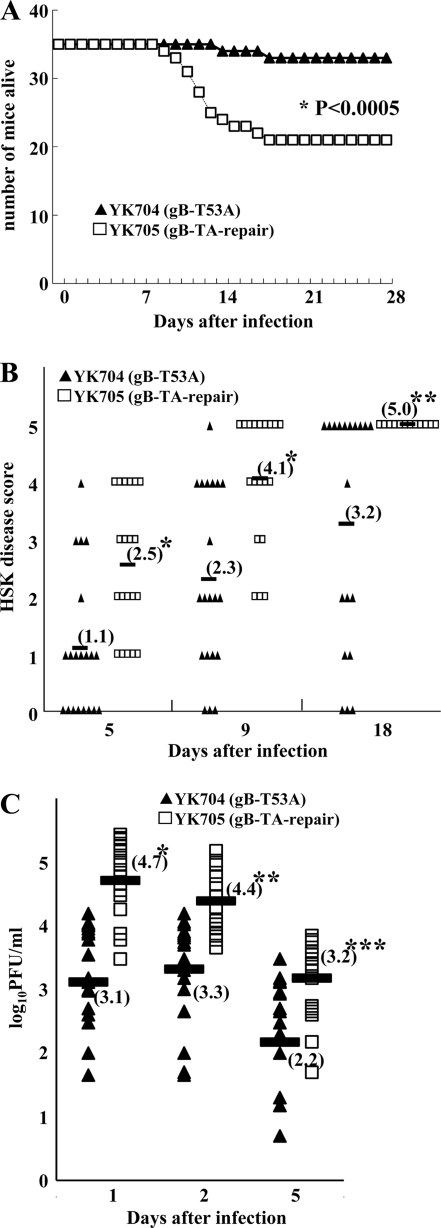
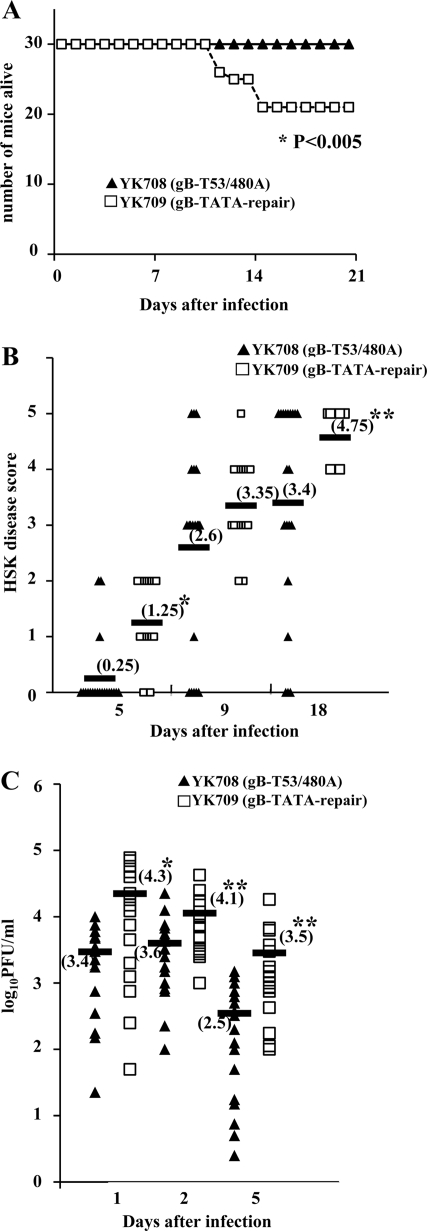
Paired immunoglobulin-like type 2 receptor α (PILRα) is a herpes simplex virus 1 (HSV-1) entry receptor that associates with O-glycans on HSV-1 envelope glycoprotein B (gB). Two threonine residues (Thr-53 and Thr-480) in gB, which are required for the addition of the principal gB O-glycans, are essential for binding to soluble PILRα. However, the role of the two threonines in PILRα-dependent viral entry remains to be elucidated. Therefore, we constructed a recombinant HSV-1 carrying an alanine replacement of gB Thr-53 alone (gB-T53A) or of both gB Thr-53 and Thr-480 (gB-T53/480A) and demonstrated that these mutations abrogated viral entry in CHO cells expressing PILRα. In contrast, the mutations had no effect on viral entry in CHO cells expressing known host cell receptors for HSV-1 gD, viral entry in HL60 cells expressing myelin-associated glycoprotein (MAG) (another HSV-1 gB receptor), viral attachment to heparan sulfate, and viral replication in PILRα-negative cells. These results support the hypothesis that gB Thr-53 and Thr-480 as well as gB O-glycosylation, probably at these sites, are critical for PILRα-dependent viral entry. Interestingly, following corneal inoculation in mice, the gB-T53A and gB-T53/480A mutations significantly reduced viral replication in the cornea, the development of herpes stroma keratitis, and neuroinvasiveness. The abilities of HSV-1 to enter cells in a PILRα-dependent manner and to acquire specific carbohydrates on gB are therefore linked to an increase in viral replication and virulence in the experimental murine model.
Figures
References
-
- Bosnjak, L., M. Miranda-Saksena, D. M. Koelle, R. A. Boadle, C. A. Jones, and A. L. Cunningham. 2005. Herpes simplex virus infection of human dendritic cells induces apoptosis and allows cross-presentation via uninfected dendritic cells. J. Immunol. 174:2220-2227. - PubMed
-
- Carr, D. J., P. Harle, and B. M. Gebhardt. 2001. The immune response to ocular herpes simplex virus type 1 infection. Exp. Biol. Med. (Maywood) 226:353-366. - PubMed
Publication types
MeSH terms
Substances
LinkOut - more resources
Full Text Sources
Other Literature Sources
Research Materials
