


In vitro evaluation of antibiotic synergy for polymyxin B-resistant carbapenemase-producing Klebsiella pneumoniae
- PMID: 20686085
- PMCID: PMC2953123
- DOI: 10.1128/JCM.01106-10
In vitro evaluation of antibiotic synergy for polymyxin B-resistant carbapenemase-producing Klebsiella pneumoniae
Abstract
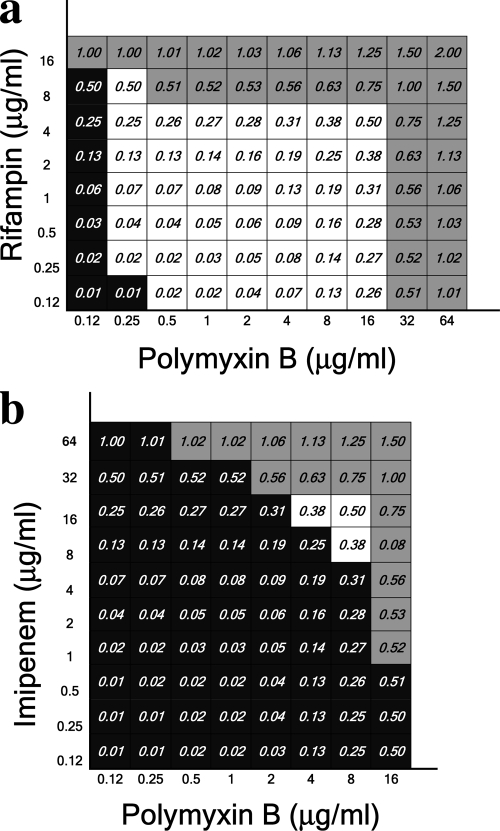
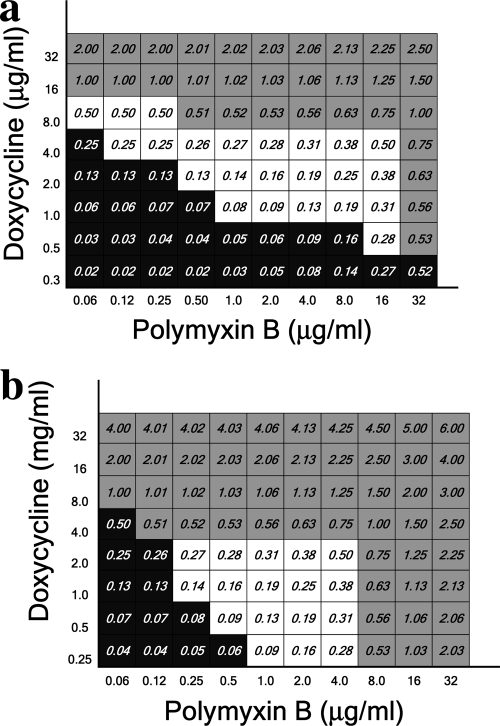
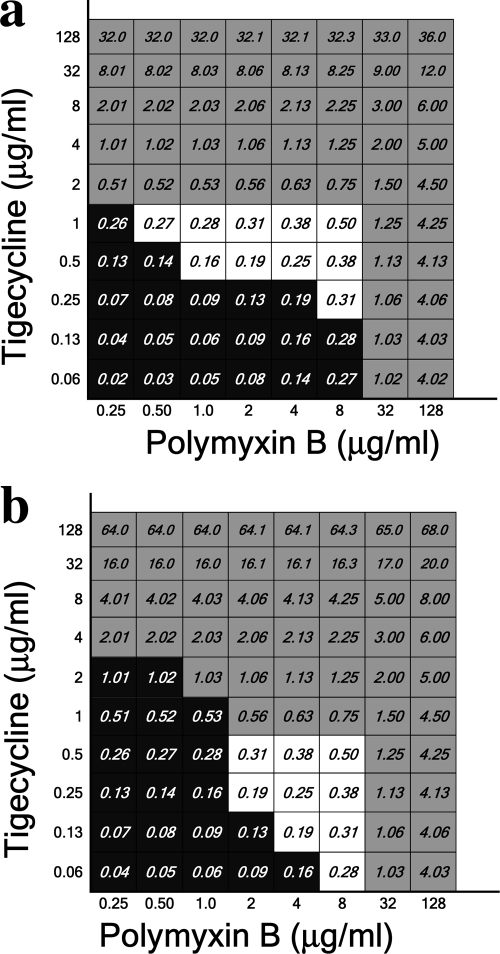
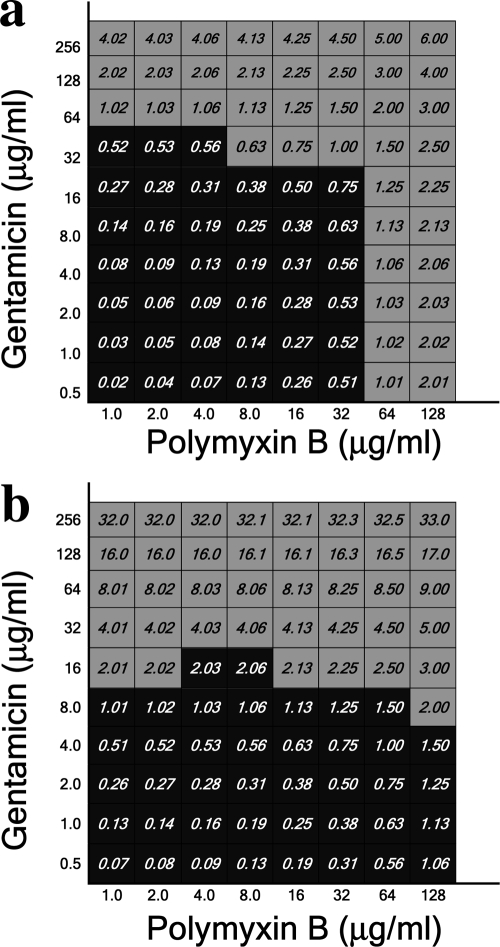
Since carbapenemase-producing Klebsiella pneumoniae strains were first reported in North Carolina, these highly resistant organisms have been isolated with increasing frequency, especially in the New York City area. Polymyxin B is one of the few antimicrobials that retain reliable activity against these organisms. However, polymyxin B MICs are elevated against K. pneumoniae isolates with increasing frequency, leaving clinicians with few therapeutic options. We investigated several antimicrobial agents for potential synergy with polymyxin B against 12 clinical strains of carbapenemase-producing K. pneumoniae. A broth microdilution assay using a 96-well plate was developed in which graded dilutions of polymyxin B and the study drug were incubated with resistant isolates in a checkerboard pattern. Polymyxin B was studied in combination with cefazolin, ceftriaxone, cefepime, imipenem, gentamicin, tigecycline, doxycycline, and rifampin. All K. pneumoniae strains tested positive for K. pneumoniae carbapenemase (KPC) genes by real-time PCR and had elevated polymyxin B MIC values ranging from 16 to 128 μg/ml. Synergy was observed with the combination of polymyxin B and rifampin as well as with polymyxin B and doxycycline, resulting in at least a 4-fold decrease in the polymyxin B MIC. For both combinations, this effect occurred at physiologically achievable concentrations. Less pronounced synergy was noted with tigecycline and polymyxin B. No synergy was observed at physiologic concentrations with the other antimicrobials studied. These results suggest that rifampin, doxycycline, and tigecycline may be useful additions to polymyxin B in the treatment of infections caused by highly resistant carbapenemase-producing K. pneumoniae. Further studies are warranted to determine if these in vitro findings translate into clinical efficacy.
Figures
References
-
- Bratu, S., S. Brooks, S. Burney, S. Kochar, J. Gupta, D. Landman, and J. Quale. 2007. Detection and spread of Escherichia coli possessing the plasmid-borne carbapenemase KPC-2 in Brooklyn, New York. Clin. Infect. Dis. 44:972-975. - PubMed
-
- Bratu, S., P. Tolaney, U. Karumudi, J. Quale, M. Mooty, S. Nichani, and D. Landman. 2005. Carbapenemase-producing Klebsiella pneumoniae in Brooklyn, NY: molecular epidemiology and in vitro activity of polymyxin B and other agents. J. Antimicrob. Chemother. 56:128-132. - PubMed
-
- CLSI. 2009. Performance standards for antimicrobial susceptibility testing. Nineteenth informational supplement. M100-S18. Clinical and Laboratory Standards Institute, Wayne, PA.
-
- Elemam, A., J. Rahimian, and W. Mandell. 2007. Infection with panresistant Klebsiella pneumoniae: a report of 2 cases and a brief review of the literature. Clin. Infect. Dis. 49:271-274. - PubMed
MeSH terms
Substances
LinkOut - more resources
Full Text Sources
Other Literature Sources
Medical
