


Differential effects of allopregnanolone on the escalation of cocaine self-administration and sucrose intake in female rats
- PMID: 20689941
- PMCID: PMC3773514
- DOI: 10.1007/s00213-010-1968-7
Differential effects of allopregnanolone on the escalation of cocaine self-administration and sucrose intake in female rats
Abstract
Rationale: Evidence suggests that the progesterone metabolite allopregnanolone (ALLO) decreases cocaine seeking in animal models of relapse.
Objective: The purpose of this study was to examine the effects of ALLO on an animal model of cocaine and sucrose bingeing (escalation). Allopregnanolone's effects on yohimbine-induced sucrose intake were also examined. In a separate group of animals, dose interactions between ALLO and cocaine were examined with an abbreviated procedure, a short access progressive ratio (PR) schedule for cocaine reinforcement.
Methods: Female rats were treated with ALLO (15 mg/kg, s.c.) or vehicle (VEH) and trained to lever press for cocaine infusions (0.4 mg/kg) under an extended-access procedure. In a separate condition, other ALLO- and VEH-treated female rats self-administered orally delivered liquid sucrose. Allopregnanolone and VEH treatment was then discountinued and the sucrose-maintained rats were administered priming injections of saline, yohimbine, or yohimbine + ALLO. For the PR condition, rats were first treated with VEH until reaching stability at four doses of cocaine (0.2, 0.4, 0.8, and 1.6 mg/kg in mixed order). Subsequently, rats re-established their baseline cocaine intake at the four cocaine doses following treatment with each of two counterbalanced doses of ALLO (15 and 30 mg/kg).
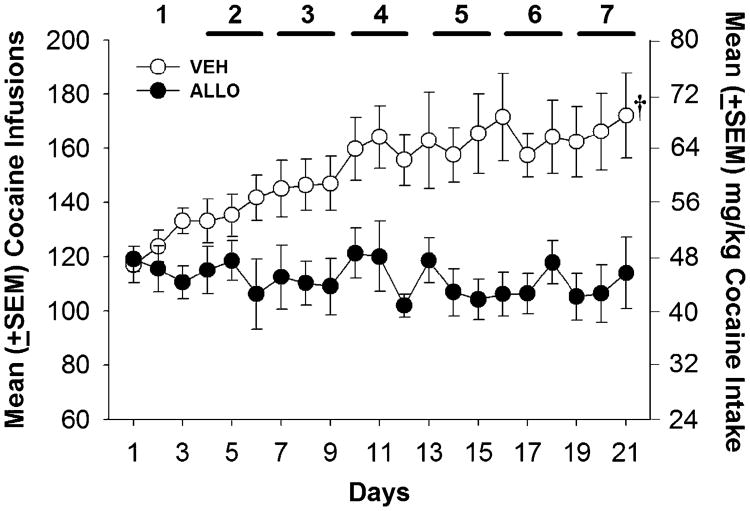
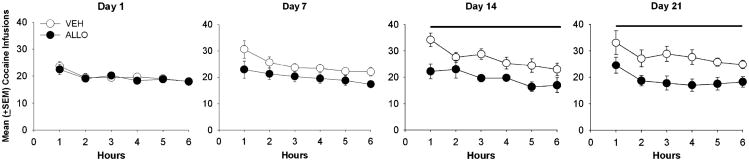
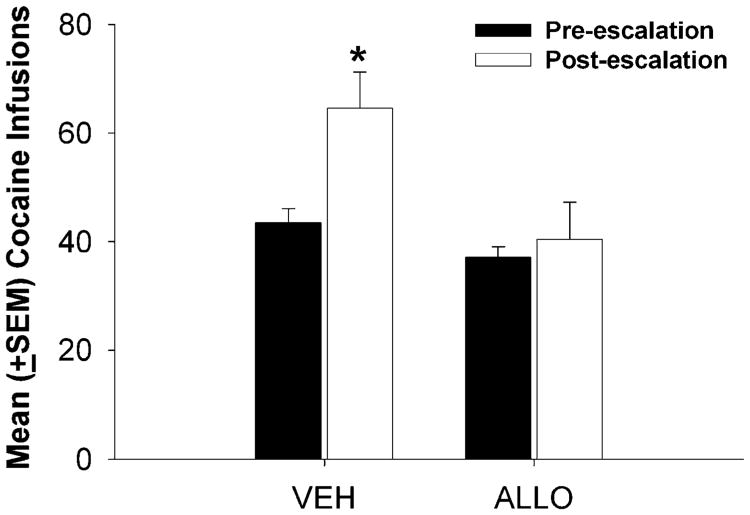
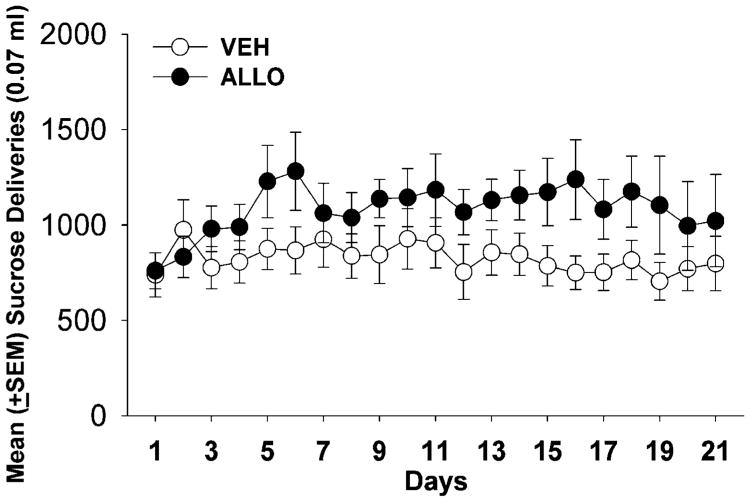
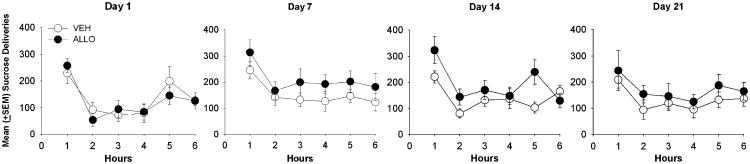
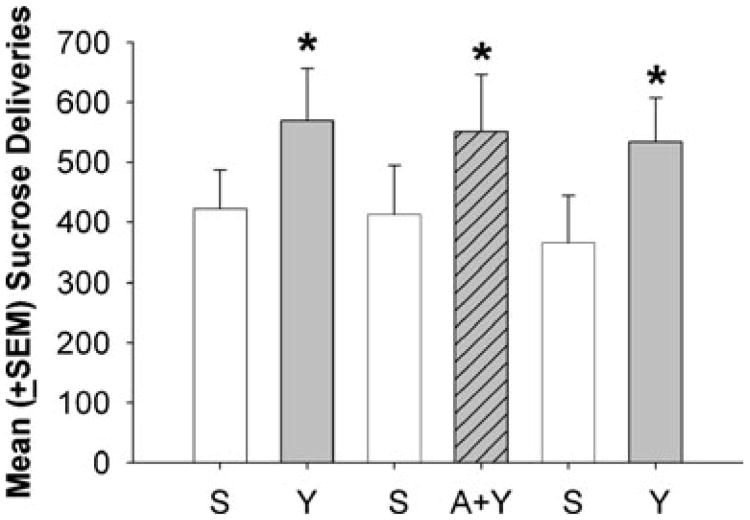
Results: ALLO significantly blocked the escalation of cocaine self-administration but did not reliably affect intake of sucrose under a similar condition or affect cocaine intake at several doses under a PR schedule. Yohimbine significantly increased sucrose intake while ALLO failed to attenuate this increase.
Conclusion: These findings indicate that ALLO protects against binge-like patterns of cocaine intake but does not reduce sugar intake that is acutely increased by yohimbine in females.
Figures
References
-
- Ahmed SH, Koob GF. Transition from moderate to excessive drug intake: change in hedonic set point. Science. 1998;282:298–300. - PubMed
-
- Ahmed SH, Koob GF. Long-lasting increase in the set point for cocaine self-administration after escalation in rats. Psychopharmacology (Berl) 1999;146:303–312. - PubMed
-
- Ahmed SH, Koob GF. Transition to drug addiction: a negative reinforcement model based on an allostatic decrease in reward function. Psychopharmacology (Berl) 2005;180:473–490. - PubMed
-
- Angeles-Castellanos M, Mendoza J, Escobar C. Restricted feeding schedules phase shift daily rhythms of c-Fos and protein Per1 immunoreactivity in corticolimbic regions in rats. Neuroscience. 2007;144:344–355. - PubMed
Publication types
MeSH terms
Substances
Grants and funding
LinkOut - more resources
Full Text Sources
Research Materials
