


The utility of a tissue slice model system to determine breast cancer infectivity by oncolytic adenoviruses
- PMID: 20691986
- PMCID: PMC3015137
- DOI: 10.1016/j.jss.2010.03.072
The utility of a tissue slice model system to determine breast cancer infectivity by oncolytic adenoviruses
Abstract
Background: Due to advances in viral design, oncolytic adenoviruses have emerged as a promising approach for treatment of breast cancer. Tumor tissue slices offer a stringent model system for preclinical evaluation of adenovirus therapies, since the slices retain a morphology and phenotype that more closely resembles the in vivo setting than cell line cultures, and this system has been shown to have utility in the evaluation of viral infectivity and replication. In this study, we evaluated the efficacy of viral infection and replication using a tropism-modified oncolytic adenovirus.
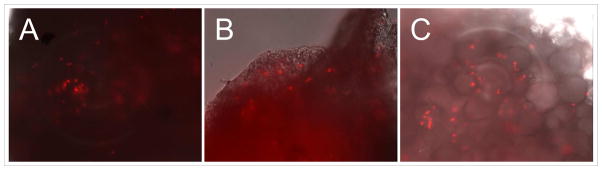
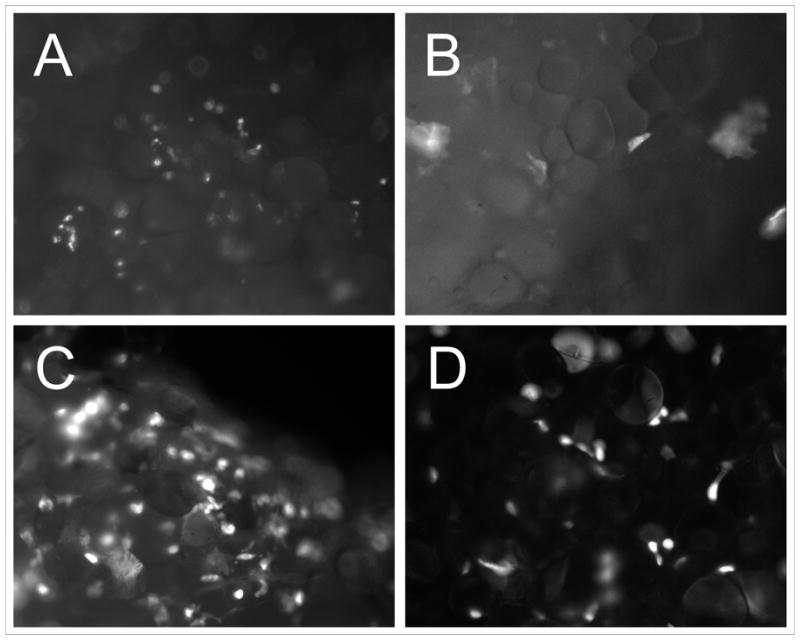
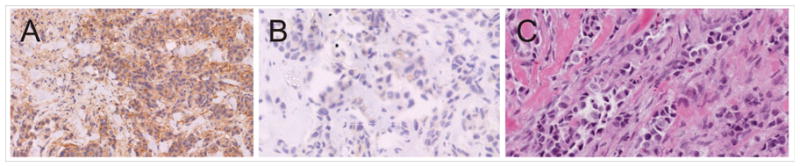
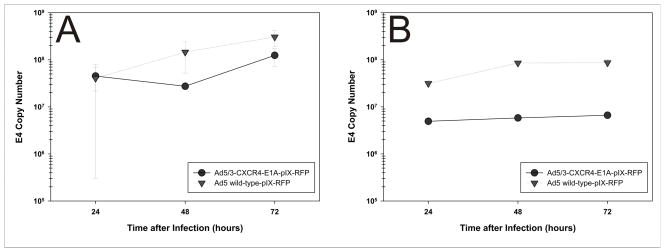
Methods: Breast tumor tissue slices were infected with a tropism-modified oncolytic adenovirus, and a wild-type adenovirus for comparison. Efficiency of infection was evaluated using fluorescent microscopy, as the viruses used have been modified to express red fluorescent protein. Replication of the viruses was evaluated with quantitative real-time polymerase chain reaction (PCR) to assay viral E4 genome copy number, a surrogate indicator for the number of virions. The breast tumor tissue slices were evaluated for the expression of CD46 expression by immunohistochemistry.
Results: Infection and replication of our tropism modified oncolytic virus has been observed in the breast cancer tissue slice model system and is comparative to wild-type virus. A qualitative increase in the number of cells showing red fluorescent protein (RFP) expression was observed correlating with increasing multiplicity of infection. Higher relative infectivity of the virus was observed in tumor tissue compared with normal breast tissue. Replication of the virus was demonstrated through increases in E4 copy number at 48 and 72 h after infection in human breast tumor slices.
Conclusions: We have shown that a tropism modified oncolytic adenovirus can infect and replicate in breast cancer tissue slices, which may be an important preclinical indicator for its therapeutic utility.
Copyright © 2010 Elsevier Inc. All rights reserved.
Figures
References
-
- Alemany R, Balague C, Curiel DT. Replicative adenoviruses for cancer therapy. Nat Biotechnol. 2000;18:723–727. - PubMed
-
- Kirn D, Martuza RL, Zwiebel J. Replication-selective virotherapy for cancer: biological principles, risk management and future directions. Nat Med. 2001;7:781–787. - PubMed
-
- Rancourt C, Rogers BE, Sosnowski BA, et al. Basic fibroblast growth factor enhancement of adenovirus-mediated delivery of the herpes simplex virus thymidine kinase gene results in augmented therapeutic benefit in a murine model of ovarian cancer. Clin Cancer Res. 1998;4:2455–2461. - PubMed
-
- Sterman DH, Treat J, Litzky LA, et al. Adenovirus-mediated herpes simplex virus thymidine kinase/ganciclovir gene therapy in patients with localized malignancy: results of a phase I clinical trial in malignant mesothelioma. Hum Gene Ther. 1998;9:1083–1092. - PubMed
MeSH terms
Substances
Grants and funding
LinkOut - more resources
Full Text Sources
Other Literature Sources
Medical
