


Adolescent Dose and Ratings of an Internet-Based Depression Prevention Program: A Randomized Trial of Primary Care Physician Brief Advice versus a Motivational Interview
- PMID: 20694059
- PMCID: PMC2917120
Adolescent Dose and Ratings of an Internet-Based Depression Prevention Program: A Randomized Trial of Primary Care Physician Brief Advice versus a Motivational Interview
Abstract
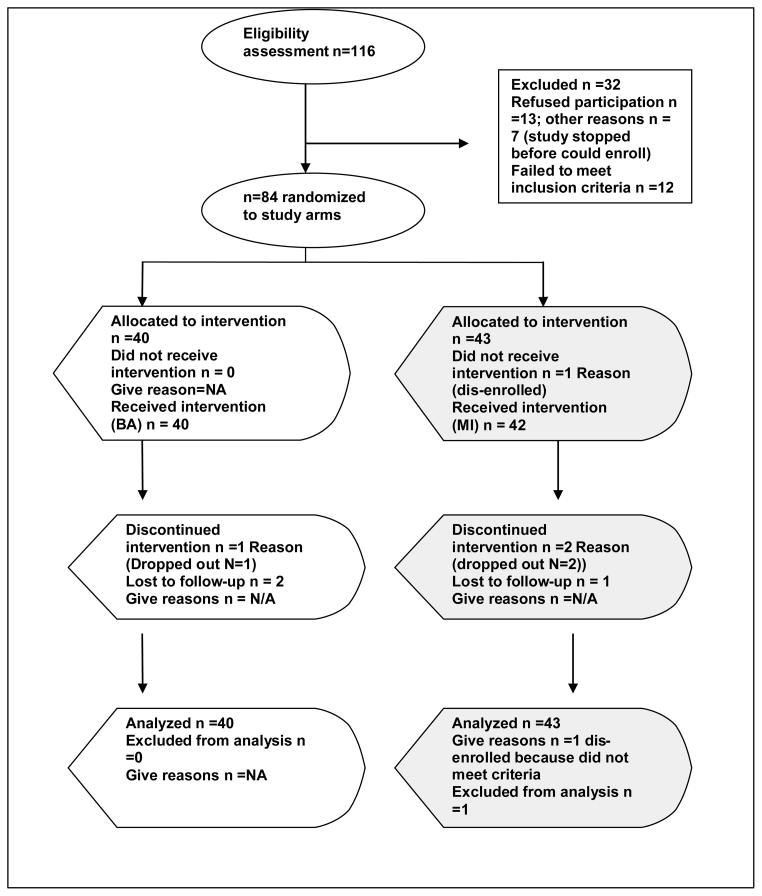
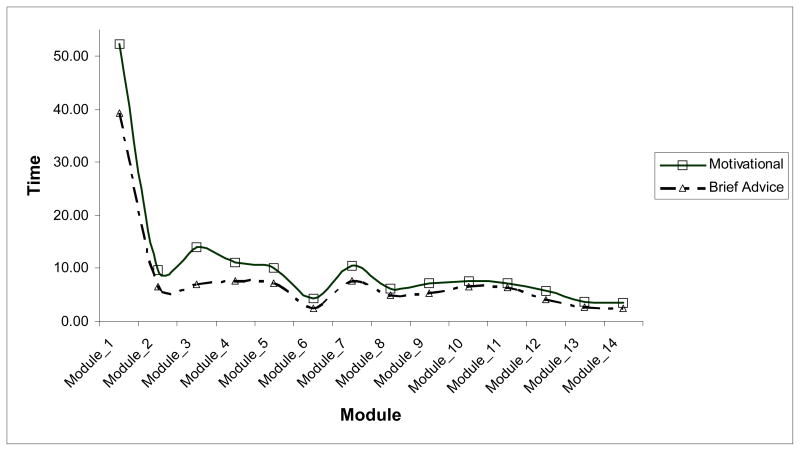
BACKGROUND: Internet-based interventions for education and behavior change have proliferated, but most adolescents may not be sufficiently motivated to engage in Internet-based behavior change interventions. We sought to determine how two different forms of primary care physician engagement, brief advice (BA) versus motivational interview (MI), could enhance participation outcomes in an Internet-based depression prevention intervention. METHODS: Eighty-three adolescents at risk for developing major depression were recruited by screening in primary care and randomized to two groups: BA (1-2 minutes) + Internet program versus MI (10-15 minutes) + Internet program. We compared measures of participation and satisfaction for the two groups for a minimum of 12 months after enrollment. RESULTS: Both groups engaged the site actively (MI: 90% versus BA: 78%, p=0.12). MI had significantly higher levels of engagement than BA for measures including total time on site (143.7 minutes versus 100.2 minutes, p=0.03), number of sessions (8.16 versus 6.00, p=0.04), longer duration of session activity on Internet site (46.2 days versus 29.34 days, p=0.04), and with more characters typed into exercises (3532 versus 2004, p=0.01). Adolescents in the MI group reported higher trust in their physician (4.18 versus 3.74, p=0.05) and greater satisfaction with the Internet-based component (7.92 versus 6.66, p=0.01). CONCLUSIONS: Primary care engagement, particularly using motivational interviewing, may increase Internet use dose, and some elements enhance and intensify adolescent use of an Internet-based intervention over a one to two month period. Primary care engagement may be a useful method to facilitate adolescent involvement in preventive mental health interventions.
Figures
References
-
- Asarnow JR, Jaycox LH, Duan N, LaBorde AP, Rea MM, Murray P, et al. Effectiveness of a quality improvement intervention for adolescent depression in primary care clinics: A randomized controlled trial. Journal of the American Medical Association. 2005;293(3):311–319. - PubMed
-
- Beck RS, Daughtridge R, Sloane PD. Physician-patient communication in the primary care office: A systematic review. Journal of the American Board of Family Practice. 2002;15(1):25–38. - PubMed
-
- Bower P, Rowland N. Effectiveness and cost effectiveness of counseling in primary care. Cochrane Database System Rev. 2006;3:CD001025. - PubMed
-
- Bramesfeld A, Platt L, Schwartz FW. Possibilities for intervention in adolescents’ and young adults’ depression from a public health perspective. Health Policy. 2006;79(2–3):121–131. - PubMed
Grants and funding
LinkOut - more resources
Full Text Sources