


Application of the Ilizarov technique to the correction of neurologic equinocavovarus foot deformity
- PMID: 20694536
- PMCID: PMC3032860
- DOI: 10.1007/s11999-010-1497-z
Application of the Ilizarov technique to the correction of neurologic equinocavovarus foot deformity
Abstract
Background: The treatment of rigid equinocavovarus foot deformities caused by neurologic disorders is often difficult and relapse is common.
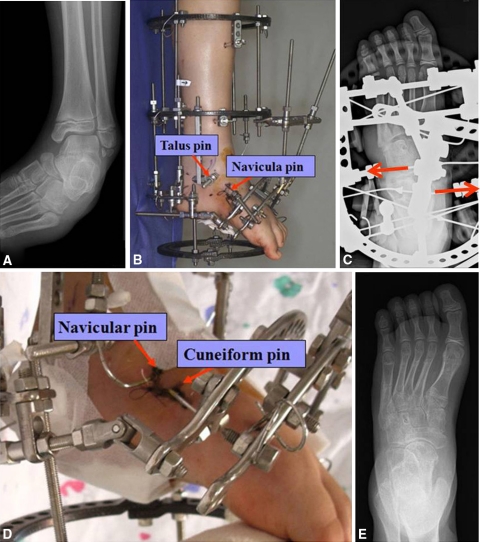
Questions/purposes: We asked whether the Ilizarov technique could be used for correction of neurologic equinocavovarus foot deformities resulting in improved foot and ankle function and patient satisfaction.
Patients and methods: The neurologic equinocavovarus foot deformities of 26 patients (mean age, 18.7 years; 29 feet) were treated using the Ilizarov technique. Nine feet were treated by distraction histiogenesis only with limited soft tissue release, whereas 20 feet needed additional osteotomy and/or tendon transfer/lengthening. Minimum followup was 12 months (mean, 72.9 months; range, 12-155 months).
Results: The mean time required for deformity correction was 27.1 days (range, 14-47 days) and the mean time for stabilization in the apparatus was 23.2 days (range, 7-53 days). A painless, stable, and plantigrade result was obtained by 22 patients (24 feet). Mild residual foot deformity was observed in the remaining five feet of four patients. Six patients (six feet) experienced postoperative complications. Three patients (four feet) experienced recurrence of the deformity requiring surgical correction.
Conclusions: Ilizarov soft tissue distraction with or without callotasis of tarsal bone(s) allows a greater degree of correction of neurologic equinocavovarus foot deformities. However, to reduce the risk of recurrence after fixator removal, it may be necessary to overcorrect the deformity while in the fixator, to use nighttime splinting, and most importantly, to eliminate neuromuscular imbalance, if necessary, by combining arthrodesis with or without tendon transfer.
Level of evidence: Level IV, therapeutic study. See Guidelines for Authors for a complete description of levels of evidence.
Figures


References
-
- Atar D, Lehman WB, Grant AD. Complications in clubfoot surgery. Orthop Rev. 1991;20:233–239. - PubMed
-
- Carroll NC. Controversies in the surgical management of clubfoot. Instr Course Lect. 1996;45:331–337. - PubMed
-
- Carroll NC, McMurtry R, Leete SF. The pathoanatomy of congenital clubfoot. Orthop Clin North Am. 1978;9:225–232. - PubMed
MeSH terms
LinkOut - more resources
Full Text Sources
Medical
Research Materials
