


Psychophysical reverse correlation with multiple response alternatives
- PMID: 20695712
- PMCID: PMC3158580
- DOI: 10.1037/a0017171
Psychophysical reverse correlation with multiple response alternatives
Abstract
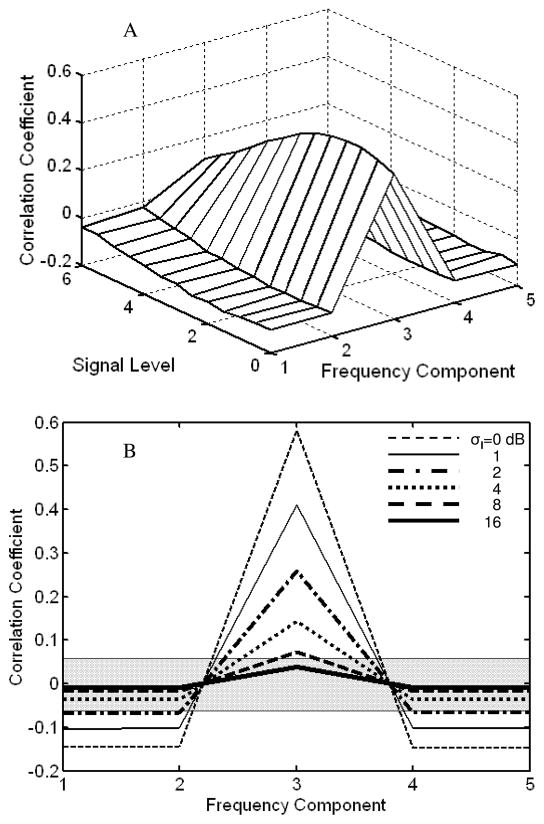
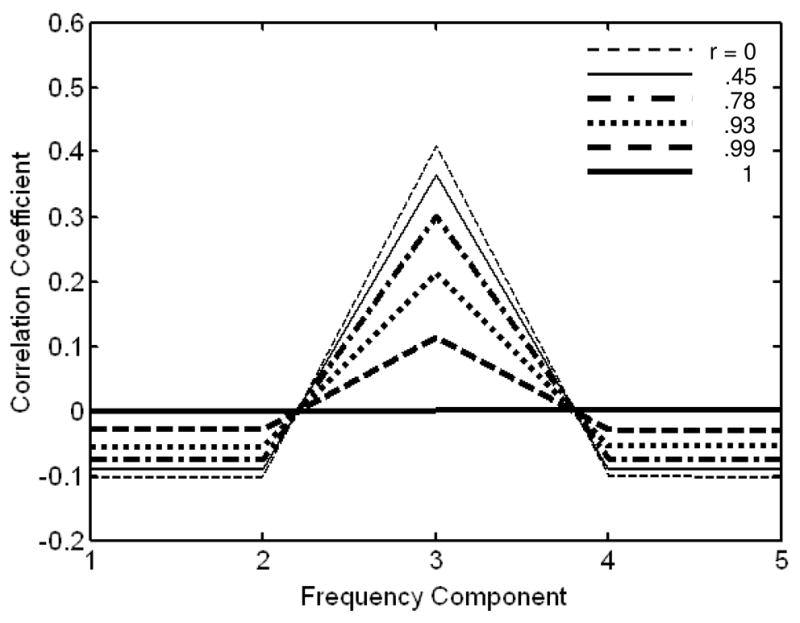
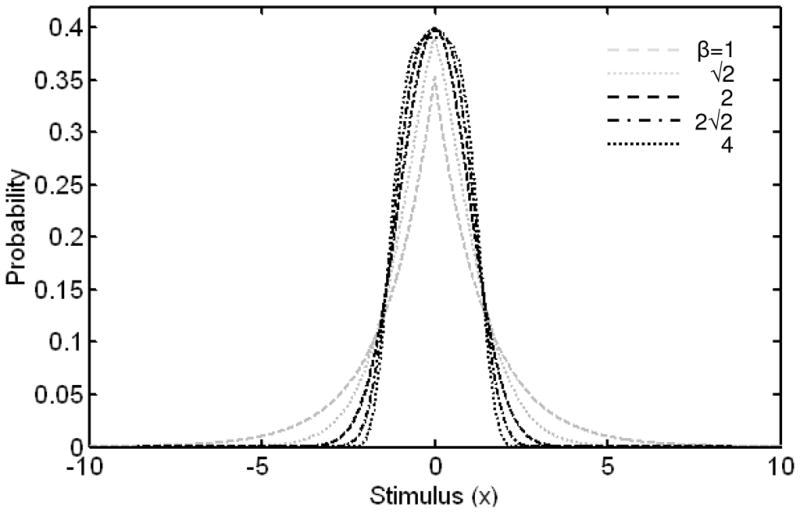
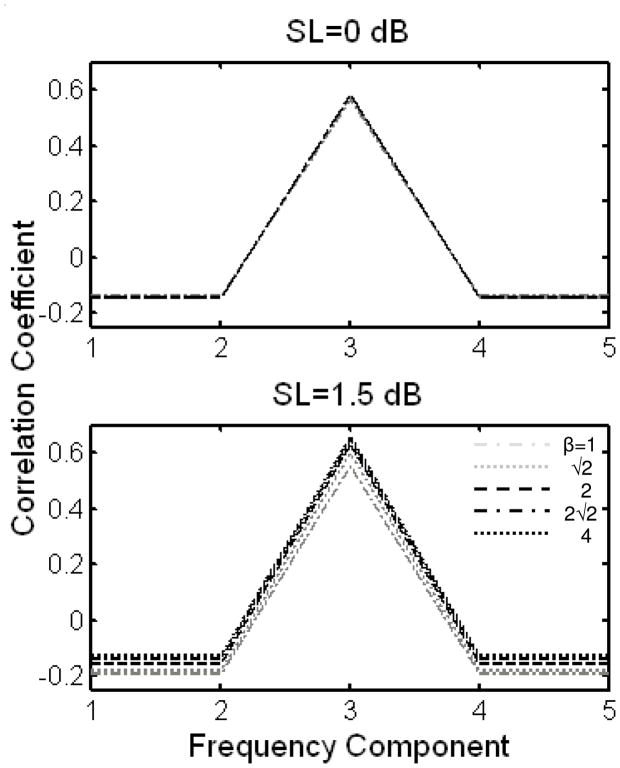
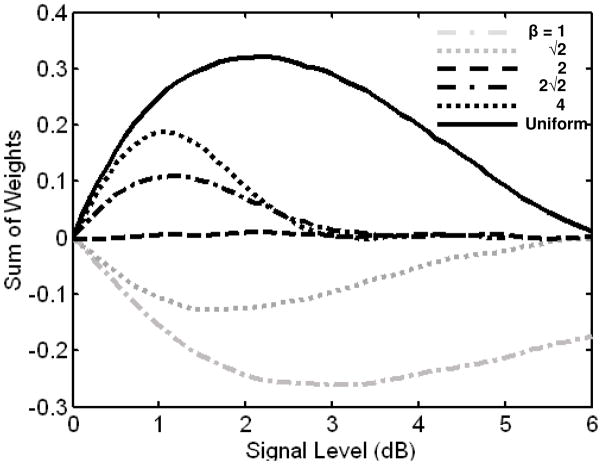
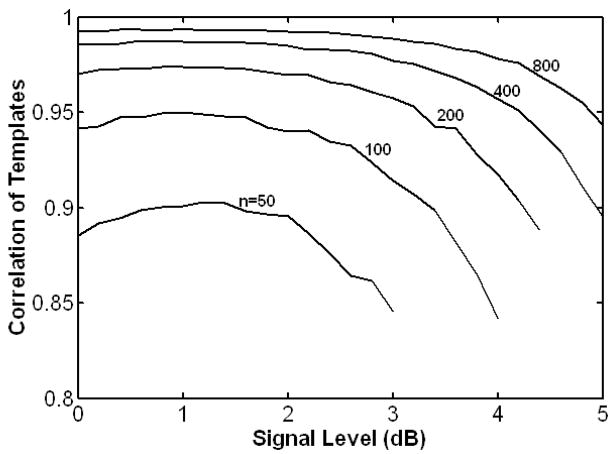
Psychophysical reverse-correlation methods such as the "classification image" technique provide a unique tool to uncover the internal representations and decision strategies of individual participants in perceptual tasks. Over the past 30 years, these techniques have gained increasing popularity among both visual and auditory psychophysicists. However, thus far, principled applications of the psychophysical reverse-correlation approach have been almost exclusively limited to two-alternative decision (detection or discrimination) tasks. Whether and how reverse-correlation methods can be applied to uncover perceptual templates and decision strategies in situations involving more than just two response alternatives remain largely unclear. Here, the authors consider the problem of estimating perceptual templates and decision strategies in stimulus identification tasks with multiple response alternatives. They describe a modified correlational approach, which can be used to solve this problem. The approach is evaluated under a variety of simulated conditions, including different ratios of internal-to-external noise, different degrees of correlations between the sensory observations, and various statistical distributions of stimulus perturbations. The results indicate that the proposed approach is reasonably robust, suggesting that it could be used in future empirical studies.
Figures
Similar articles
-
Measuring decision weights in recognition experiments with multiple response alternatives: comparing the correlation and multinomial-logistic-regression methods.J Acoust Soc Am. 2012 Nov;132(5):3418-27. doi: 10.1121/1.4754523. J Acoust Soc Am. 2012. PMID: 23145622 Free PMC article.
-
Psychophysical reverse correlation reflects both sensory and decision-making processes.Nat Commun. 2018 Aug 28;9(1):3479. doi: 10.1038/s41467-018-05797-y. Nat Commun. 2018. PMID: 30154467 Free PMC article.
-
Decision criteria in dual discrimination tasks estimated using external-noise methods.Atten Percept Psychophys. 2012 Jul;74(5):1042-55. doi: 10.3758/s13414-012-0269-0. Atten Percept Psychophys. 2012. PMID: 22351481
-
Auditory perceptual learning and changes in the conceptualization of auditory cortex.Hear Res. 2018 Sep;366:3-16. doi: 10.1016/j.heares.2018.03.011. Epub 2018 Mar 12. Hear Res. 2018. PMID: 29551308 Review.
-
Performance of a Computational Model of the Mammalian Olfactory System.In: Persaud KC, Marco S, Gutiérrez-Gálvez A, editors. Neuromorphic Olfaction. Boca Raton (FL): CRC Press/Taylor & Francis; 2013. Chapter 6. In: Persaud KC, Marco S, Gutiérrez-Gálvez A, editors. Neuromorphic Olfaction. Boca Raton (FL): CRC Press/Taylor & Francis; 2013. Chapter 6. PMID: 26042330 Free Books & Documents. Review.
Cited by
-
Development of auditory selective attention: why children struggle to hear in noisy environments.Dev Psychol. 2015 Mar;51(3):353-69. doi: 10.1037/a0038570. Dev Psychol. 2015. PMID: 25706591 Free PMC article.
-
Harmonic pitch: dependence on resolved partials, spectral edges, and combination tones.Hear Res. 2010 Dec 1;270(1-2):143-50. doi: 10.1016/j.heares.2010.08.002. Epub 2010 Aug 13. Hear Res. 2010. PMID: 20709166 Free PMC article.
-
Differential neural mechanisms for early and late prediction error detection.Sci Rep. 2016 Apr 15;6:24350. doi: 10.1038/srep24350. Sci Rep. 2016. PMID: 27079423 Free PMC article.
-
Measuring decision weights in recognition experiments with multiple response alternatives: comparing the correlation and multinomial-logistic-regression methods.J Acoust Soc Am. 2012 Nov;132(5):3418-27. doi: 10.1121/1.4754523. J Acoust Soc Am. 2012. PMID: 23145622 Free PMC article.
-
Using auditory classification images for the identification of fine acoustic cues used in speech perception.Front Hum Neurosci. 2013 Dec 16;7:865. doi: 10.3389/fnhum.2013.00865. eCollection 2013. Front Hum Neurosci. 2013. PMID: 24379774 Free PMC article.
References
-
- Abbey CK, Eckstein MP. Classification image analysis: estimation and statistical inference for two-alternative forced-choice experiments. Journal of Vision. 2002;2:66–78. - PubMed
-
- Ahumada AJ., Jr Classification image weights and internal noise level estimation. Journal of Vision. 2002;2:121–131. - PubMed
-
- Ahumada AJJ. Perceptual classification images from vernier acuity masked by noise. Perception. 1996;26:18.
-
- Ahumada AJJ, Beard BL. Response classification images in vernier acuity. Investigations in Opthalmology and Visual Science. 1998;40:S572.
-
- Ahumada AJJ, Lovell J. Stimulus features in signal detection. Journal of the Acoustical Society of America. 1971;49:1751–1756.
Publication types
MeSH terms
Grants and funding
LinkOut - more resources
Full Text Sources
Miscellaneous
