


The impact of genetic research on our understanding of Parkinson's disease
- PMID: 20696313
- PMCID: PMC4451604
- DOI: 10.1016/S0079-6123(10)83002-X
The impact of genetic research on our understanding of Parkinson's disease
Abstract
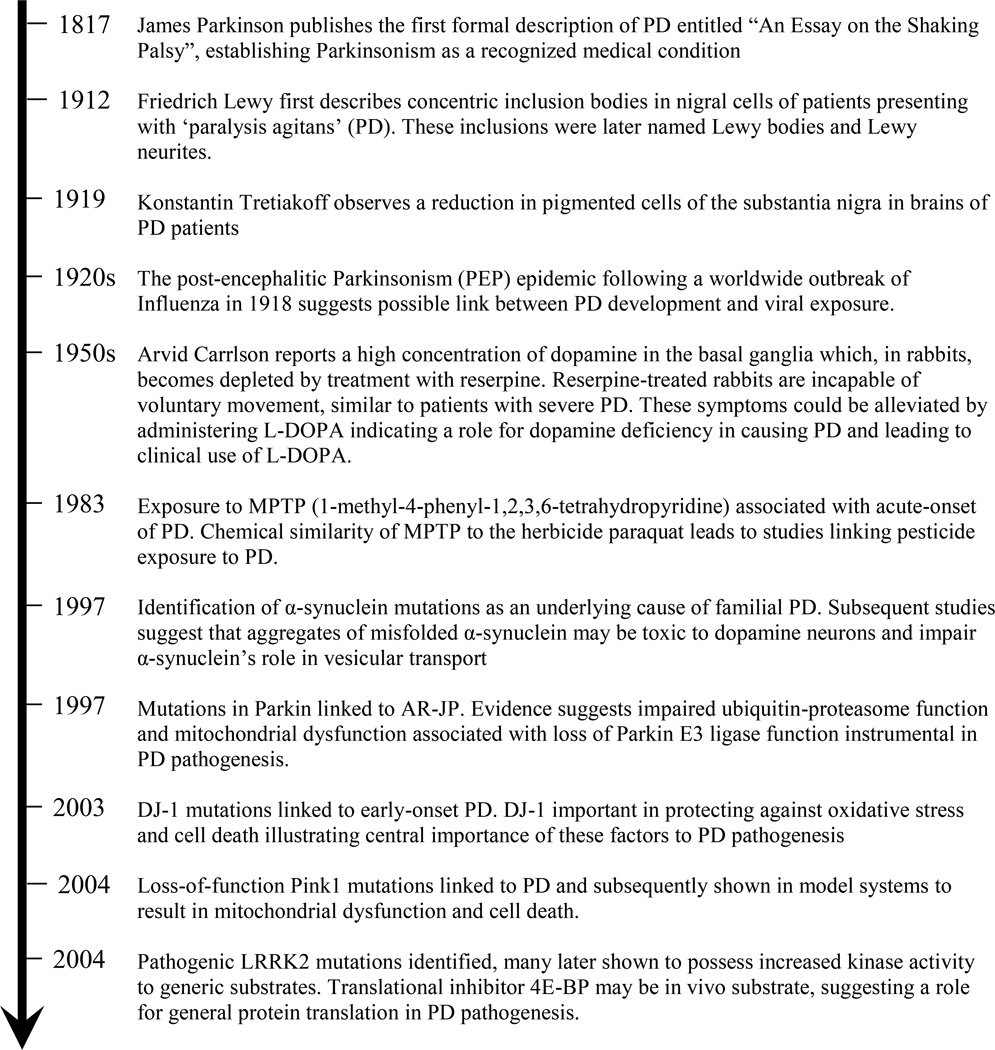
Until recently, genetics was thought to play a minor role in the development of Parkinson's disease (PD). Over the last decade, a number of genes that definitively cause PD have been identified, which has led to the generation of disease models based on pathogenic gene variants that recapitulate many features of the disease. These genetic studies have provided novel insight into potential mechanisms underlying the aetiology of PD. This chapter will provide a profile of the genes conclusively linked to PD and will outline the mechanisms of PD pathogenesis implicated by genetic studies. Mitochondrial dysfunction, oxidative stress and impaired ubiquitin-proteasome system function are disease mechanisms that are particularly well supported by genetic studies and are therefore the focus of this chapter.
2010 Elsevier B.V. All rights reserved.
Figures

References
-
- Allen W. Inheritance of the shaking palsy. Archives of Internal Medicine. 1937;60:424–436.
-
- Auluck PK, Chan HY, Trojanowski JQ, Lee VM, Bonini NM. Chaperone suppression of alpha-synuclein toxicity in a Drosophila model for Parkinson's disease. Science. 2002;295(5556):865–868. - PubMed
Publication types
MeSH terms
Substances
Grants and funding
LinkOut - more resources
Full Text Sources
Medical
Miscellaneous
