


Learning from Jekyll to control Hyde: Hedgehog signaling in development and cancer
- PMID: 20696410
- PMCID: PMC3651907
- DOI: 10.1016/j.molmed.2010.05.003
Learning from Jekyll to control Hyde: Hedgehog signaling in development and cancer
Abstract
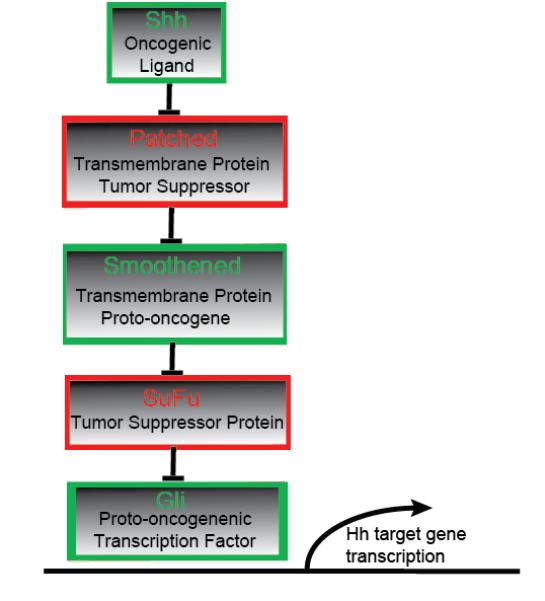
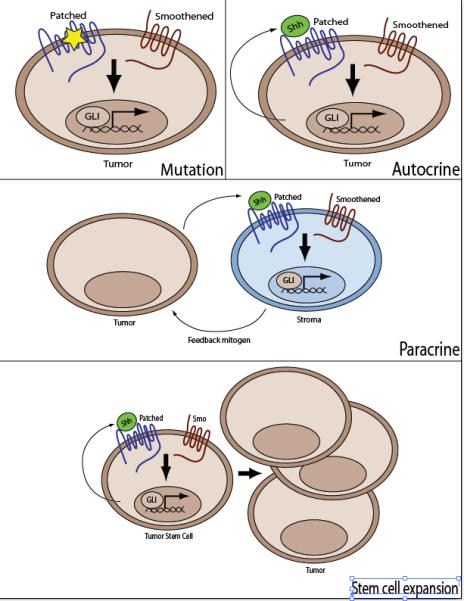
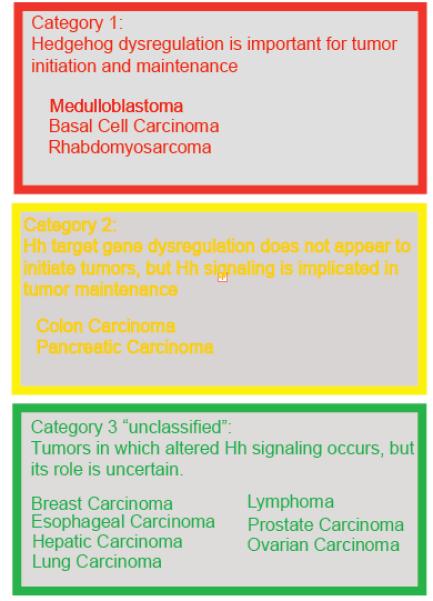
The Hedgehog (Hh) cascade controls cell proliferation, differentiation and patterning of tissues during embryogenesis but is largely suppressed in the adult. The Hh pathway can become reactivated in cancer. Here, we assimilate data from recent studies to understand how and when the Hh pathway is turned on to aid the neoplastic process. Hh signaling is now known to have a role in established tumors, enabling categorization of tumors based on the role Hh signaling plays in their growth. This categorization has relevance for prognosis and targeted therapeutics. In the first category, abnormal Hh signaling initiates the tumor. In the second category, Hh signaling helps maintain the tumor. In the third category, Hh signaling is implicated but its role is not yet defined.
Copyright 2010. Published by Elsevier Ltd.
Figures

References
-
- Nusslein-Volhard C, Wieschaus E. Mutations affecting segment number and polarity in Drosophila. Nature. 1980;287(5785):795–801. - PubMed
-
- Cohen MM., Jr. The hedgehog signaling network. Am J Med Genet A. 2003;123A(1):5–28. - PubMed
-
- Hooper JE, Scott MP. Communicating with Hedgehogs. Nat Rev Mol Cell Biol. 2005;6(4):306–17. - PubMed
-
- Rubin LL, de Sauvage FJ. Targeting the Hedgehog pathway in cancer. Nat Rev Drug Discov. 2006;5(12):1026–33. - PubMed
-
- Gailani MR, et al. The role of the human homologue of Drosophila patched in sporadic basal cell carcinomas. Nat Genet. 1996;14(1):78–81. - PubMed
Publication types
MeSH terms
Substances
Grants and funding
LinkOut - more resources
Full Text Sources
Other Literature Sources
