


Enterococcal biofilm formation and virulence in an optimized murine model of foreign body-associated urinary tract infections
- PMID: 20696830
- PMCID: PMC2950371
- DOI: 10.1128/IAI.00711-10
Enterococcal biofilm formation and virulence in an optimized murine model of foreign body-associated urinary tract infections
Abstract
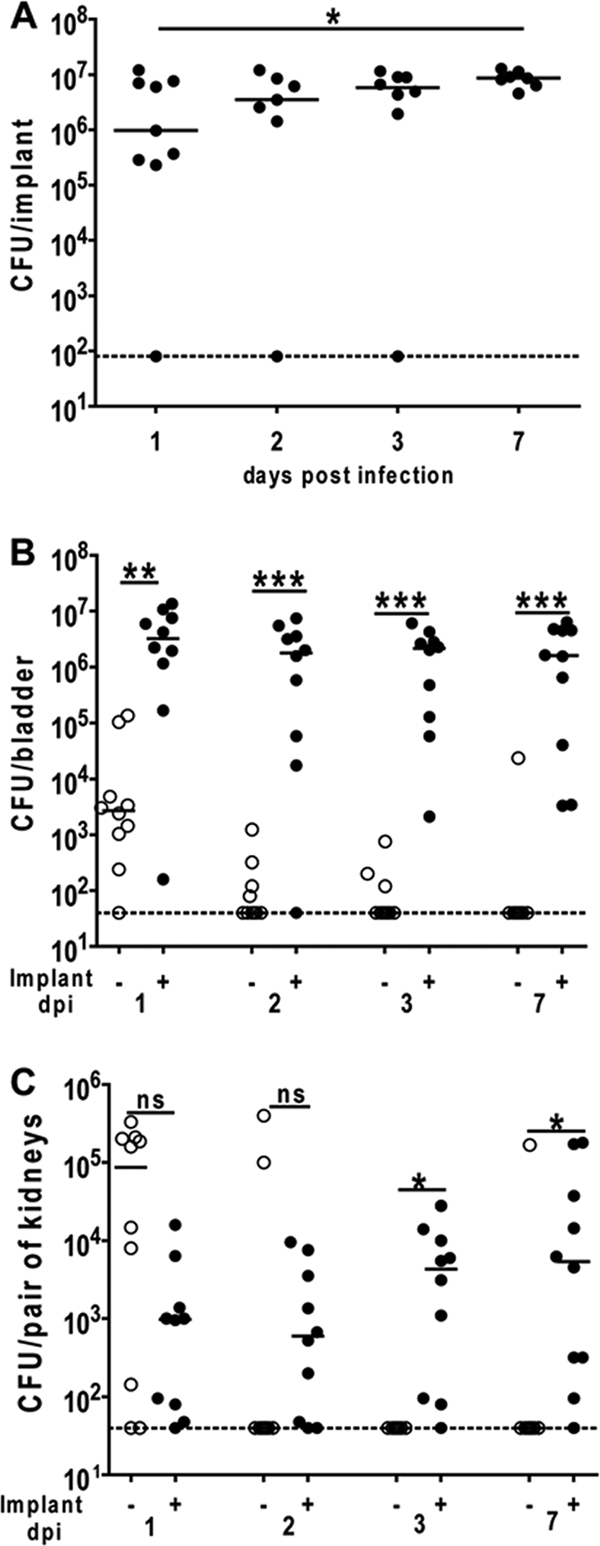
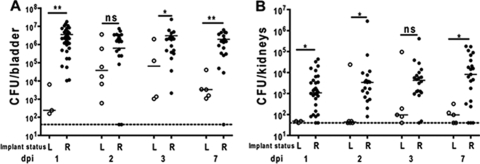
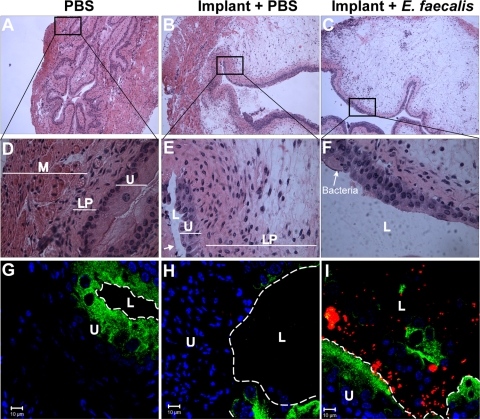
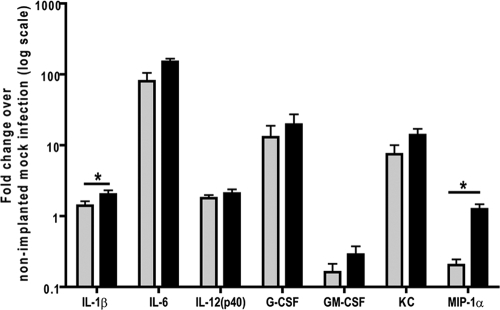
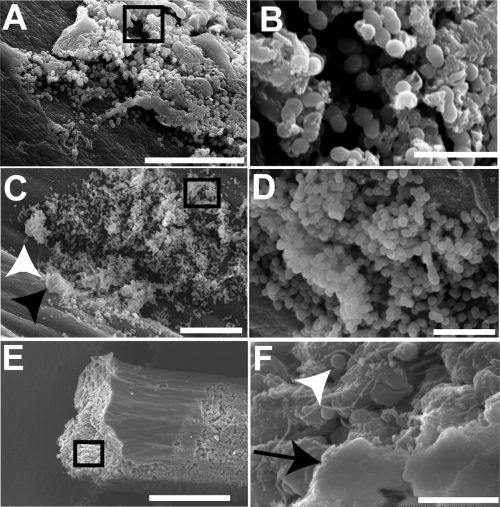
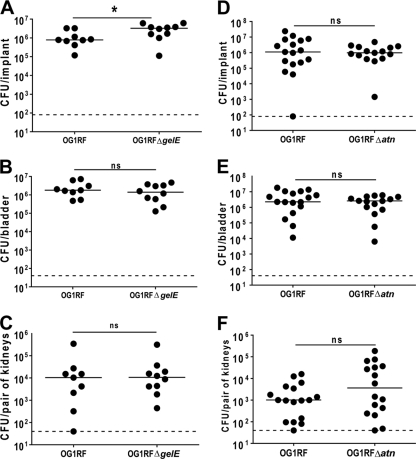
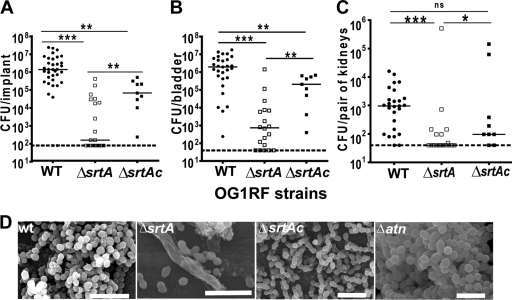
Catheter-associated urinary tract infections (CAUTIs) constitute the majority of nosocomial UTIs and pose significant clinical challenges. Enterococcal species are among the predominant causative agents of CAUTIs. However, very little is known about the pathophysiology of Enterococcus-mediated UTIs. We optimized a murine model of foreign body-associated UTI in order to mimic conditions of indwelling catheters in patients. In this model, the presence of a foreign body elicits major histological changes and induces the expression of several proinflammatory cytokines in the bladder. In addition, in contrast to naïve mice, infection of catheter-implanted mice with Enterococcus faecalis induced the specific expression of interleukin 1β (IL-1β) and macrophage inflammatory protein 1α (MIP-1α) in the bladder. These responses resulted in a favorable niche for the development of persistent E. faecalis infections in the murine bladders and kidneys. Furthermore, biofilm formation on the catheter implant in vivo correlated with persistent infections. However, the enterococcal autolytic factors GelE and Atn (also known as AtlA), which are important in biofilm formation in vitro, are dispensable in vivo. In contrast, the housekeeping sortase A (SrtA) is critical for biofilm formation and virulence in CAUTIs. Overall, this murine model represents a significant advance in the understanding of CAUTIs and underscores the importance of urinary catheterization during E. faecalis uropathogenesis. This model is also a valuable tool for the identification of virulence determinants that can serve as potential antimicrobial targets for the treatment of enterococcal infections.
Figures
References
-
- Arciola, C. R., L. Baldassarri, D. Campoccia, R. Creti, V. Pirini, J. Huebner, and L. Montanaro. 2008. Strong biofilm production, antibiotic multi-resistance and high gelE expression in epidemic clones of Enterococcus faecalis from orthopaedic implant infections. Biomaterials 29:580-586. - PubMed
-
- Barford, J. M., Y. Hu, K. Anson, and A. R. Coates. 2008. A biphasic response from bladder epithelial cells induced by catheter material and bacteria: an in vitro study of the pathophysiology of catheter related urinary tract infection. J. Urol. 180:1522-1526. - PubMed
-
- Barreda, D. R., P. C. Hanington, and M. Belosevic. 2004. Regulation of myeloid development and function by colony stimulating factors. Dev. Comp. Immunol. 28:509-554. - PubMed
-
- Brady, R. A., J. G. Leid, J. H. Calhoun, J. W. Costerton, and M. E. Shirtliff. 2008. Osteomyelitis and the role of biofilms in chronic infection. FEMS Immunol. Med. Microbiol. 52:13-22. - PubMed
-
- Cassatella, M. A. 1999. Neutrophil-derived proteins: selling cytokines by the pound. Adv. Immunol. 73:369-509. - PubMed
Publication types
MeSH terms
Substances
Grants and funding
LinkOut - more resources
Full Text Sources
Other Literature Sources
Medical
