


A pilot study to determine the safety and feasibility of oropharyngeal administration of own mother's colostrum to extremely low-birth-weight infants
- PMID: 20697221
- PMCID: PMC2924875
- DOI: 10.1097/ANC.0b013e3181e94133
A pilot study to determine the safety and feasibility of oropharyngeal administration of own mother's colostrum to extremely low-birth-weight infants
Abstract
Own mother's colostrum is rich in cytokines and other immune agents that may stimulate oropharyngeal-associated lymphoid tissue if administered oropharyngeally to extremely low-birth-weight (ELBW) infants during the first days of life when enteral feeding is contraindicated. However, the safety and feasibility of the oropharyngeal route for the administration of colostrum have not been determined.
Purpose: To determine the safety of oropharyngeal administration of own mother's colostrum to ELBW infants in first days of life. A secondary purpose was to investigate the feasibility of (1) delivering this intervention to ELBW infants in the first days of life and (2) measuring concentrations of secretory immunoglobulin A and lactoferrin in tracheal aspirate secretions and urine of these infants.
Subjects: Five ELBW infants (mean birth weight and gestational age = 657 g and 25.5 weeks, respectively).
Design: Quasi-experimental, 1 group, pretest-posttest design.
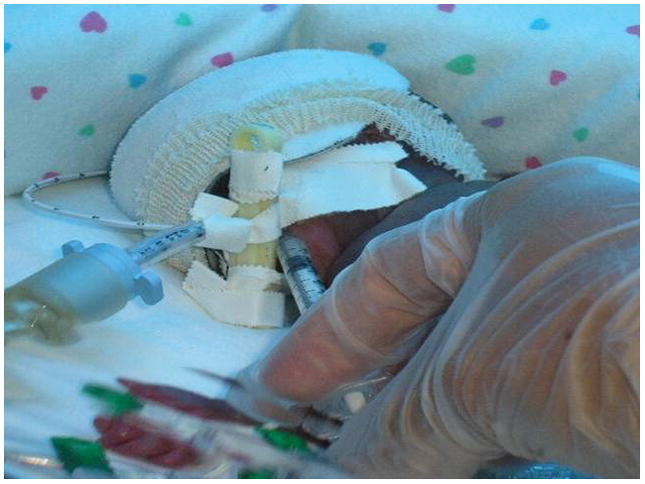
Methods: Subjects received 0.2 mL of own mother's colostrum administered oropharyngeally every 2 hours for 48 consecutive hours, beginning at 48 hours of life. Concentrations of secretory immunoglobulin A and lactoferrin were measured in tracheal aspirates and urine of each subject at baseline, at the completion of the intervention and again 2 weeks later.
Results: All infants completed the entire treatment protocol, each receiving 24 treatments. A total of 15 urine specimens were collected and 14 were sufficient in volume for analysis. A total of 15 tracheal aspirates were collected, but only 7 specimens (47%) were sufficient in volume for analysis. There was wide variation in concentrations of secretory immunoglobulin A and lactoferrin in urine and tracheal aspirates among the 5 infants; however, several results were outside the limits of assay detection. All infants began to suck on the endotracheal tube during the administration of colostrum drops. Oxygen saturation measures remained stable or increased slightly during each of the treatment sessions. There were no episodes of apnea, bradycardia, hypotension, or other adverse effects associated with the administration of colostrum.
Conclusions: Oropharyngeal administration of own mother's colostrum is easy, inexpensive, and well-tolerated by even the smallest and sickest ELBW infants. Future research should continue to examine the optimal procedure for measuring the direct immune effects of this therapy, as well as the clinical outcomes such as infections, particularly ventilator-associated pneumonia.
References
-
- Hoekstra RE, Ferrera TB, Couser RJ, Payne NR, Connett JE. Survival and long-term neurodevelopmental outcome of extremely premature infants born at 23–26 weeks gestation age at a tertiary center. Pediatrics. 2004;(113):el–6. - PubMed
-
- Strodbeck F. The role of early enteral nutrition in protecting premature infants from sepsis. Critical Care Nursing Clinics of North America. 2003;15 (1):79–87. - PubMed
-
- Fanaroff AA, Hack M, Walsh MC. The NICHD neonatal research network: changes in practice and outcomes during the first 15 years. Seminars in Perinatology. 2003;27 (4):281–7. - PubMed
-
- Tommiska V, Heinonen K, Lehtonen L, Renlund M, Saarela T, Tammela O, et al. No improvement in outcome of nationwide extremely low birth weight infant populations between 1996–1997 and 1999–2000. Pediatrics. 2007;119 (1):29–36. - PubMed
Publication types
MeSH terms
Substances
Grants and funding
LinkOut - more resources
Full Text Sources
Other Literature Sources
Medical
