. 2010 Dec;88(6):1081-7.
doi: 10.1189/jlb.0610318. Epub 2010 Aug 10.

Cholesterol 25-hydroxylase production by dendritic cells and macrophages is regulated by type I interferons

Affiliations

Cholesterol 25-hydroxylase production by dendritic cells and macrophages is regulated by type I interferons

Kiwon Park et al. J Leukoc Biol. 2010 Dec.

Abstract

The oxysterol-producing enzyme CH25H plays an important role in regulating lipid metabolism, gene expression, and immune activation. In vitro experiments using a panel of TLR agonists to activate BMDCs and macrophages demonstrated that Ch25h expression is induced rapidly, selectively, and robustly by the TLR ligands poly I:C and LPS. The mechanism of TLR3- and TLR4-induced transcription levels of Ch25h relies on the TRIF-mediated production of type I IFNs and requires signaling through the IFNαR and JAK/STAT1 pathway. Treatment of BMDCs and macrophages with IFN-α or IFN-β induces Ch25h in a STAT1-dependent manner. IFN-γ also up-regulated Ch25h expression by signaling through STAT1, suggesting that multiple pathways regulate the production of this enzyme. In addition, we demonstrated that regulation of Ch25h expression in vivo in lung-derived DCs and macrophages is dependent on signaling through the IFNαR and STAT1. The results suggest that the rapid induction of Ch25h and subsequent oxysterol synthesis may represent a component of the regulatory network that modulates the magnitude of innate immune reactions and possibly the nature and intensity of subsequent adaptive responses.


Figures
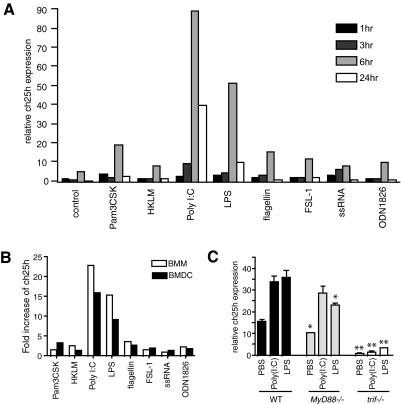
Figure 1.
Figure 1.. TLR-mediated induction of Ch25h expression.
(A) BMDCs derived from a single BALB/c mouse were stimulated with a panel of TLR ligands for 1, 3, 6, or 24 h and then harvested for real-time RT-PCR analysis of Ch25h expression. The data are from a single experiment that is representative of three biological replicates. (B) BMDCs and BMMs derived from a single BALB/c mouse were stimulated with a panel of TLR ligands for 6 h and then harvested for real-time RT-PCR analysis of Ch25h expression. The data are from a single experiment that is representative of three biological replicates. (C) BMDCs from WT C57BL/6, myd88−/−, and trif−/− mice were cultured and stimulated with PBS, poly I:C, LPS, or IFN-β for 6 h and then harvested for real-time RT-PCR analysis of Ch25h expression, which was normalized to 18S rRNA levels and expressed as relative units or as fold-change over PBS controls. Statistical significance for each treatment between WT and gene-deficient strains was assessed by Student's t test. *P < 0.05; **P < 0.005.
Figure 2.
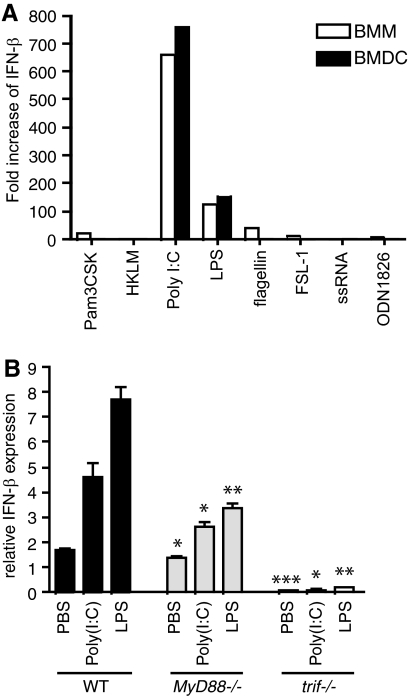
Figure 2.. TLR-mediated ifnβ expression.
(A) ifnβ expression in BMDCs and BMMs stimulated with a panel of TLR ligands for 6 h. Transcription was measured by real-time RT-PCR, the results were normalized to 18S rRNA expression, and ifnβ transcription was expressed as a fold-change over PBS controls. The data are from a single experiment that is representative of biological replicates. (B) BMDCs from WT C57BL/6, myd88−/−, and trif−/− mice were cultured and stimulated with PBS, poly I:C, LPS, or IFN-β for 6 h. Transcription of ifnβ was measured by real-time RT-PCR, normalized to 18S rRNA levels, and expressed in relative units. Statistical significance for each treatment between WT and gene-deficient strains was assessed by Student's t test. *P < 0.05; **P < 0.005; ***P < 0.0005.
Figure 3.
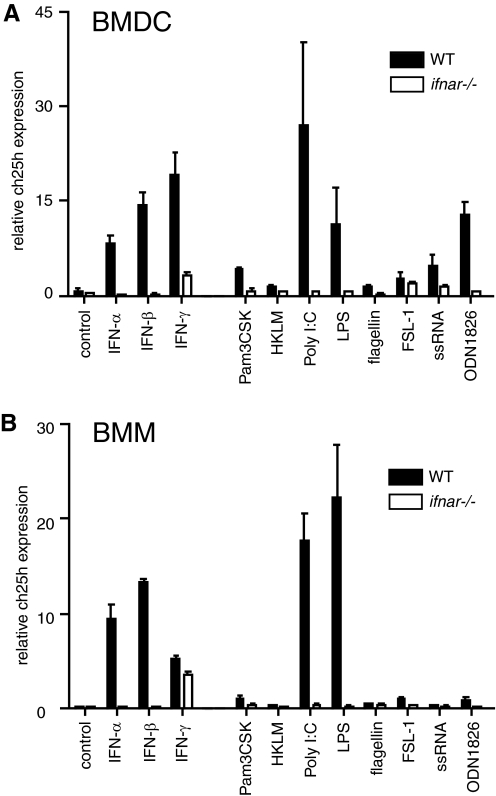
Figure 3.. Type1 IFN-mediated Ch25h expression is IFNR-dependent.
BMDCs (A) and BMMs (B) from WT BALB/cJ and ifnar−/− mice were stimulated with IFN-α, IFN-β, IFN-γ, or a panel of TLR ligands for 6 h, and the transcription of Ch25h was measured by real-time RT-PCR. Ch25h transcription was expressed in relative units normalized to 18S rRNA. Each bar represents the mean (sd) of the measurements from three biological replicates. The differences in Ch25h expression between WT- and ifnar−/−-derived BMDCs for poly I:C, LPS, ODN1826, IFN-α, IFN-β, and IFN-γ treatments were statistically significant at P < 0.05 (two-way ANOVA). The differences in Ch25h expression between WT- and ifnar−/−-derived BMMs for poly I:C, LPS, IFN-α, and IFN-β treatments were statistically significant at P < 0.0001 (two-way ANOVA).
Figure 4.
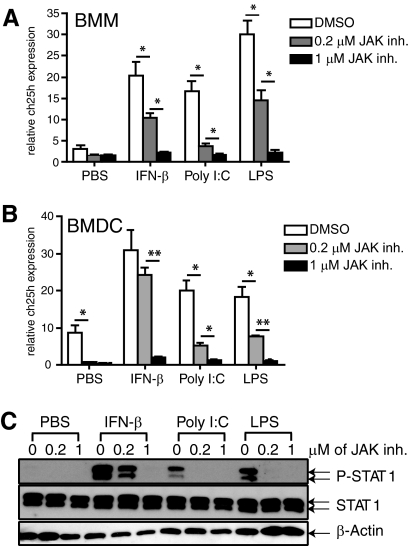
Figure 4.. Induction of Ch25h in BMMs and BMDCs is JAK-dependent.
BMMs (A) and BMDCs (B) were treated with 0, 0.2, or 1.0 μM JAK inhibitor 1 (inh.) for 1 h and then stimulated with 25 μg/ml poly I:C, 1 μg/ml LPS, or 1000 units/ml IFN-β for 6 h. Transcription of Ch25h was measured by real-time RT-PCR, and the data were normalized to 18S rRNA levels and expressed in relative expression units. Bars represent the mean (sd) response from three mice/group. *P < 0.05; **P < 0.005, by Student's t test. (C) BMDCs treated with 0, 0.2, or 1.0 μM JAK inhibitor 1 for 1 h and then incubated for 3 h with PBS, 1000 units/ml IFN-β, 25 μg/ml poly (I:C), or 1 μg/ml LPS. Cells were harvested and processed for Western blotting and immunostaining for the presence of phospho-STAT1 (P-STAT1), STAT1, or β-actin.
Figure 5.
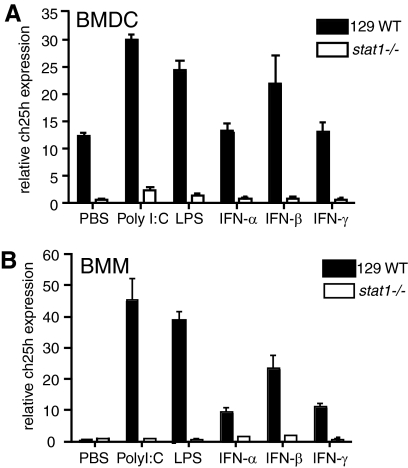
Figure 5.. TLR- and IFN-induced Ch25h expression is STAT1-dependent.
BMDCs (A) and BMMs (B) cultured from 129 WT and stat1−/− mice were stimulated with poly I:C, LPS, IFN-α, IFN-β, or IFN-γ for 6 h, and then, Ch25h transcription was measured by real-time RT-PCR. Bars represent the mean (sd) of the response from three mice/strain for each treatment after normalization to 18S rRNA levels. The differences in expression of Ch25h between 129 WT and stat1−/− for BMMs and BMDCs for each treatment were statistically significant at P < 0.0001 (two-way ANOVA).
Figure 6.
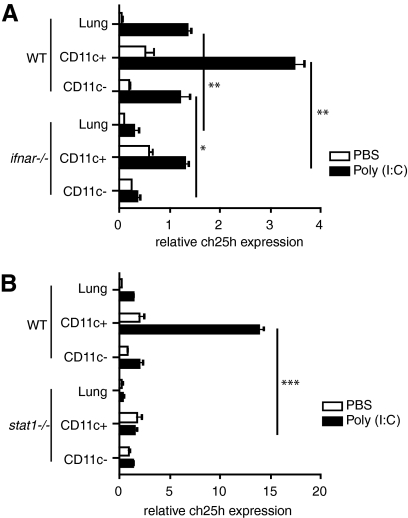
Figure 6.. Ch25h expression in mouse lung is stat1-dependent.
Naïve Balb/cJ WT and ifnar−/− (A) and 129 WT and stat1−/− (B) were challenged intratracheally with 90 μg poly I:C. Whole lungs as well as the CD11c+ and CD11c cells were isolated at 24 h post-exposure and processed for real-time PCR analysis of Ch25h transcription. Each bar represents the mean (sd) of the results from three animals normalized to 18S rRNA levels and presented as relative expression units. *P < 0.05; **P < 0.005; ***P < 0.0005, by Student's t test.

Comment in

References

    1. Russell D. W. (2000) Oxysterol biosynthetic enzymes. Biochim. Biophys. Acta 1529, 126–135 - PubMed
    1. Lehmann J. M., Kliewer S. A., Moore L. B., Smith-Oliver T. A., Oliver B. B., Su J. L., Sundseth S. S., Winegar D. A., Blanchard D. E., Spencer T. A., Willson T. M. (1997) Activation of the nuclear receptor LXR by oxysterols defines a new hormone response pathway. J. Biol. Chem. 272, 3137–3140 - PubMed
    1. Wang Y., Kumar N., Crumbley C., Griffin P. R., Burris T. P. (2010) A second class of nuclear receptors for oxysterols: regulation of RORα and RORγ activity by 24S-hydroxycholesterol (cerebrosterol). Biochim. Biophys. Acta 1801, 917–923 - PMC - PubMed
    1. Nes W. D., Lukyanenko Y. O., Jia Z. H., Quideau S., Howald W. N., Pratum T. K., West R. R., Hutson J. C. (2000) Identification of the lipophilic factor produced by macrophages that stimulates steroidogenesis. Endocrinology 141, 953–958 - PubMed
    1. Brown M. S., Goldstein J. L. (1997) The SREBP pathway: regulation of cholesterol metabolism by proteolysis of a membrane-bound transcription factor. Cell 89, 331–340 - PubMed

Publication types